Today’s Superstitious Yet Truly Morbid Fact!
Historically, superstitious practices to ward off smallpox were widespread. In eighteenth-century Europe, people tried to protect themselves from infection by holding vinegar-soaked rags over their noses, wearing amulets of animal teeth or bags of camphor around their necks, and carrying lengths of tarred rope.
A more effective means of containing smallpox epidemics was quarantine. Long before the germ theory of disease was developed, people deduced that smallpox was contagious because the rash was so distinctive and the infection usually occurred after close contact with a sick individual. For this reason, smallpox patients in Europe and America were often placed in isolation on ships moored in harbors or in special quarantine hospitals. In the 1700s, for example, “pest houses” were built on two islands in Boston Harbor. Foreign ships approaching the city were required to stop and discharge passengers with smallpox or plague; these individuals were housed in dreary isolation wards until they either died or recovered from the illness.
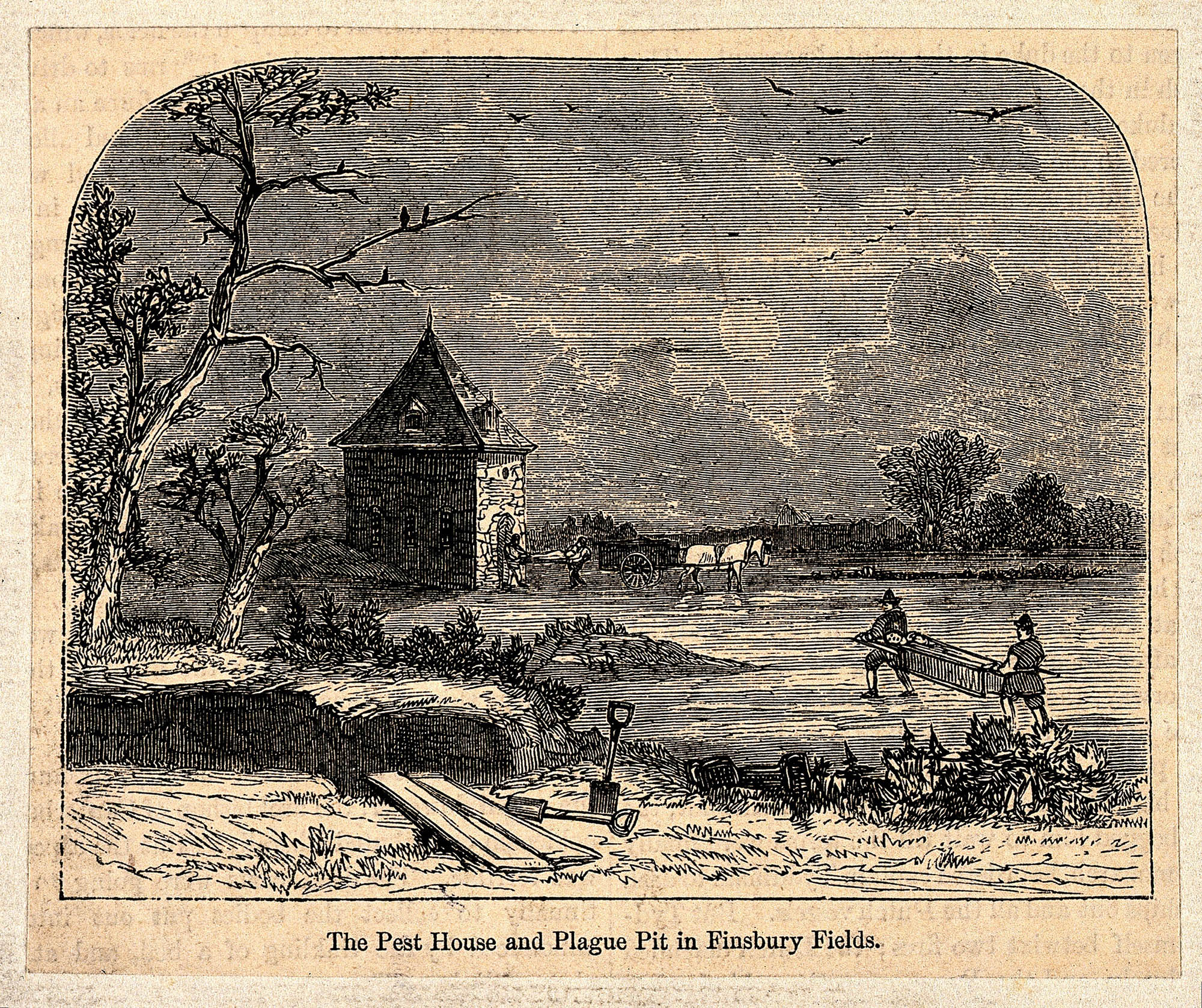
V0013229 The pest house and plague pit, Moorfields, London.
Credit: Wellcome Library, London. Wellcome Images
images@wellcome.ac.uk
http://wellcomeimages.org
The pest house and plague pit, Moorfields, London. Wood engraving.
Wood engraving
Published: –
Copyrighted work available under Creative Commons Attribution only licence CC BY 4.0 http://creativecommons.org/licenses/by/4.0/
Culled from: Scourge: The Once and Future Threat of Smallpox
Post-Mortem Photo Du Jour!
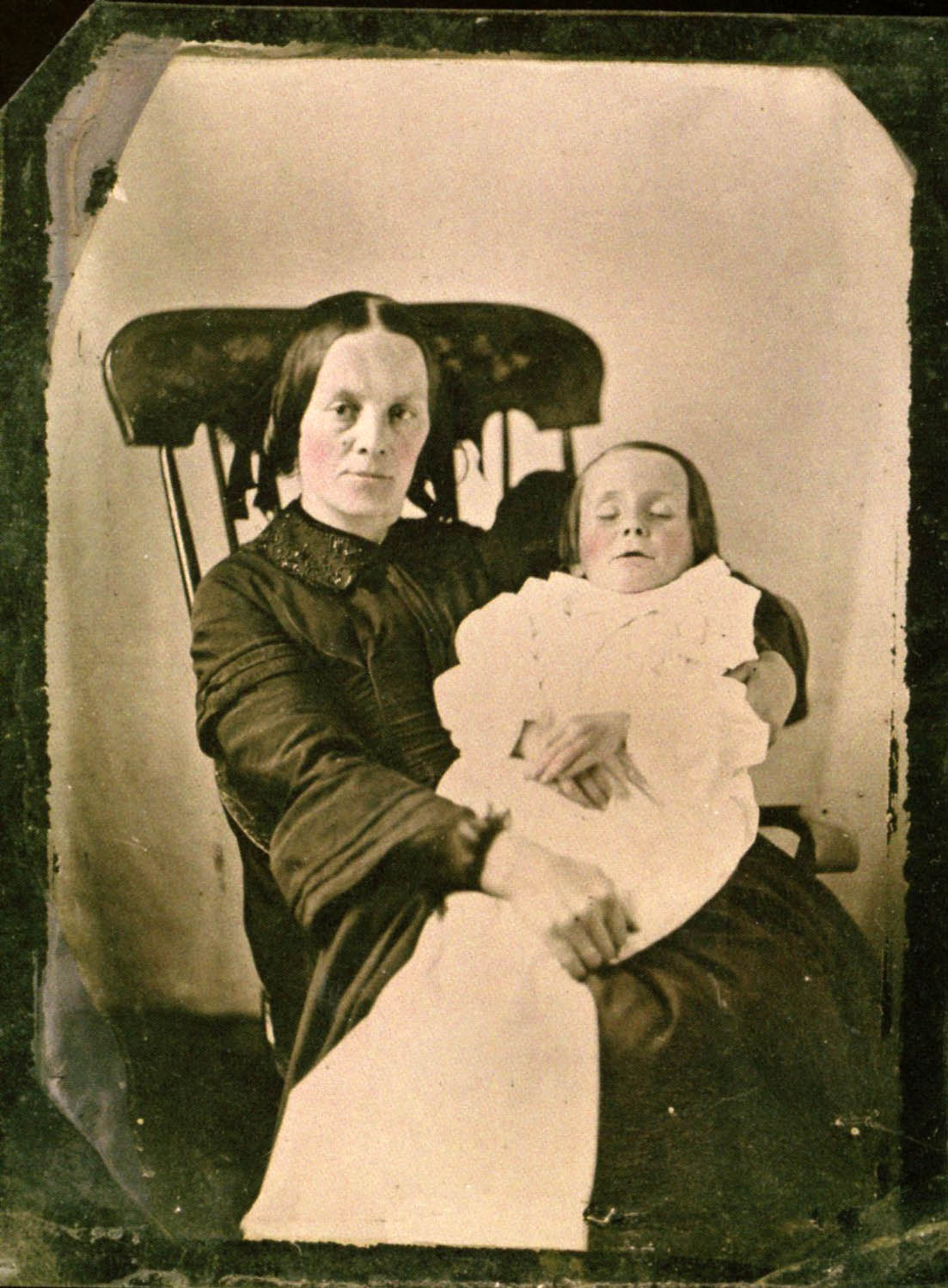
Rocking Chair circa 1860 – quarter-plate ambrotype – 4.25″ x 3.25″
Woman in a black mourning dress holds her son, who is dressed in a white burial gown.
Culled from: Beyond the Dark Veil