Today’s Womanizing Yet Truly Morbid Fact!
Marine Sergeant Phillip Tulley of Pittsburgh, Pennsylvania was a tall, handsome forty-year-old veteran who was tasked with recruiting duties in New Castle, just fifty-six miles northwest of Pittsburgh. Sergeant Tulley and his thirty-three-year-old wife Dorothy made the easy two hour move on January 16, 1926, taking two adjoining rooms at a boardinghouse owned by Margaret Winters at 205 North Mill street. Tulley’s recruiting office was inside the New Castle City Hall, where his good looks and smart uniform must have impressed more than few women who worked there, because just three days later, Miss Winters took a phone message from a woman for Tulley.
Phillip came home around eleven in the evening that night and Dorothy confronted him in their bedroom about the call, and where he had been, but Tulley laughed it off. As the night wore on, they argued more intensely.
Their landlady slept through the entire argument, until she was awoken by a bleeding Sergeant Tulley, who stumbled into her unlocked bedroom around one in the morning and fell on her floor, moaning. Dorothy charged into her room, knelt next to Tulley and kissed him gently, telling him to get up and come back to bed. Tulley stumbled with Dorothy back to their room. The stunned Winters then heard three gunshots. She quickly called the police.
The police and ambulance arrived to find the couple laying over each other on the blood covered floor. When the attendants looked at their wounds, they discovered that most of the blood belonged to the Marine. Dorothy’s wound was superficial. They were taken to Shenango Valley Hospital where Phillip Tulley died a few hours later.
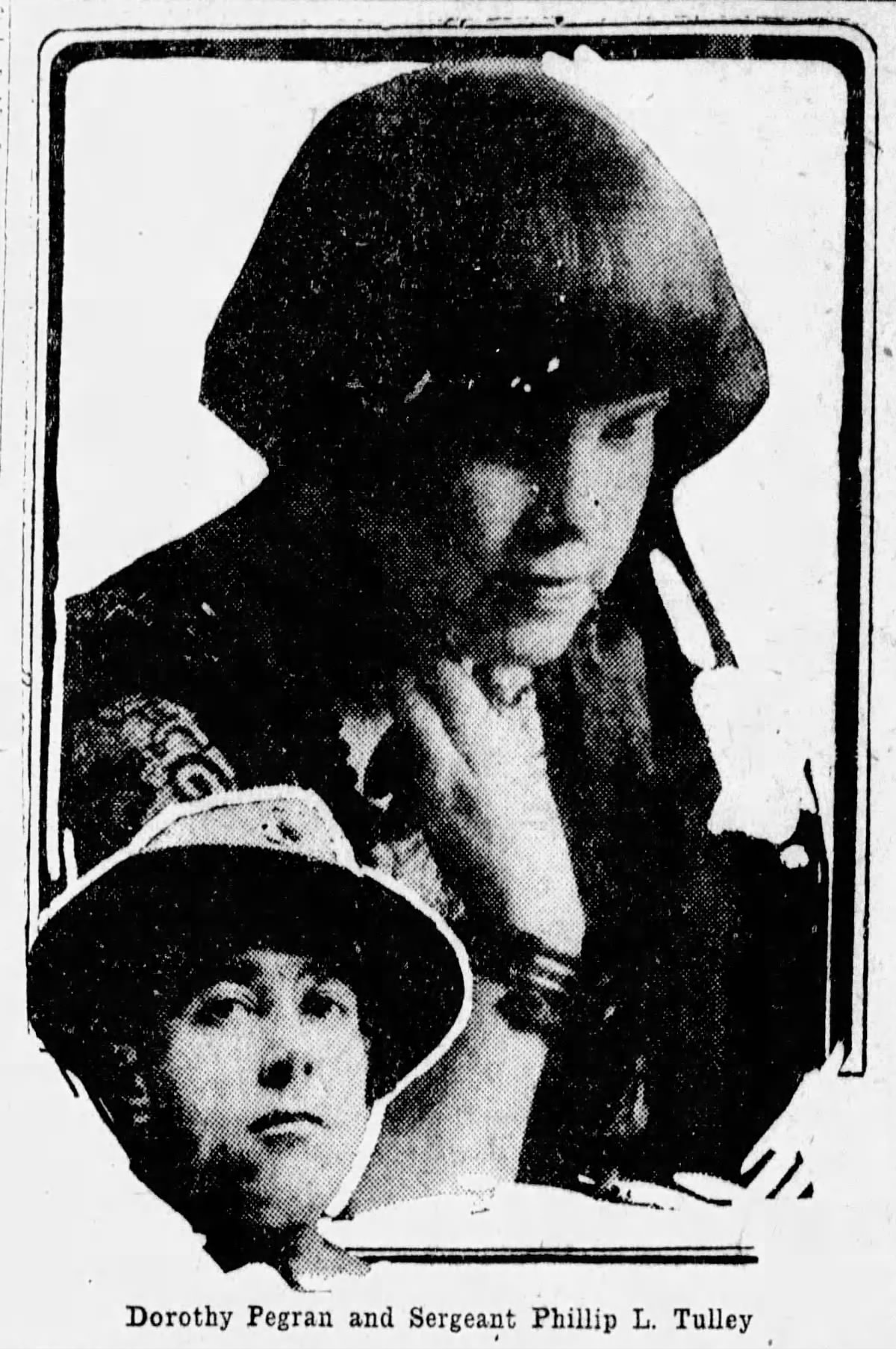
The Marine Corp was informed and Tulley’s commanding officer was on the first train to New Castle, but before he left, he notified Tulley’s “next of kin.” Dorothy was bandaged up and taken to the Lawrence County Jail.
Dorothy was beside herself with grief. She wept uncontrollably in the cell. The sheriff and his wife, who as the jail matron, took pity on the woman, who spoke freely to them about her crime and her love for the Marine sergeant.
“I never loved a man in my life like I did Sergeant Tulley,” she was quoted. “And when you love a man like I did him, you just can’t tell what’s liable to happen. I wouldn’t care if they could chloroform me, but I don’t want to be electrocuted. I want to be freed of this charge of murder they have against me, but life isn’t ever going to be the same for me after this.”
Dorothy was correct as later that day, a woman with an eight-year-old son showed up to claim the Marine’s body. She said her name was Nan Tulley and she had been married to the Sergenat since August 20, 1917. The young boy with her was their son, Phillip Jr., and they lived in Pittsburgh.
Dorothy was livid with Nan and Junior’s arrival, telling the Sherriff. “Don’t give her anything! Don’t let her have the body. She’s not his wife. She was married to some man down in New Jersey and never divorced.”
Even though Nan Tulley could not produce a marriage certificate, Tulley’s body was turned over to her for burial at Arlington National Cemetery.
When she was asked about their unusual marriage arrangement, she rationalized melodramatically. “She came to him! Oh, why did he not tell me of that other woman? I would have gone to her and if I found that he cared more for her than me, why I would have given him up. His suffering is over, but hers is yet to come.”
Dorothy Bertha Pegran went on trial on March 9, 1926, with Judge R.. Lawrence Hildabrand presiding over a standing room only courtroom. Nan Tulley showed up in black veils, and little Junior was dressed in a child’s Marine uniform. The sordid tale of lost love and jealousy made the trial the must-see event of the year. The courthouse took on a circus-like atmosphere.
Assistant District Attorney Thomas W. Dickey presented his evidence to an all-male jury. Witnesses included Margaret Winters, who told the jury of Tulley bursting into her room and collapsing. She testified that Tulley moaned to her, “My God, call the police. My wife shot me.” Winters also told about the mysterious female who had been calling the house and leaving messages for the Sergeant.
New Castle police officer C. C. Dickey, who was not related to the district attorney, was the first officer at the crime scene and told the jury he found the couple on the floor of their room, in a big pool of the sergeant’s blood. The sergeant told him that Dorothy shot him.
Dorothy Pegran, who sobbed almost constantly while the prosecution made its case, took the stand in her defense to a hushed courtroom. She told how she fell in love with Tulley, and that they had secretly lived as husband and wife for two years in Pittsburgh. Tulley promised to marry her someday, and Dorothy was happy with the arrangement.
On the night in question, Pegran told the court that Tulley had arrived home hours later than he said he would be, so she questioned Tulley about the woman who kept calling the house. They argued, and when they both reached for the loaded revolver on the nightstand, Pegran got to it first. After that she claimed that she did not remember anything.
District Attorney Dickey was full of questions for the thirty-three-year-old Pegran. She had already admitted to bigamy and murder, so it is somewhat confusing why the D.A. decided to needle the hapless woman with personal questions. The D.A. peppered Dorothy with questions about her family, her religion, and her apparent disregard for moral laws placed in the legal books by straitlaced Protestants. She answered the insulting questions honestly, between sobs.
On March 12, 1926, the jury deliberated for three hours and came back with the verdict of “not guilty.” Dickey’s vicious cross examination only made the jury feel sorry for Dorothy, and they felt that she was honest in telling her story. Sergeant Tulley was a womanizer who had stained the uniform of the Marine Corps.
Dorothy Pegran was released from jail, but because she had no money or place to live, the sheriff and his wife invited her to stay with them in their home until she could raise some money. The good people of New Castle took up a collection and Dorothy Pegran got on a train to Pittsburgh.
Culled from: 1926: Homicide in America by David Kulczyk
French Crime Scene Du Jour!
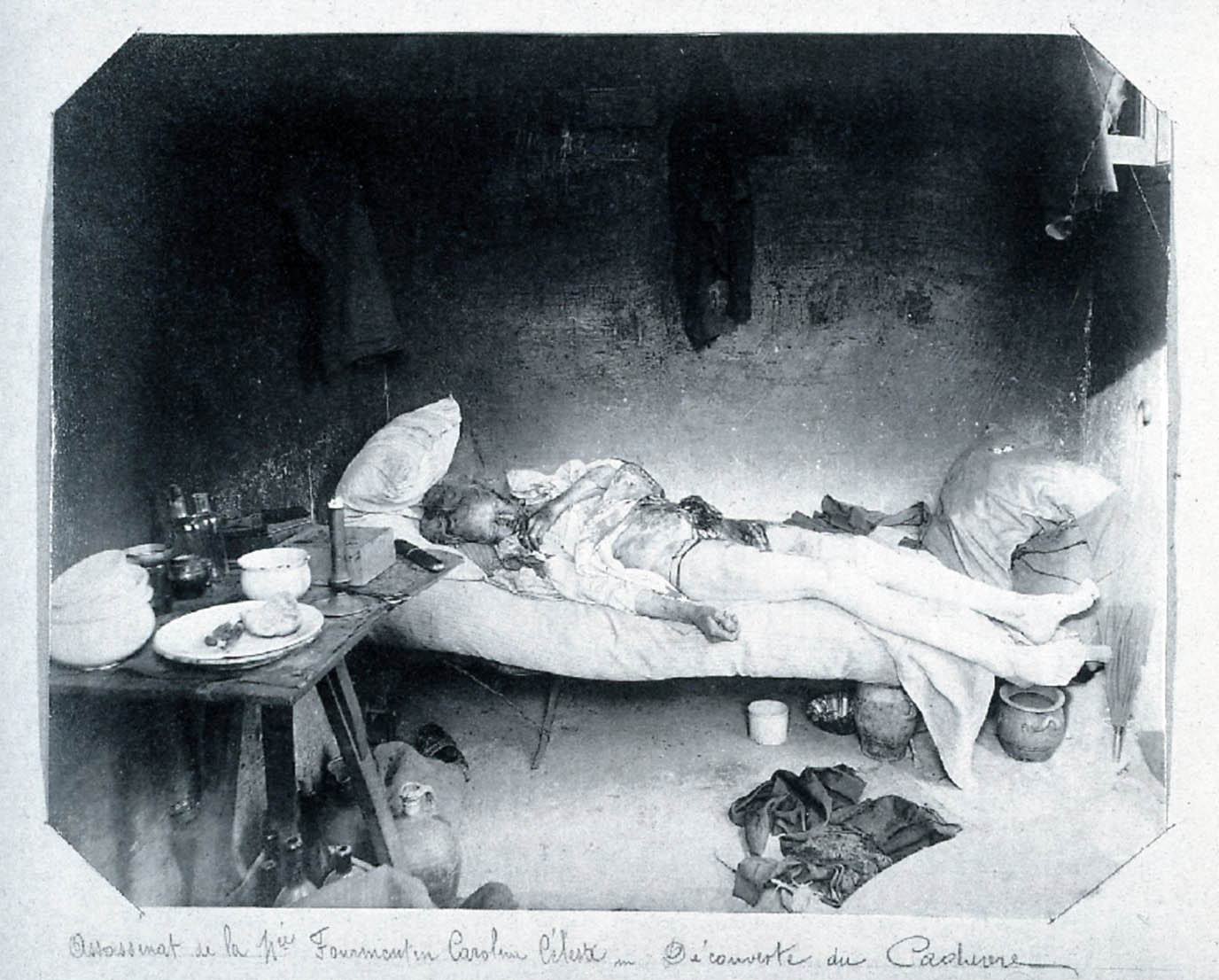
May 9, 1900, 4 Rue de Lutèce,Colombes-dans-les-Champs, northwest of Paris, Caroline-Celeste Fourmentin, 79, former dressmaker, prostitute, vagrant, raped, strangled, and eviscerated in the tool shed where she lived. Murderer unknown.
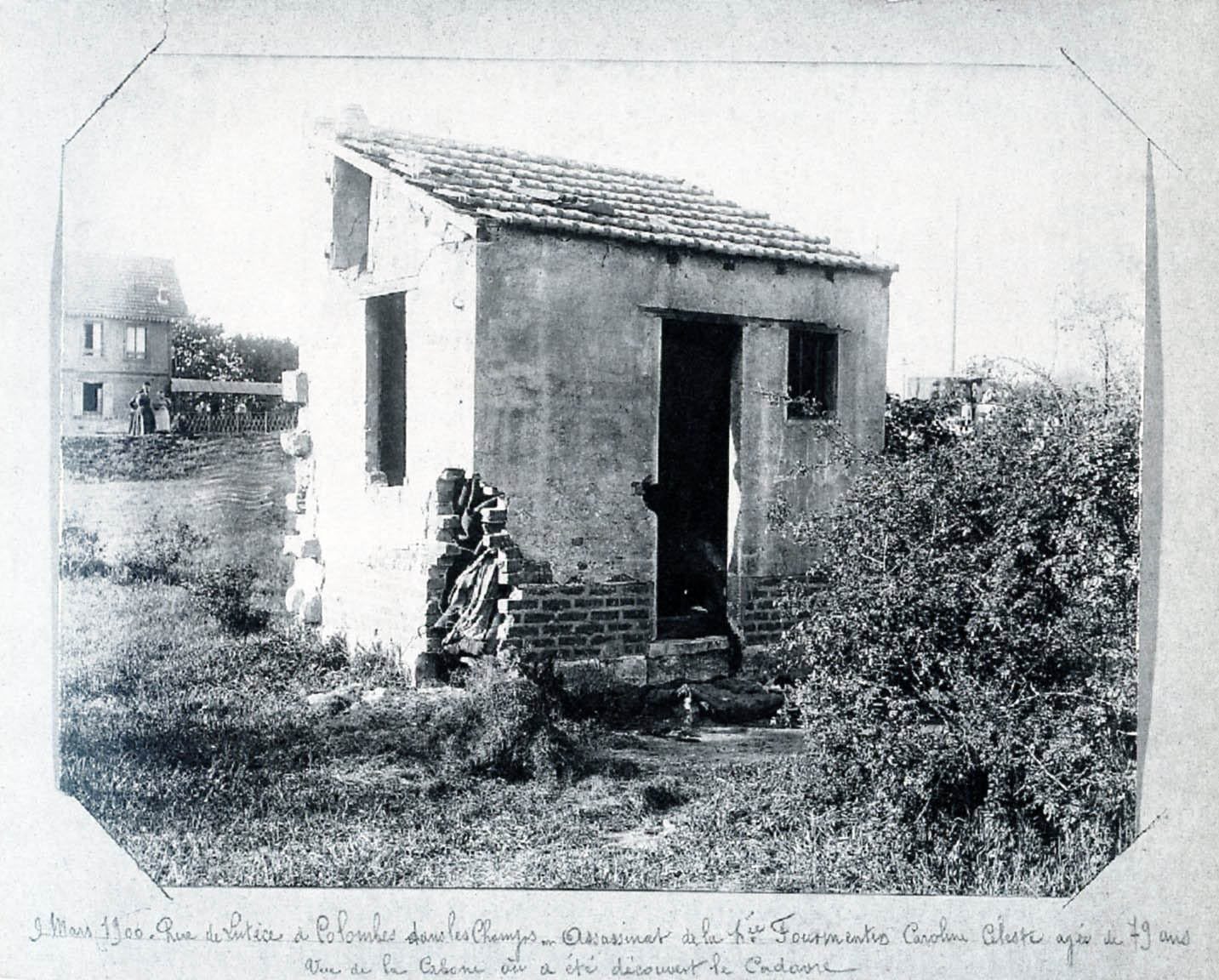
View of the shed where the body was found.
Culled from: Crime Album Stories