Today’s Tupenny Yet Truly Morbid Fact!
The first battle of Bull Run in the American Civil War, also known as First Manassas, was fought on July 21, 1861, near the city of Manassas, Virginia, not far from the Federal capital in Washington. It was the first major battle of the Civil War. Union forces fought well early in the day, but the Confederate forces, strengthened by reinforcements that arrived by rail, eventually won the battle. Each side had about 30,000 inexperienced troops led by equally inexperienced officers. The Confederate victory was followed by a disorganized Union retreat.
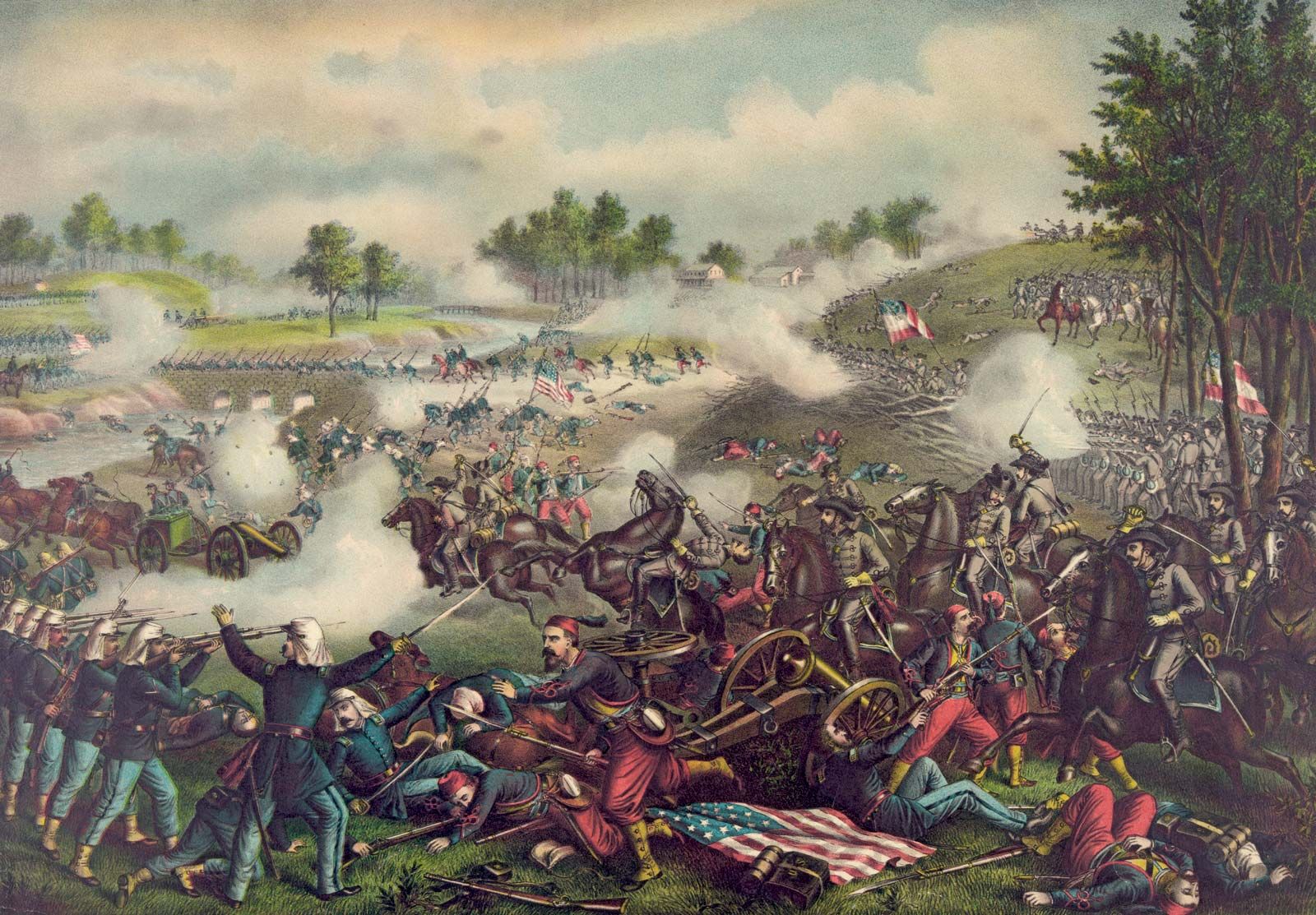
The first Battle of Bull Run
In hindsight, the casualties were light, at least compared to what the future held. Approximately 400 Confederates were killed and 1,600 wounded. Union forces had comparable casualty rates: 460 killed and 1,124 wounded, with an additional 1,312 Union soldiers listed as missing and captured. Even at the time, Massachusetts Senator Henry Wilson referred to it as a “tupenny skirmish,” but these deaths deeply affected communities in 20 states, both Northern and Southern. The majority of casualties were from either New York or Virginia. Now, as one Virginian said, “War was no longer funny.”
Both Union and Confederate dead lay exposed to a terrible rainstorm that began the evening of the 21st and continued all the next day. Federal troops had rather abruptly left the battlefield, being unceremoniously routed by the Confederates after several hours of intense fighting during which the outcome of the battle was uncertain. At the end, however, it *was* certain — the Federal forces had lost the first engagement of the war.
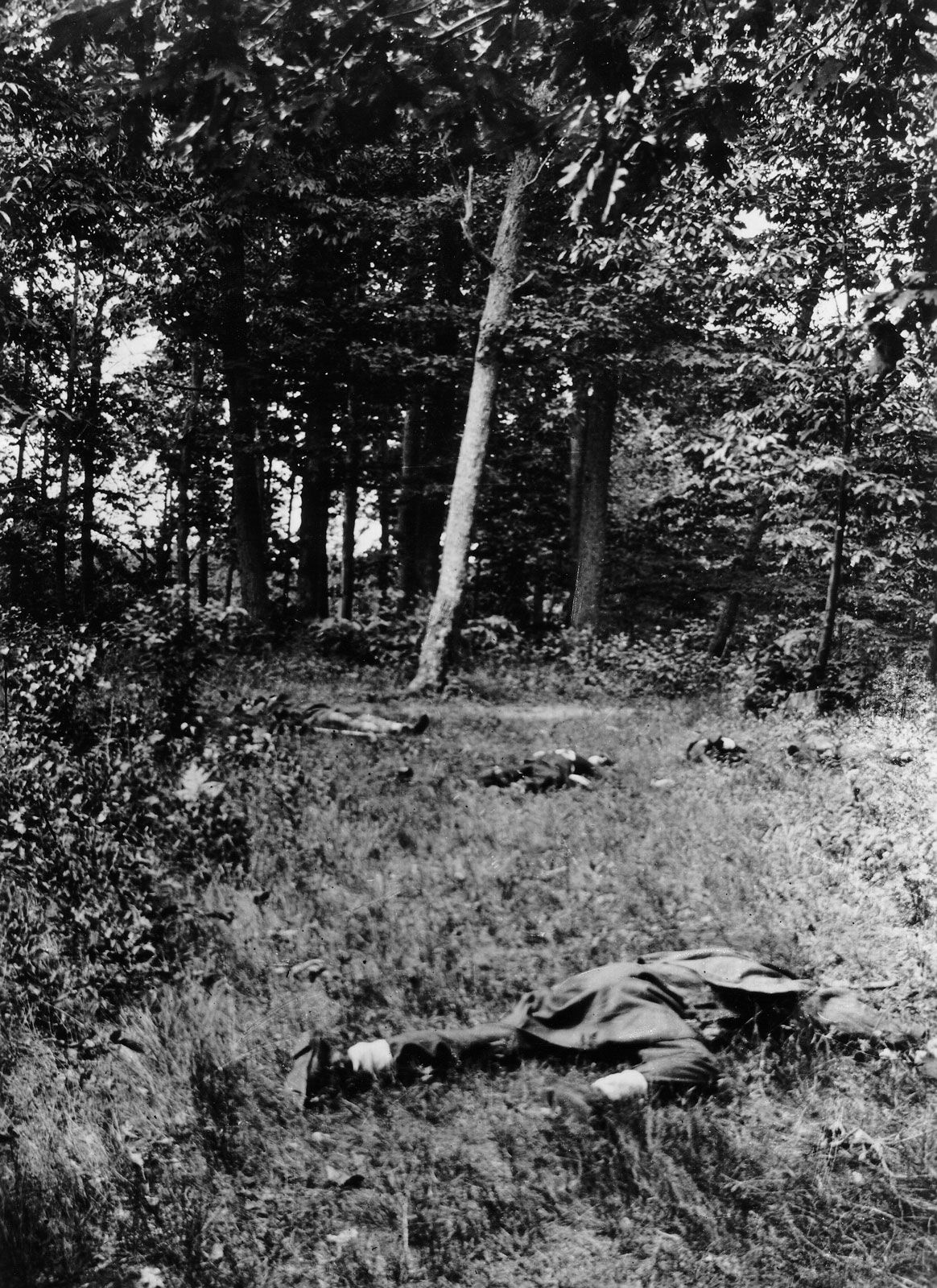
Dead Confederate Soldiers after the first Battle of Bull Run
Private Alcock was the orderly for Dr. Gray, the regimental surgeon for the 11th New York Fire Zouaves (see below for more info on the Zouaves). Due to his position as a non-combatant, he was able to observe his surroundings, and he gave his report later on. Dr. Gray and several other surgeons had set up a field hospital at the Sudley Methodist Church, on the upper northwest part of the battlefield. As the battle wound down outside the little church, Alcock and the others realized that, although they were in danger of becoming prisoners, they could not stop their bloody work. “In the church,” Alcock wrote, “the scene of human suffering was terrible. Every part of the floor was covered with the wounded—dying and dead… So close together did the sounded lay upon the floor, that it was with the greatest care I could pick my way through them.”
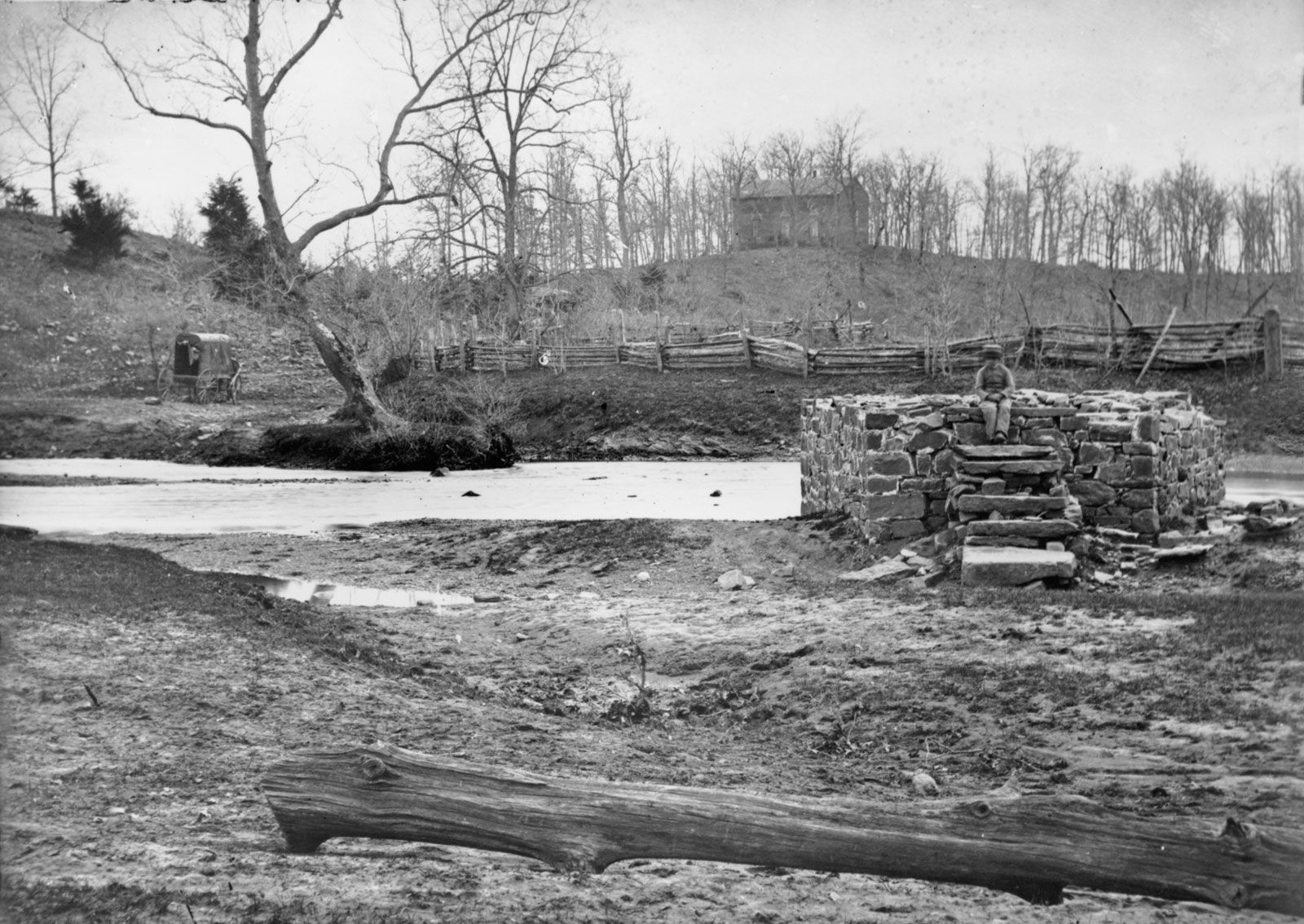
Catharpin Run, Sudley Church, and the remains of the Sudley Sulphur Spring house, Bull Run, Virginia.
Cries of “Water, water, for God’s sake!” and “Oh! For Heaven’s sake don’t step on me,” [Sounds like the gay version of “Don’t Tread On Me” – DeSpair] rang everywhere. No amount of pleading on the parts of the doctors, their assistants or the wounded kept the Confederate cavalry lieutenant in charge of rounding up prisoners in that part of the field from forcing all who could walk, regardless of situation, to begin the eight mile trek to Manassas. Many men were left behind, and the little group of Federals “passed by scores of dead men and horses, many of them horribly mutilated.” The grim work of burial would begin almost immediately, even in the rain.
Usually burial work was the job of slaves, but there were far too many bodies for the few slaves available in the Manassas-Centerville area to bury them quickly. This was the first battle, after all, and sometimes a friend or brother wanted to perform this service for those about whom he cared. One Confederate soldier decided he would go back to the battlefield to find his friend Blue. After he located Blue’s body, he used a hoe and a spade to dig a grave in the orchard next to Mrs. Henry’s house. As he worked, another Confederate came up to him and asked to borrow the tools, as he had located his brother’s remains and wished to bury him as well. The rain poured down over the two men and their sad burdens, so the two agreed to work together to dig a hole large enough to accommodate both dead men. “So we buried them that way,” the first soldier recalled, “and gathered up some old shingles to put over the bodies.”
Because the Confederates had won the battle, they were left in charge of the field. The burials were done hastily, with little attention to detail, and within three days the field was considered cleared, although a spot of rain might uncover a decomposing foot or hand.
Culled from: The Aftermath of Battle by MFDJ patron Meg Groeling
I had to look up Zouaves and this is what I found (from AramcoWorld)::
The Zouaves’ heritage was North African, running back to the indigenous Berber fighters who served the Arab dey, or ruler, of Algiers prior to the French occupation of 1830. Initially recruited into the French military, by the time of the Crimean conflict in the mid-1850s almost all of the Zouave troopers were French.
In 1855 us Army Captain George McClellan, who was stationed in Europe as an official observer of the Crimean War, had witnessed the Siege of Sevastopol and observed the French Zouaves in action against Russian troops. McClellan, who would later command the Union Army of the Potomac in the Civil War, praised the Zouaves “as the finest light infantry that Europe can produce; the beau-ideal of a soldier.” Other us officers and the American press shared his admiration for the unconventional troops.
Not long after that, Zouave units were springing up all over northern and southern states. As reporters put it, their drill performances were acrobatic, and their battle cries of “zoo-zoo-zoo!” had men cheering and women swooning.
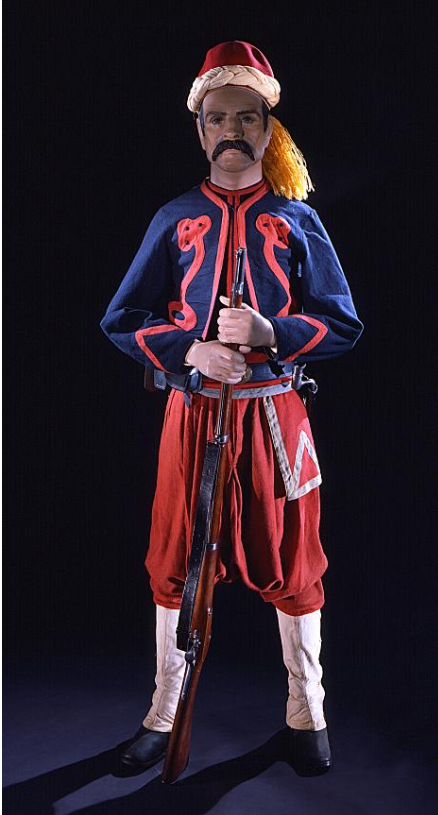
I mean, who wouldn’t swoon over this?
By the early 1860s, when North and South took to the battlefield, about a hundred Zouave volunteer regiments entered the fray—more than 70 for the Union and about 25 smaller units, mostly companies, for the Confederacy. (A regiment was comprised of about 1,000 men, divided into 10 companies.)
“Zoo-zoos” fought throughout the war, from First Bull Run to Antietam, and from Gettysburg to Appomattox. The first Union officer to die in action was a Zouave. So was the first Union soldier to win the Medal of Honor. And the last Union trooper to die before the war ended in 1865 was a Zouave. Fans of the Zouaves thought of them as superheroes; critics dismissed them as showboaters.
Today some continue to make light of the Zouave units that served in that bloody and divisive conflict, suggesting they were little more than acrobats in Orientalist dress—a fashion fad that came and went in a few decades. The Zouave uniform was indeed colorful by American standards, with bright red baggy trousers, short braided jacket, vest and tasseled fez. The outfit was designed for warm climates and rugged terrain. (It occasionally proved to be a fatal drawback, too, as the vivid colors made Zouaves easy targets on a battlefield.)
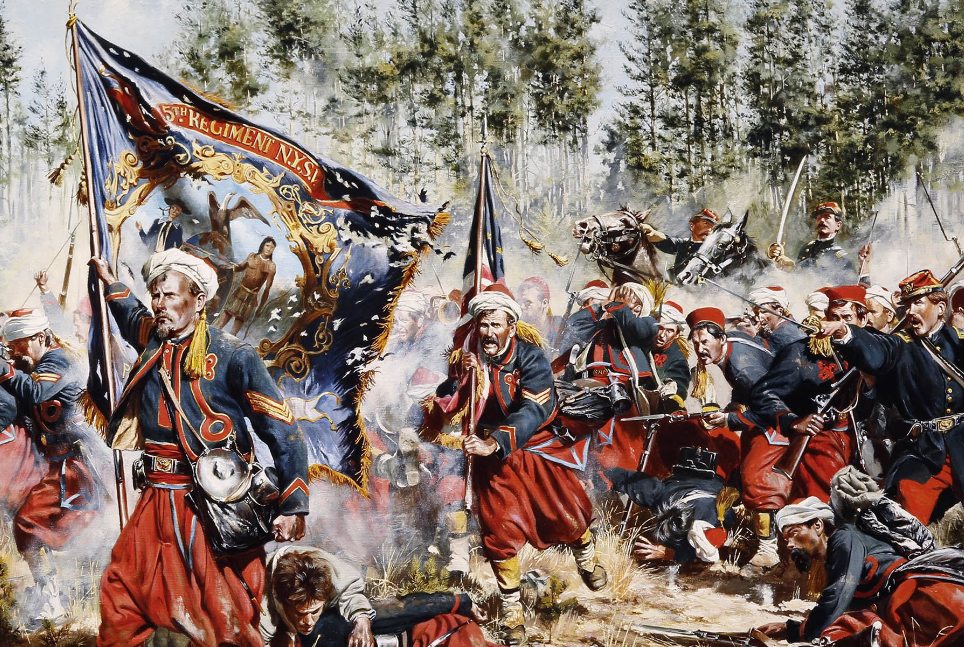
But those who study the Zouaves’ role in the Civil War realize they were about much more than style. America’s interest in the French Zouaves was fundamentally military: us officers were impressed by the fast-moving, agile fighting style inspired by the Algerian Berbers who developed it. On July 20, 1860, The New York Times burbled:
If the Zouaves should be deprived by siege of their ammunition, they would fight with the butt end of their guns; if by stratagem they should lose their guns, they would throw stones; if there were no stones, they would indulge in fistiana, and if their hands and feet were cut off, they would “butt” with their heads and pummel with their stumps.
Zouaves won admiration also for their compassion for victims of war. The Atlantic Monthly in August 1859 described how French Zouaves escorted a large group of “prisoners, wounded, and helpless women, old men and children” across the Algerian desert to their home villages. The troopers “behaved like very Sisters of Charity, rather than rough bearded soldiers,” sharing their food and water, feeding orphaned babies with ewes’ milk and carrying the infants to their destination. Zouaves developed remarkable unit cohesion and morale, modeled on the close relationships of the French family. It was common for soldiers to refer to their commander as “Father.”
Suicide Du Jour!
One of my favorite books is Death Scenes: A Homicide Detective’s Scrapbook. It is exactly what it says it is: a bizarre and oft-disturbing scrapbook collected over the years by Los Angeles area police detective Jack Huddleston, whose career spanned from 1921 to the early 1950’s.
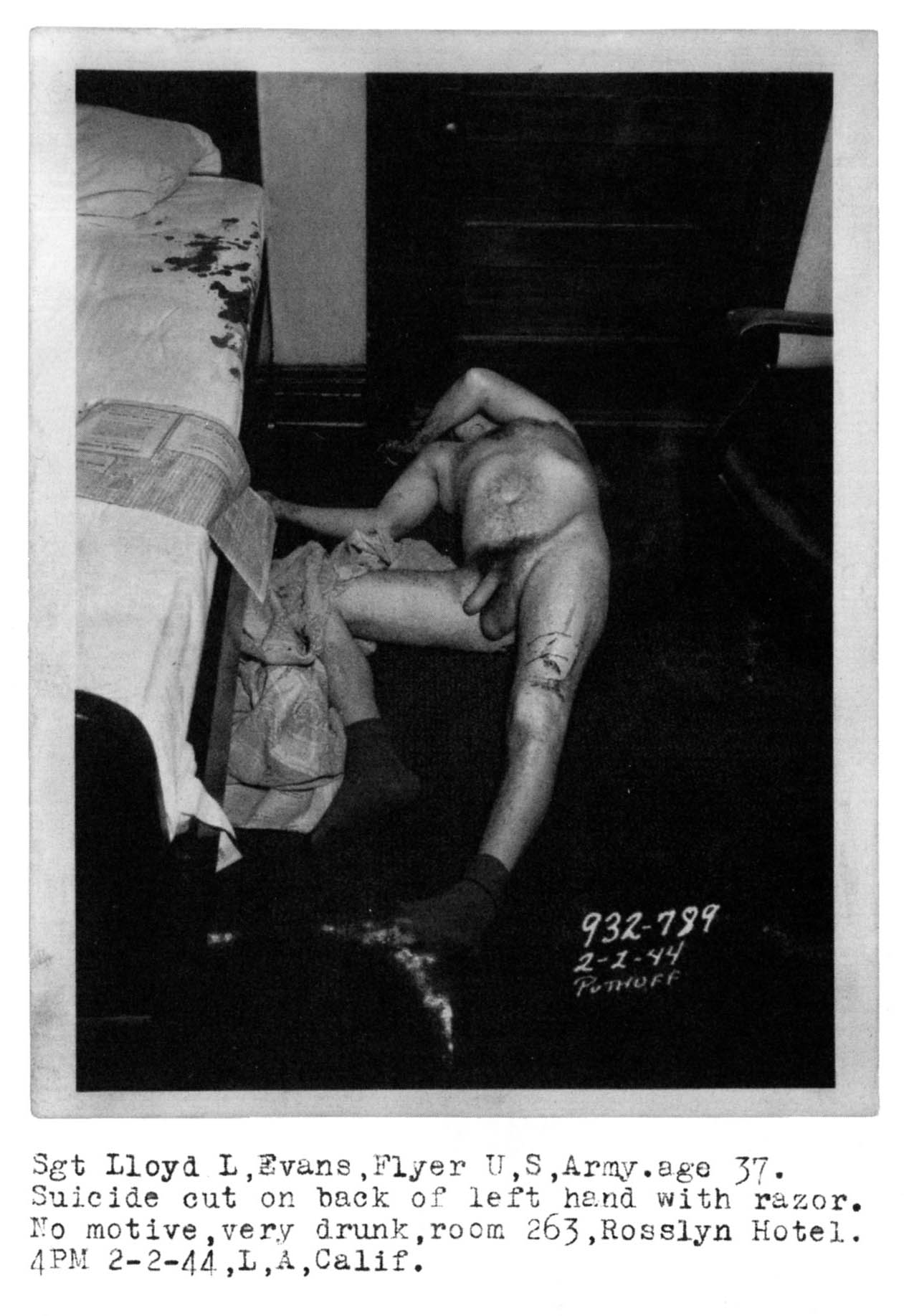
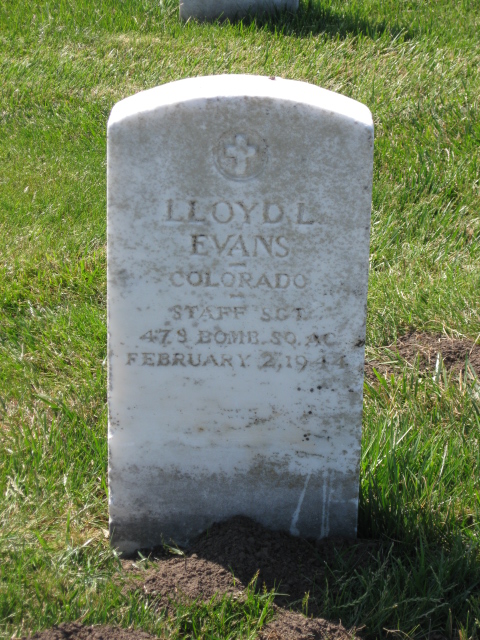
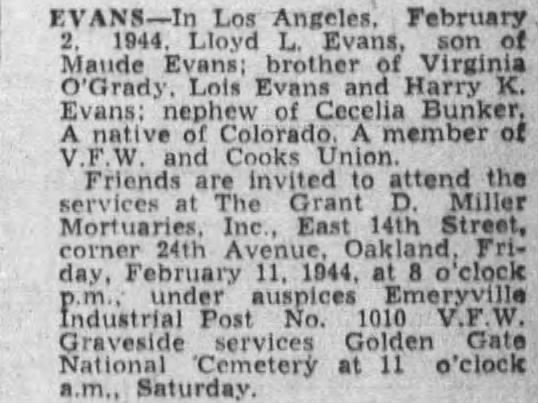
Sgt Lloyd L. Evans, Flyer U.S. Army, age 37. Suicide cut on back of left hand with razor. No motive, very drunk, room 263, Rosslyn Hotel. 4 PM 2-2-44, L.A., Calif.
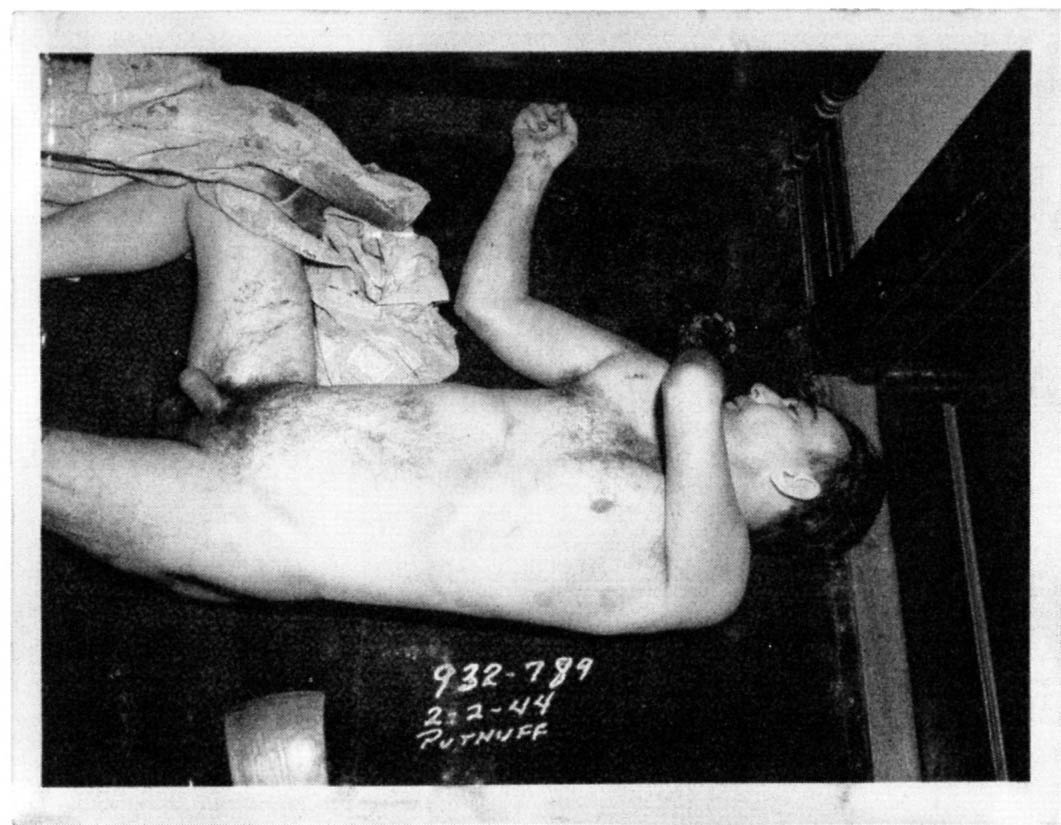
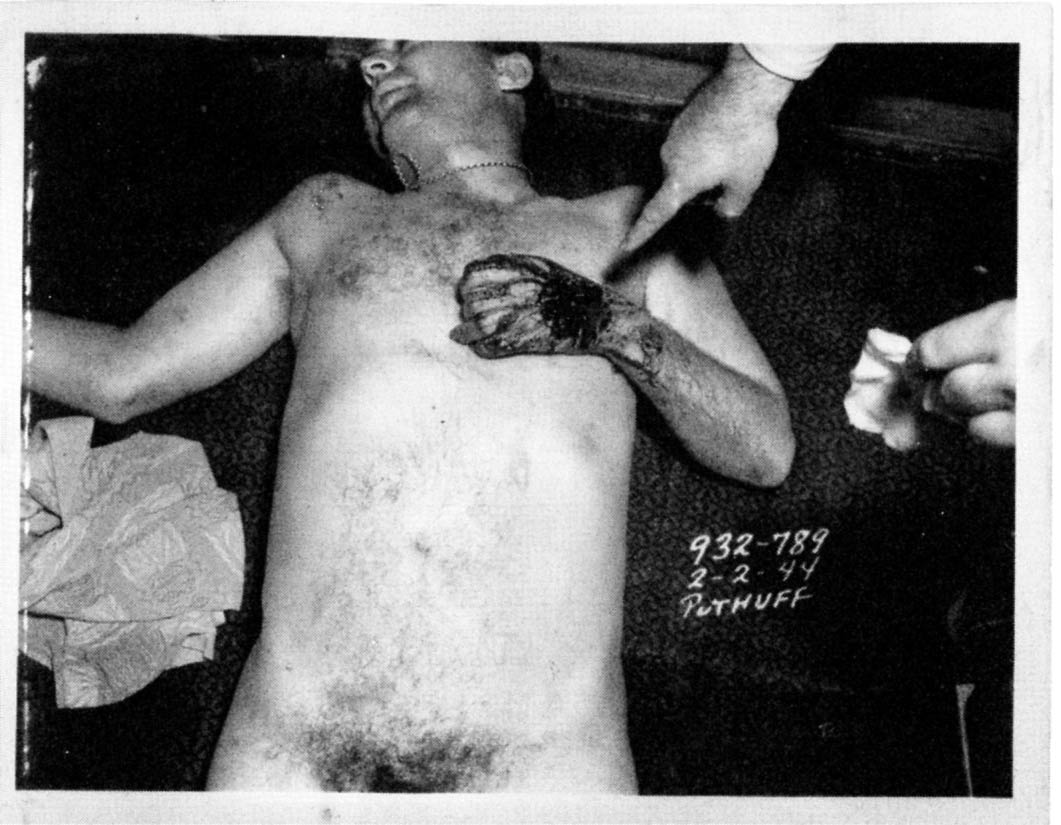
Okay, first of all – I had no idea you could commit suicide by slicing the artery on the top of your hand! That’s a new one to me. I always thought it was pretty hard to bleed to death, but Lloyd makes it look easy!
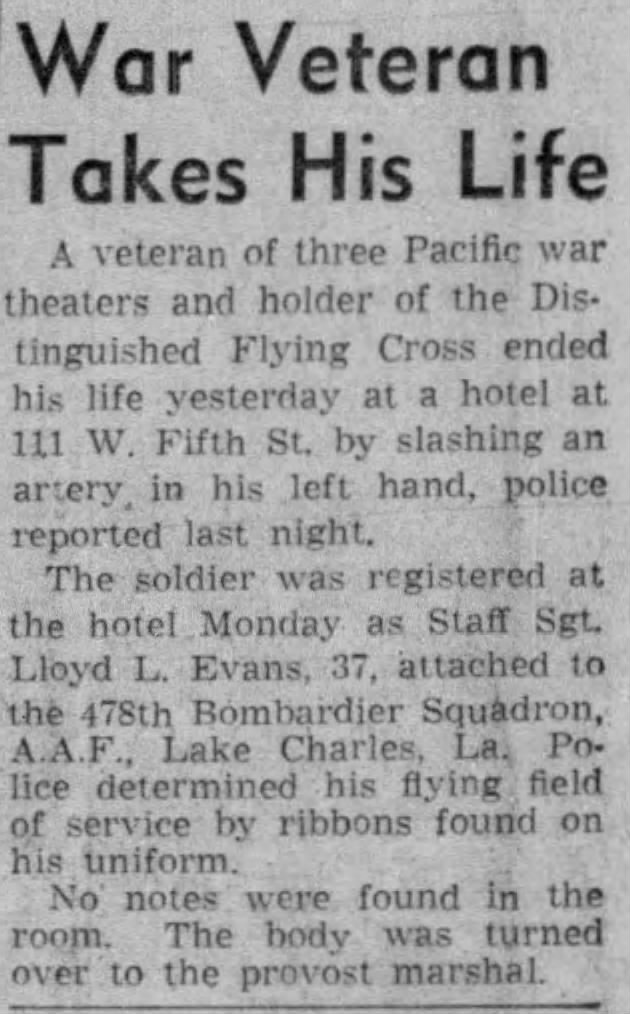
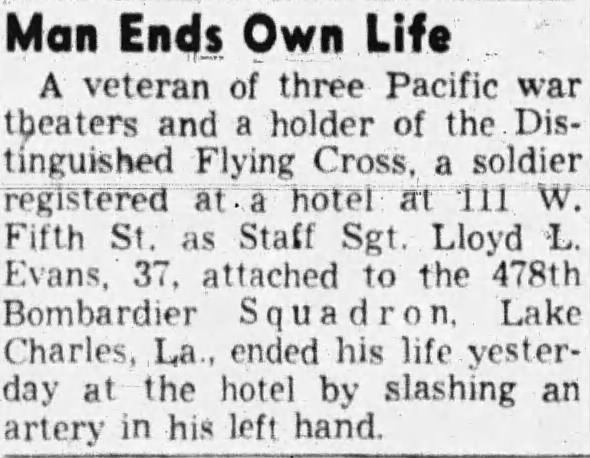
Secondly, I tracked down some additional information about Lloyd. Not much, unfortunately, but I felt like I had to get to know him a little better, all things considered.
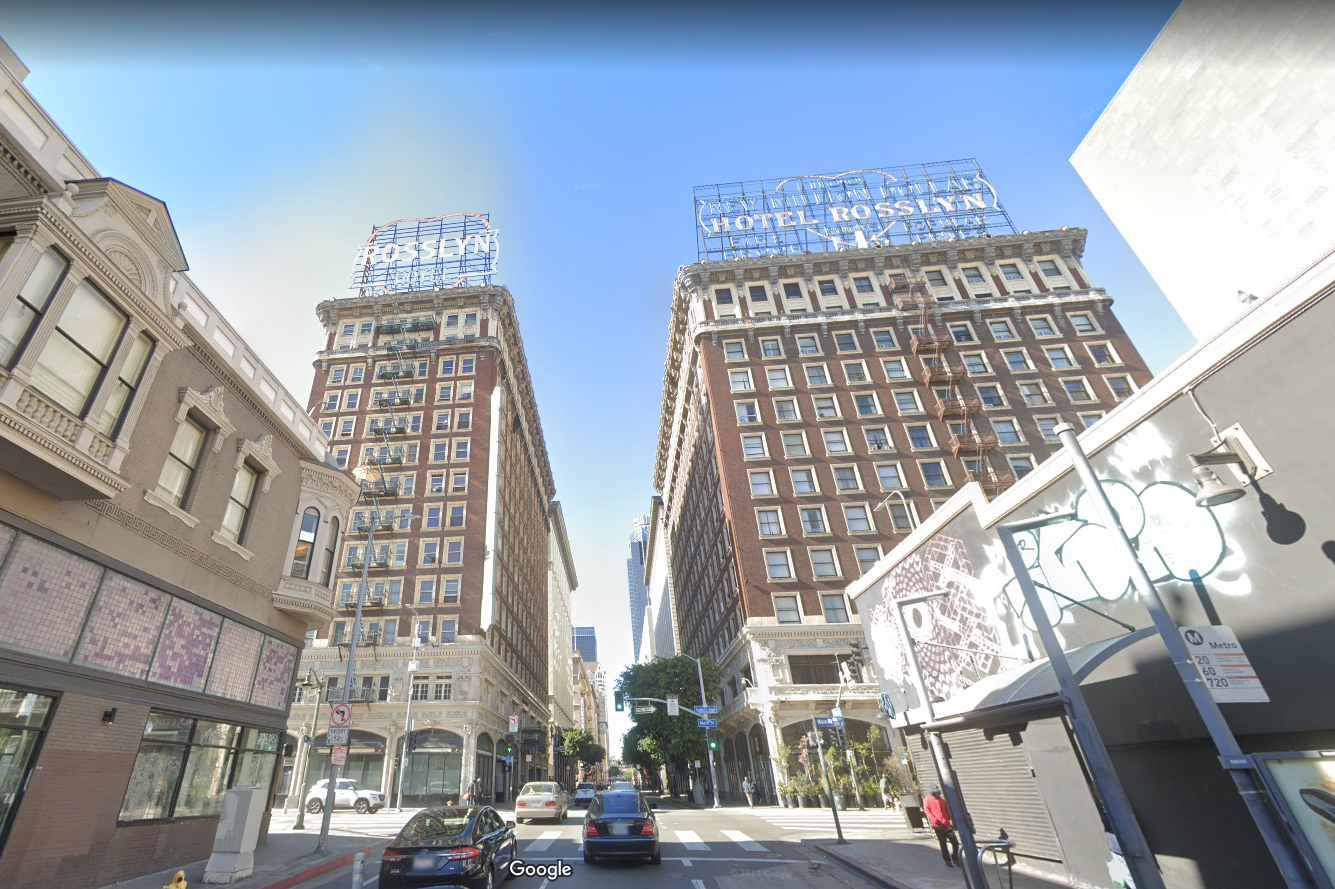
First of all, I was delighted to see that the site of his suicide – the Rosslyn Hotel, still exists. That’s so rare in Los Angeles. If I ever stay there, I’ll definitely ask for room 263.
A couple of newspaper articles:
Obituary:
And Lloyd’s gravestone from Find-a-Grave: