Today’s Hotheaded Yet Truly Morbid Fact!
Twenty-four-year-old Monroe Brinkley and sixteen-year-old Avina Wilson were young sweethearts. Although Avina, who was called Dora, was told multiple times by her rancher father John Wilson not to see the young man, Dora’s mother liked the young laborer and welcomed him into their home. Brinkley was never told by Dora’s father not to see her and had never been warned to stay away.
On June 6, 1915, Monroe and his sister rode his new motorcycle from Lindsey to the Wilson Ranch. With Dora’s mother’s permission, the lovebirds rode to Visalia to see a parade the Portuguese Pentecostals were putting on, leaving his sister at the Wilson ranch.
When John Wilson came home and found out that Dora was off with Brinkley, he hit the ceiling. He drove off to Visalia, purchased a .38 revolver and returned home. He argued with his wife about their daughter and stormed out of the house to lay in wait for the couple on Encina Lane, a route he knew they would travel on.
As the couple appeared, Wilson stepped onto the road and hailed them to stop, but Brinkley did not recognize Wilson and kept going. Wilson fired a shot from his new revolver and hit Dora in the middle finger as she was trying to block her father from shooting her boyfriend. After the bullet tore through her finger, it went into Brinkley’s back, killing him instantly. His motorcycle careened a few yards before crashing into a barbed wire fence. Dora and the body of Brinkley landed in the mass of barbed wire and were soon discovered by a passing motorist who thought they had an accident.
After a quick trial in which Wilson pleaded insanity but was found guilty of second-degree murder, John Wilson was sentenced to twenty-years in the State Penitentiary at San Quentin. Judge Wallace declared during the sentencing that the crime was deliberate, premeditated, and cold-blooded which called for no leniency from the court.
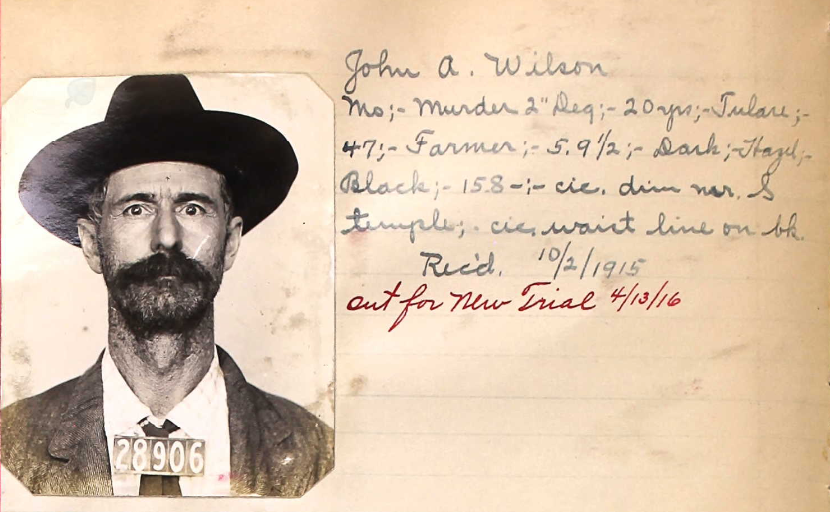
Wilson’s initial San Quentin prison record
On June 2, 1916, Wilson was given a new trial, pled guilty to manslaughter and had his sentence reduced to eleven years. He was paroled in 1921.
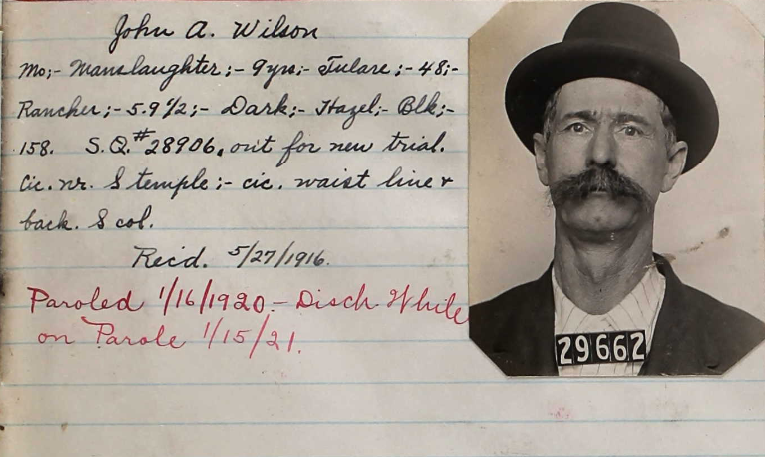
And his subsequent record.
Culled from: Forgotten California Murders
Ghastly!
Some people find the murder of children to be unbearably sad; for me, it’s the murder of elderly women. This next story is just awful and so very sad. I almost skipped it, but I don’t tend to shy away from showing reality in all its horror. And so here it is…
BEWARE OF YOUR NEIGHBORS
“New York’s Most Atrocious Crime”
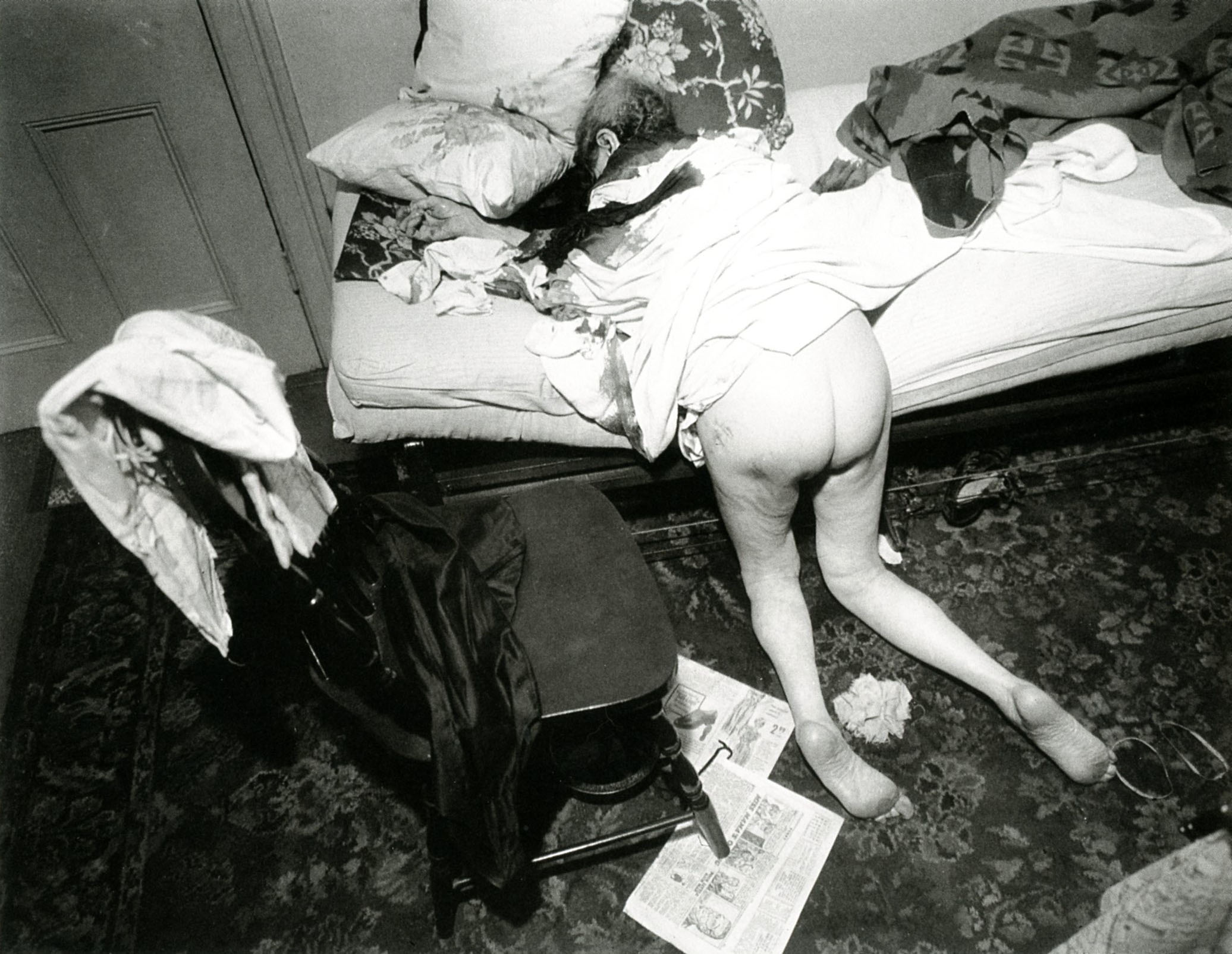
Labeled by Brooklyn police as “New York’s Most Atrocious Crime in Thirty-One Years,” 200 lawmen searched the city for the rapist and murderer of 80-year-old spinster Mary Gray of 17 Madison Street on October 8, 1948. Although she lived alone, she was dead only an hour before she was discovered. Her neighbor, 33-year-old Mrs. Helen O’Reilly, had called police a half-hour before the slaying, about 3:45 AM, because she had seen a black man “acting suspiciously.” The search for the killer was exhaustive; over 200 policemen and detectives were assigned to the detail. About 87 suspects were interviewed over a seven-day period. The culprit was caught on the fourth day, when a patrolman, Harry Dwyer, who incidentally had been demoted from detective eight years prior, followed through on a tip he heard while off-duty, that a man named “Boots” had done the murder. A trucker’s helper, Walter Davis, 21, was known as “Boots” in the neighborhood because of the fancy shoes he wore. Police arrested Davis. He admitted to the murder and led police to the murder weapon. He pleaded guilty to prevent any charges being brought against his mother or sister, who had both known about the murder. While in custody, and after being booked for the Gray murder, David was identified by Emma Barwell as the man who had attempted to rob her 18 days earlier on the Nostrand Avenue subway platform (formerly the IND, now the A and C lines). Barwell had been able to fight Davis off.
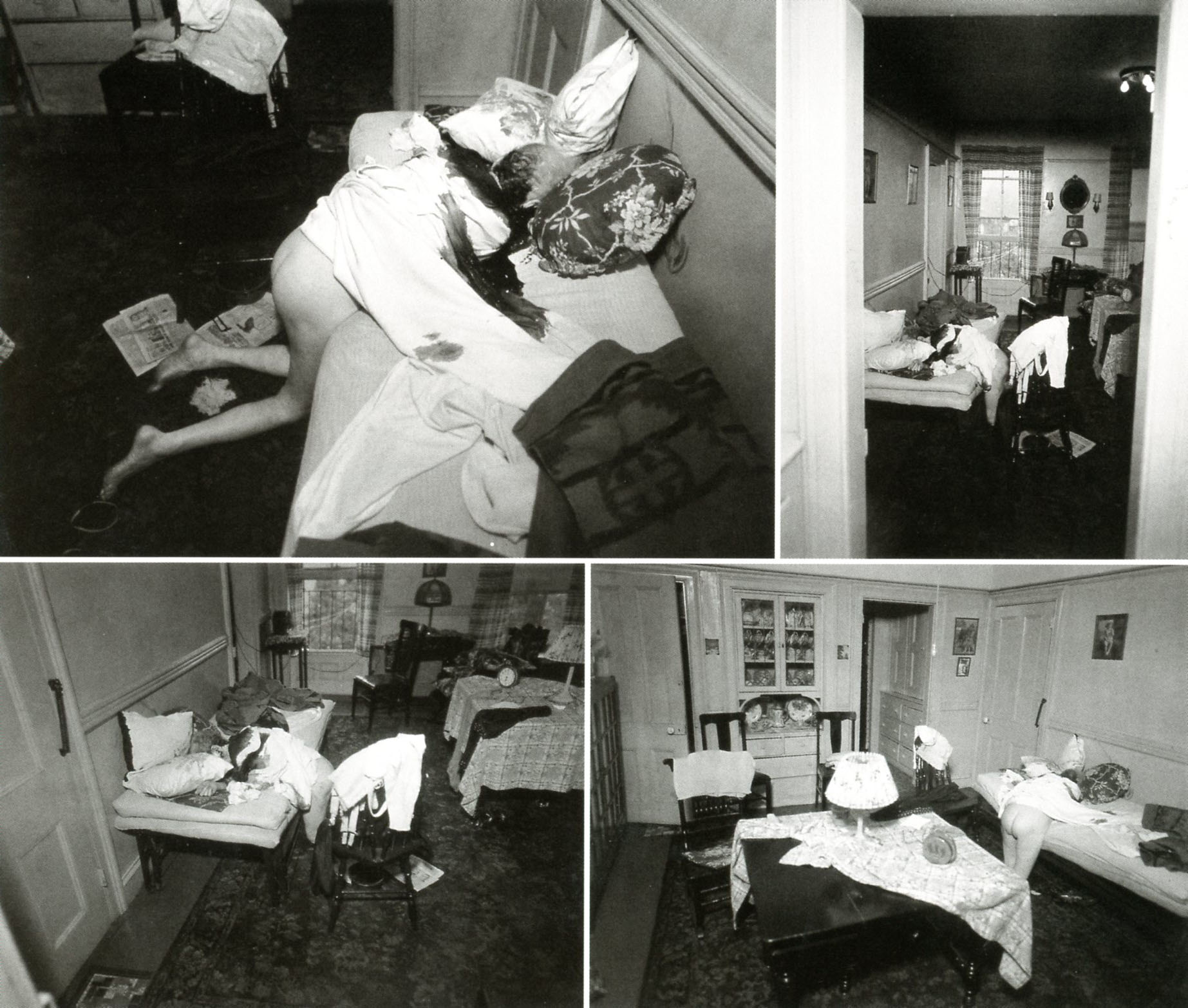
The witness, Mrs. O’Reilly, heard a noise, saw a partially open window and shouted at Davis, who was on her stoop. He said he was looking for a “Marie,” and added, “Sorry lady, I didn’t know white people lived here.” She ordered him away. Soon after, she saw him attempting to open a window of the house next door. In his confession, Davis admitted that he had lurked in front of the house before moving around to the back of the building where he jumped a fence and entered the victim’s apartment from a fire escape window. He was not discovered at the scene of the crime, despite the fact that he later described waiting to leave the victim’s apartment because there were cops searching the backyard on account of O’Reilly’s call. Davis claimed he had no direct motive and had not raped Ms. Gray before stabbing her with a switchblade, but it is recorded in a police affidavit and on the autopsy report that the victim had in fact been raped prior to her death. The photographs taken at the scene showed Gray as she was found, partially undressed and bent over the daybed in her tidy living room. The murderer lived at 8 Monroe Street, just two backyards from the murder victim’s home. He could see into the apartment from his room. He claimed to have muffled her screams for five minutes before stabbing her nine times, and he claimed to have been thinking to himself as he climbed in her window and she began to scream, “I must get this over with.” Officer Dwyer was reinstated as a third-grade detective as a result of his work on this case. Davis was put to death in the electric chair at Sing Sing prison on September 8, 1949, 11 months from the date of the murder.
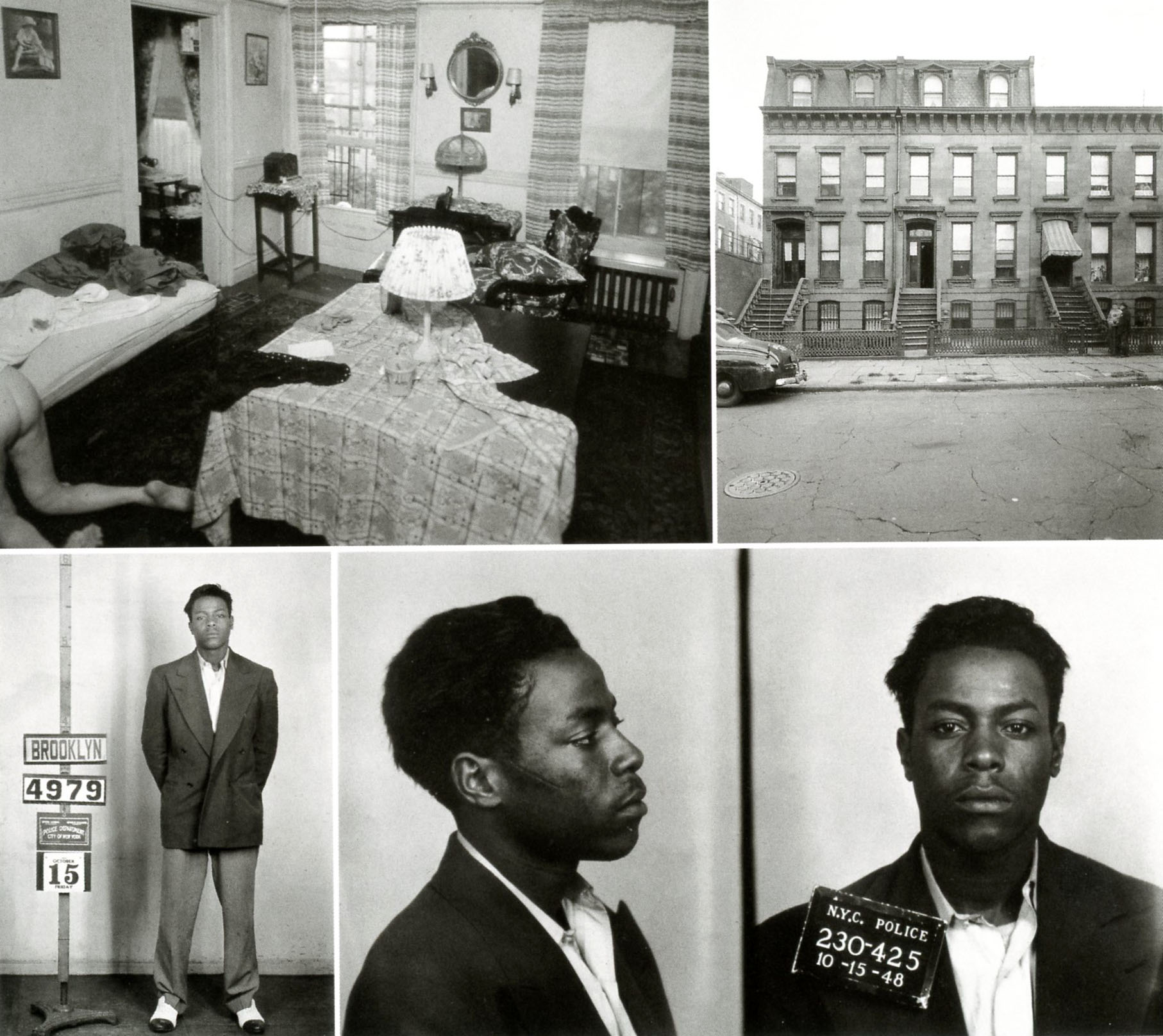
Culled from: Deadly Intent: Crime and Punishment: Photographs from the Burns Archive