Today’s Persevering Yet Truly Morbid Fact!
William Masterton (August 13, 1938 – January 15, 1968) was a Canadian American professional ice hockey centre who played in the National Hockey League (NHL) for the Minnesota North Stars in 1967–68. He is the only player in NHL history to die as a direct result of injuries suffered during a game, the result of massive head injuries suffered following a hit during a January 13, 1968 contest against the Oakland Seals.
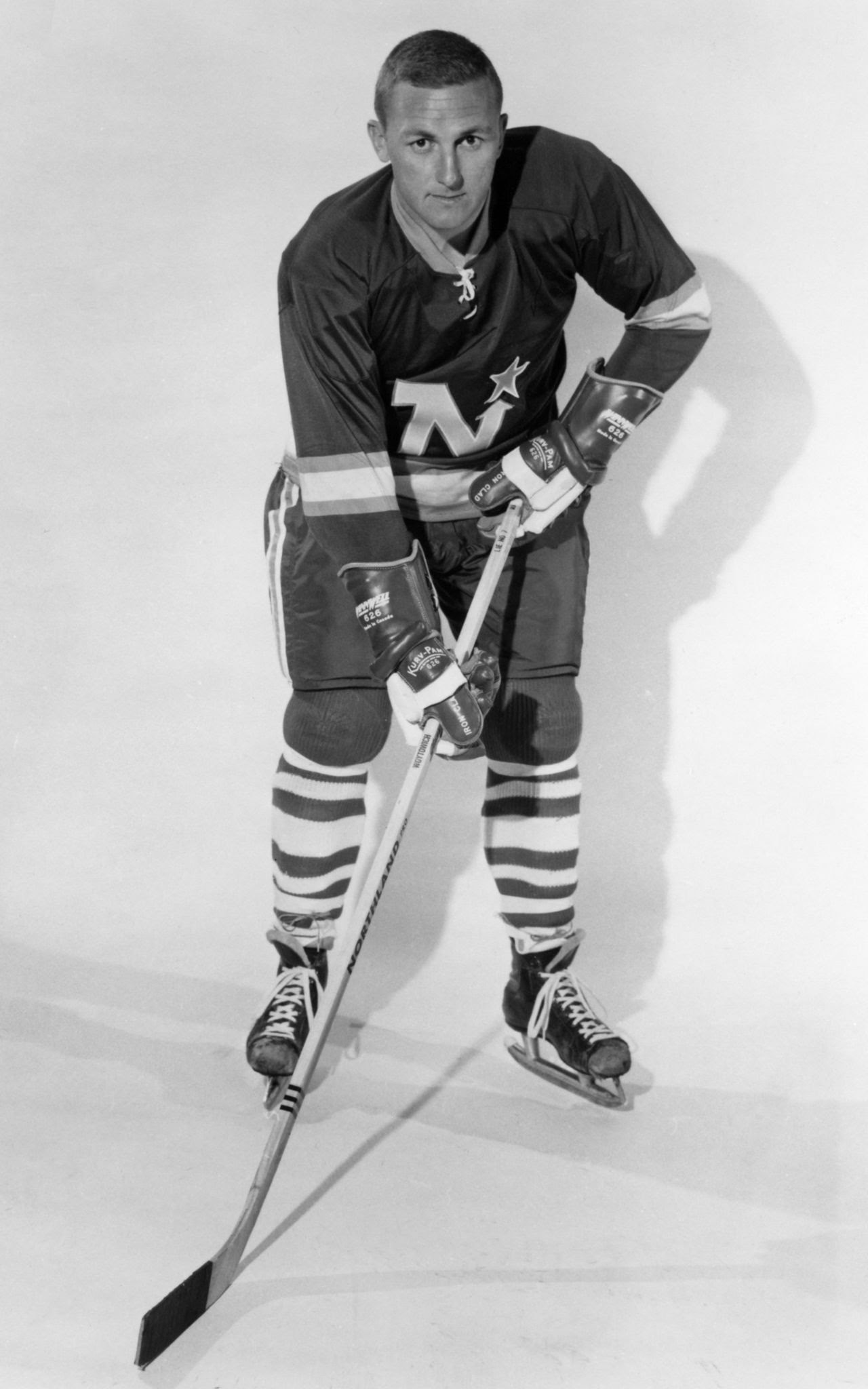 Bill Masterton, 1967
Masterton suffered a severe internal brain injury during the first period of Minnesota’s January 13, 1968, game against the Oakland Seals at the Met Center. He carried the puck up the ice at full speed, passing it off as two Seals defenders, Larry Cahan and Ron Harris, converged on him. Masterton was knocked backward in the resulting collision and landed on his head. Like most players of his era, he was not wearing a helmet. Referee Wally Harris compared the hit to an explosion, adding “he was checked hard, but I’m sure it wasn’t a dirty play.” The force of the impact caused Masterton to bleed from his nose, ears, and mouth. The impact of the hit caused him to lose consciousness before he hit the ice; according to some accounts, he briefly came to and muttered, “Never again, never again” before passing back out. He received treatment on the ice and in the dressing room before being rushed to Fairview-Southdale Hospital.

Masterton being stretchered off the ice
Carol, who was watching the game from the stands, and Masterton’s parents, who were listening to the game from their home in Winnipeg, rushed to his bedside at the hospital. He was attended to by two neurosurgeons and three other doctors. They soon concluded that the injury was too severe for surgery to be a viable option. Some 30 hours after his fall, on January 15, Masterton died without ever regaining consciousness. His parents, brother, wife and two children were at his side. Masterton’s Minnesota teammates, who were playing a game in Boston on the 14th, were informed that he had been removed from life support in the dressing room in what was ultimately a 9–2 loss to the Bruins. He is the only player in NHL history to die as a direct result of an injury suffered on the ice.
Ron Harris was haunted for many years by his role in Masterton’s death: “It bothers you the rest of your life. It wasn’t dirty and it wasn’t meant to happen that way. Still, it’s very hard because I made the play. It’s always in the back of my mind.” However, Masterton’s family held no animosity towards the players involved or the game. Carol referred to the incident as a fluke, saying that it could have happened to anyone.
Few NHL players wore helmets in 1968. According to several of Masterton’s teammates, wearing a helmet was frowned upon in the NHL of that era; at least one North Star who wore a helmet during a game was traded after the season. However, Masterton’s death sparked an immediate debate on whether their use should be compulsory. Legislators in New York considered a law to make their use mandatory, and the NHL voted on and rejected a rule requiring players wear helmets three times by 1971.
Some players began to wear helmets following Masterton’s death, but adoption was slow. Three years later, only six Minnesota players wore them, the most of any of the NHL’s teams. The “macho” attitude of the game, including fear of being called a coward, was an often cited reason for reluctance. It was 11 years before the NHL finally mandated the use of helmets by all players entering the league beginning in the 1979–80 season.
A later analysis by the Toronto Star in 2011 suggested that the “macho” attitude of the NHL in that era, as well as Masterton’s aggressive playing style, played a significant role in his death. Coach Wren Blair believed that Masterton was playing through a pre-existing brain hemorrhage. He and the Stars’ trainer had noticed Masterton’s face was “blood red, almost purple,” and were concerned enough that they wanted Masterton checked out by a doctor. However, Masterton brushed it off. Longtime NHL coach John Muckler, who was then the coach of the Stars’ second-tier farm team, the Memphis South Stars, believed that Masterton may have suffered a brain injury as early as training camp. During the season, several players and coaches recalled seeing Masterton black out during rushes in practice. Goaltender Cesare Maniago recalled that the night before the fatal hit, Masterton had been complaining of severe migraines that he had had for over a week. They felt it caused what was otherwise viewed as a clean, albeit hard, bodycheck to turn fatal. Toronto neurosurgeon and concussion expert Charles Tator reviewed Masterton’s autopsy and opined that Masterton had suffered second-impact syndrome, which occurs when a person suffers a second concussion on top of an earlier, untreated concussion. When this happens, it can cause rapid and often fatal brain swelling.
Several awards were named in Masterton’s memory. The Bill Masterton Memorial Trophy was created in 1968 under the trusteeship of the Professional Hockey Writers’ Association and is presented annually to the “National Hockey League player who best exemplifies the qualities of perseverance, sportsmanship and dedication to hockey”.
Culled from: Wikipedia
Vintage Medical Photo Du Jour!
Here’s an except from Stanley Burns’ excellent collection of vintage medical photographs: A Morning’s Work.
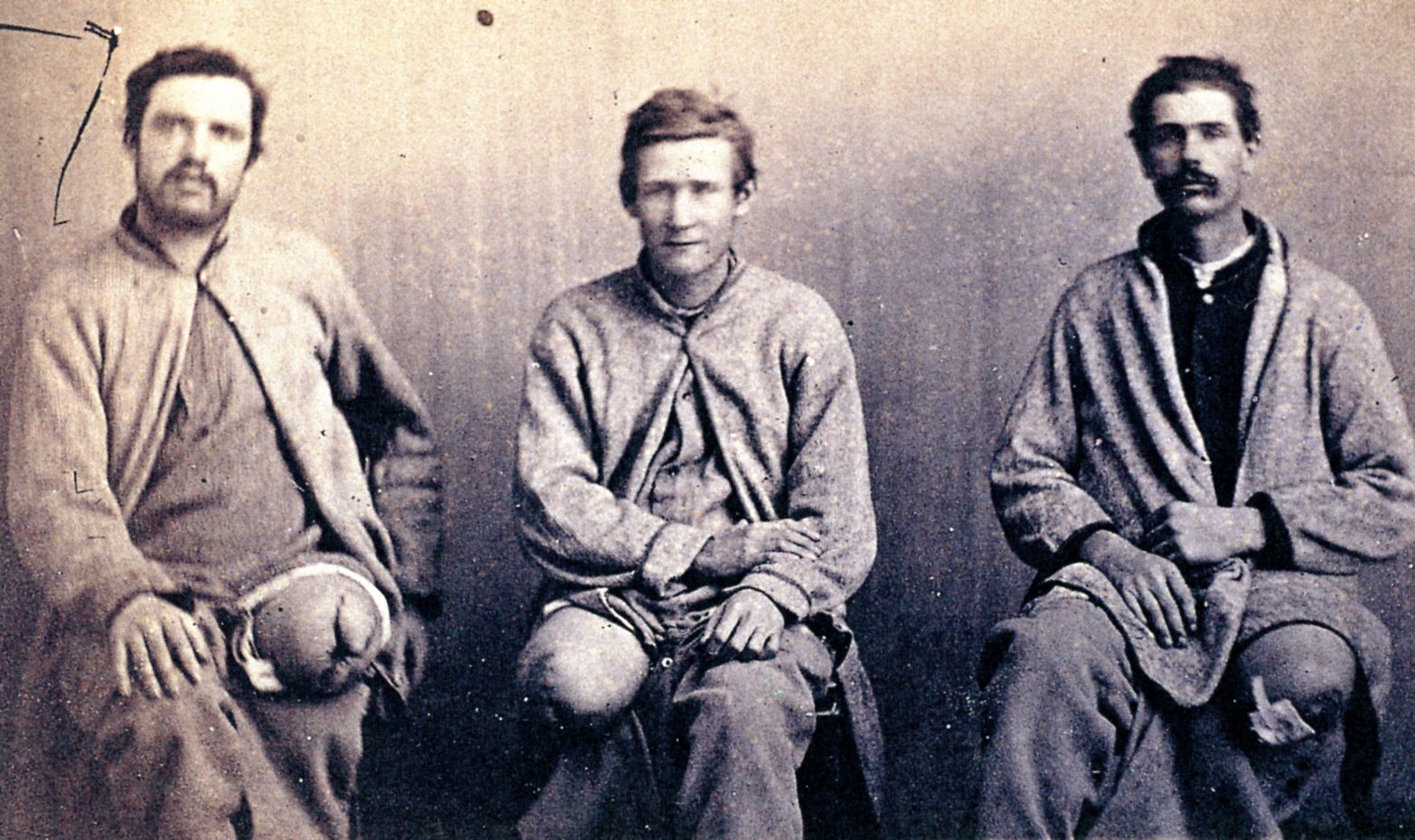
Three Soldiers with Midthigh Amputations, 1865
Reed Brockway Bontecou, M.D., Washington, D.C.
Albumen print (carte-de-visite), 4 x 2 1/2 in.
Showing off the magnitude of his surgical accomplishments during the Civil War, Dr. Bontecou (1824-1907) here photographed three soldiers — Private W. Snyder (Company H, 7th New York, Heavy Artillery), Sergeant W. Baitle (Company H, 86th New York Volunteers, Infantry), and Sergeant A. Hickey (Company C, 7th New York, Heavy Artillery) — on whom he had performed midthigh amputations.
The higher up on the leg an amputation was attempted, the higher the possibility of mortality. Hip amputations were done only in cases of utter necessity, and few survived this procedure. Aside from the shock of losing a major portion of the body (25 percent by weight), those who underwent hip and upper-thigh operations were prone to secondary bleeding, which occurred when infection — which in those days, before antiseptic procedures had become standard, was present in every case — reached a major artery or vein. However, these patients of Dr. Bontecou look well healed and out of danger.
He was unconscious before he even landed? Forgive a dumb question, I’m not into hockey, it’s not popular where I live despite having two NHL teams fairly close by. But did he clonk heads with one or the other of the players who checked him? Or was he hit with a stick?