Today’s Well-Documented Yet Truly Morbid Fact!
Among the most horrible—and highly publicized—crimes of its era in St. Paul was the molestation and murder of a seven-year-old boy named Harlow O’Brien in 1949. Photographers for the Pioneer Press and Dispatch took scores of pictures in the days, weeks, and months after the boy’s death. These picture are not only a chilling documentation of murder but also serve as a visual catalog of the Speed Graphic style. Here are three of those pictures.
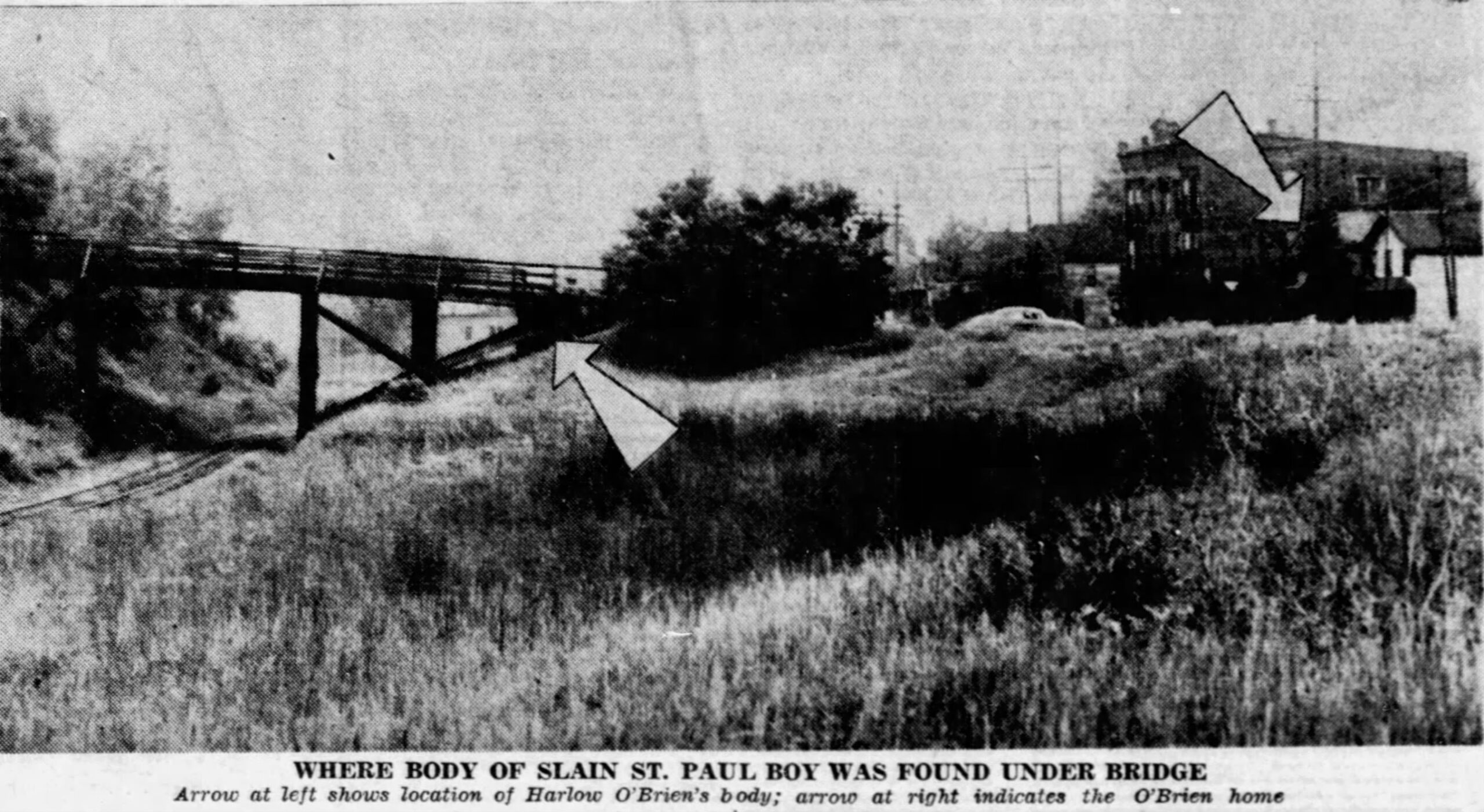
The first, taken a day after the murder, shows Harlow’s neighborhood along Mississippi Street just northeast of downtown St. Paul. The boy lived in the house at left (next to the brick apartment building) with his parents, Mr. and Mrs. Jack M. O’Brien, and seven siblings. The old houses and cars leave no doubt that this was not a well-to-do neighborhood. In fact, the area was sometimes called “the badlands” because of the reputation for crime and disarray. Note all the children present and the police officer, his back to the camera, who’s talking with people near his squad car.
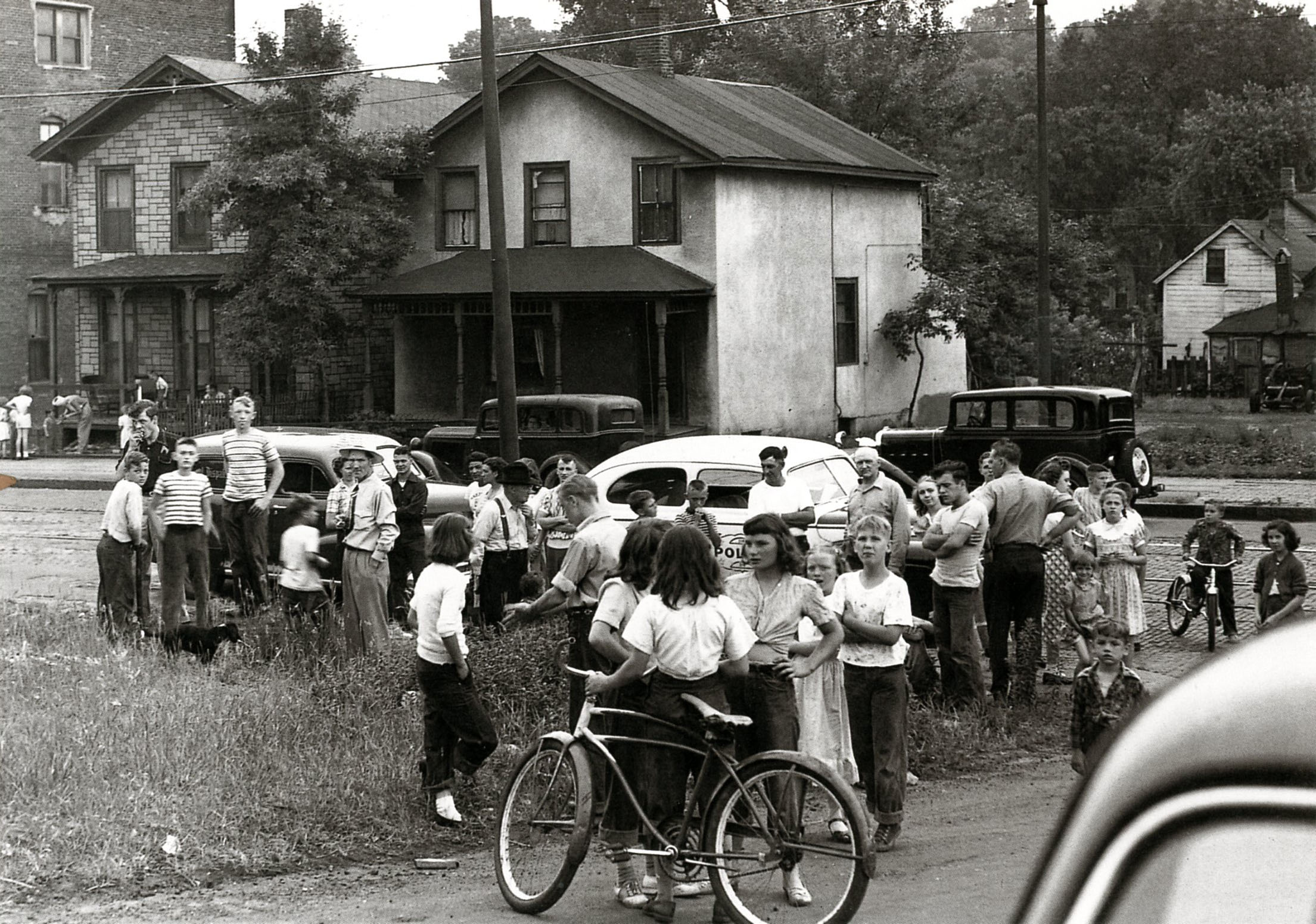
Harlow’s body was found beneath a railroad bridge about a block away, near what is now the Williams Hill Business Center. He was “the victim of a sex maniac who strangled him to death,” the Pioneer Press reported. The bridge was near a shantytown occupied by hoboes and derelicts, who became initial suspects in the case. Yet despite furious efforts by police and a steady drumbeat of publicity, the investigation soon foundered.
In the meantime, funeral services were held for Harlow. His family proved to be remarkably cooperative with the press, to the point of allowing an extraordinary photograph of the boy in his coffin, published by the Dispatch on June 23, 1949. The caption reads in part: “Playmates of Harlow O’Brien, 7, slain by a sex maniac, gathered at the O’Brien home this morning to see his body prior to funeral services. Two of his closest friends are shown with Harlow’s pet dog, Brownie.” One wonders if the photographer “encouraged” the boys in their choice of play area.
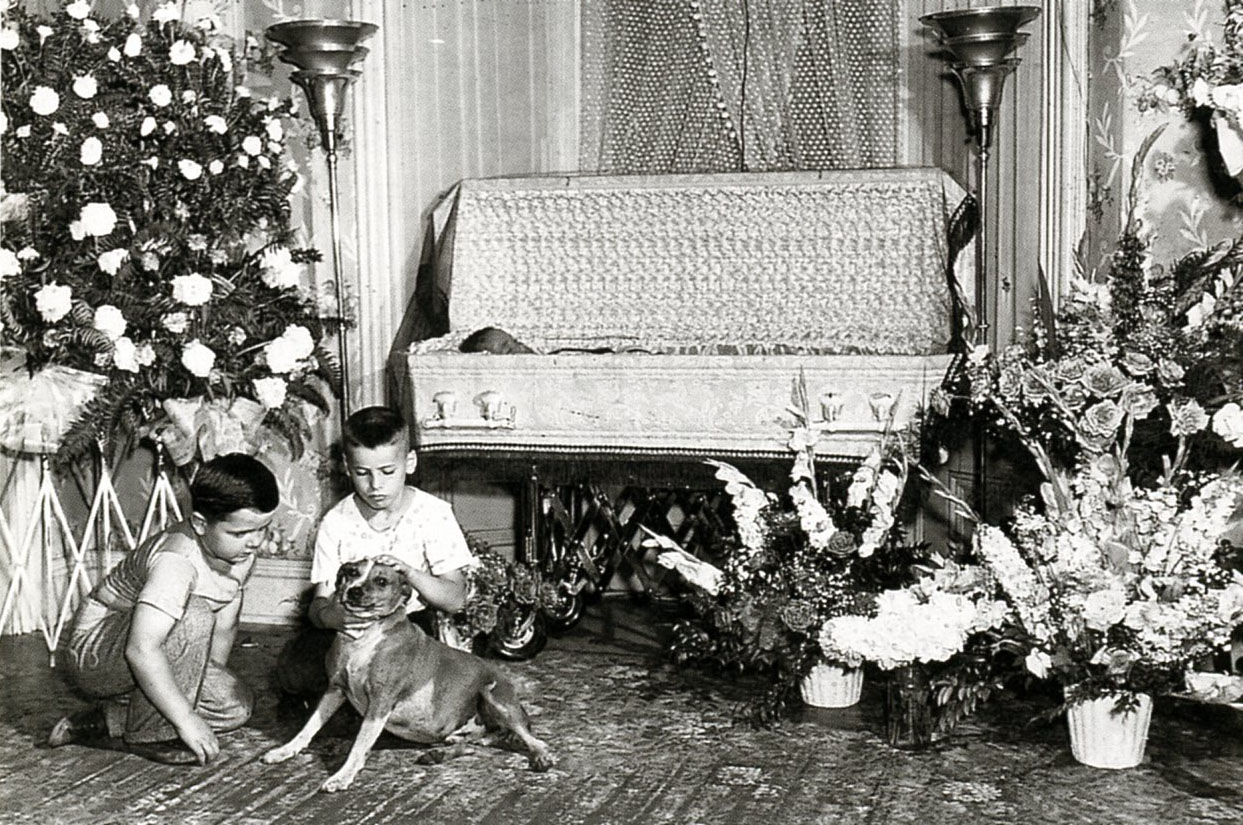
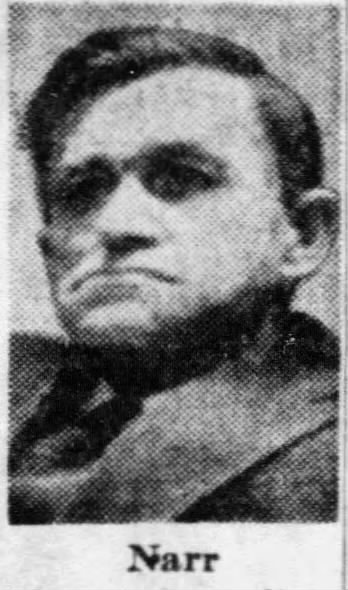
In March 1950, nine months after the murder, the police finally got their man. A convicted sex offender named Alexander Narr, who lived only a few blocks from the boy’s house, confessed to the crime after being arrested for exposing himself. Narr’s confession drew as much publicity as the murder itself. There was even a photograph (now apparently lost) that showed Narr pointing to the spot where he’d murdered Harlow.
The case came full circle the next day when the Pioneer Press published this picture of Mr. and Mrs. O’Brien reading all about their son’s killer. Mrs. O’Brien, however, looks more sad than relieved, for even the most austere justice is cold comfort in the case of a murdered child.
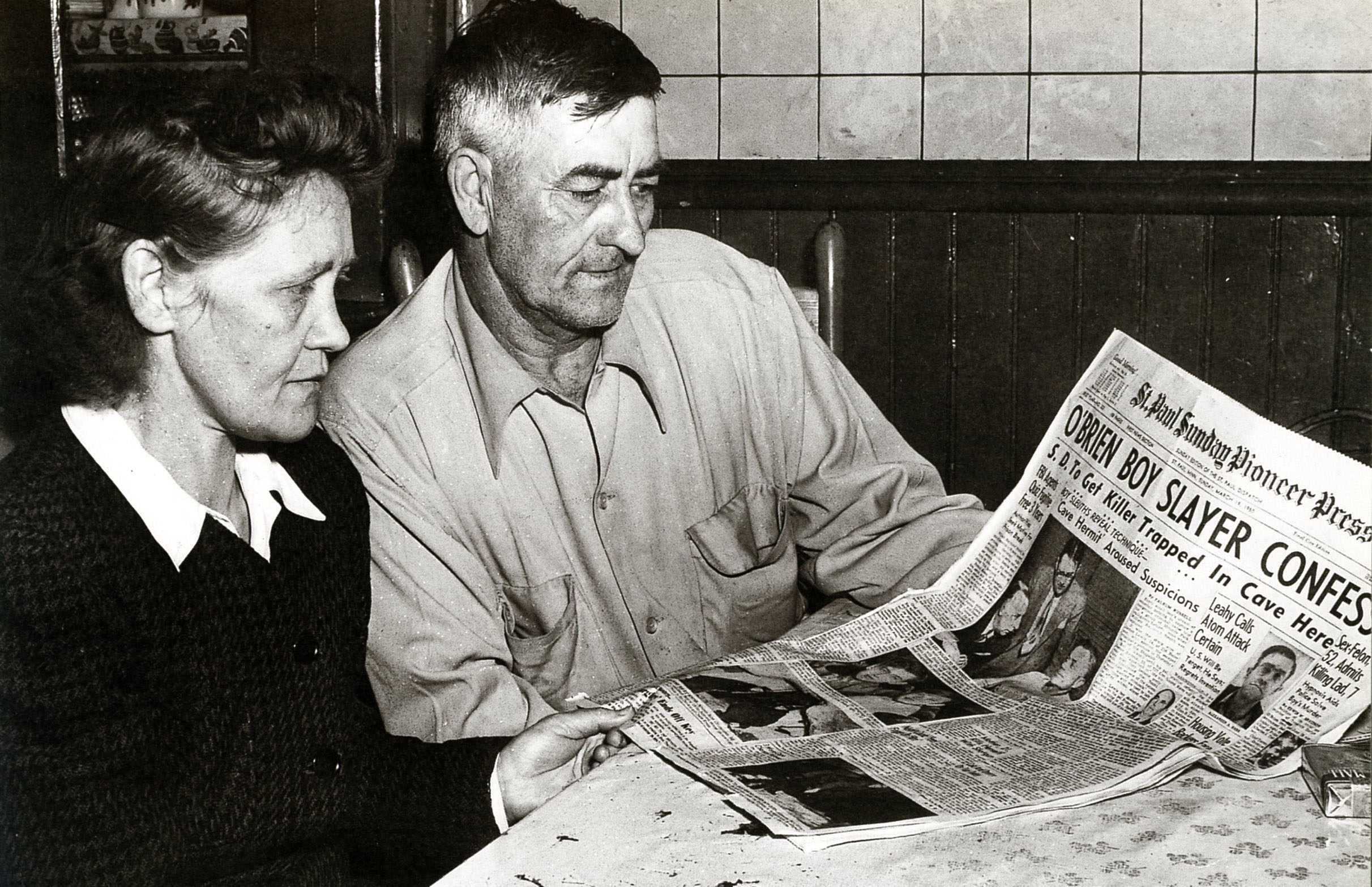
Culled from: Strange Days, Dangerous Nights
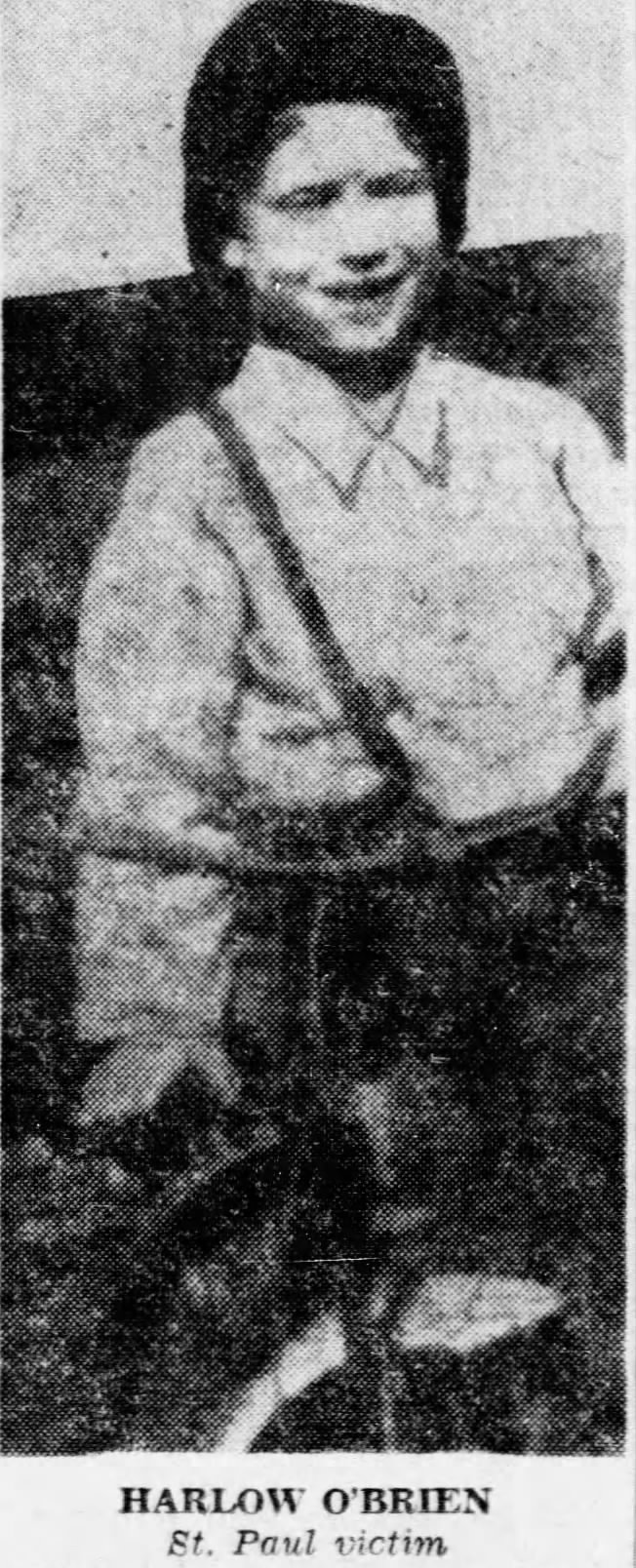
Here’s a photo of poor Harlow:
And here’s his murderer, Alexander Narr:
Here’s where his body was found:
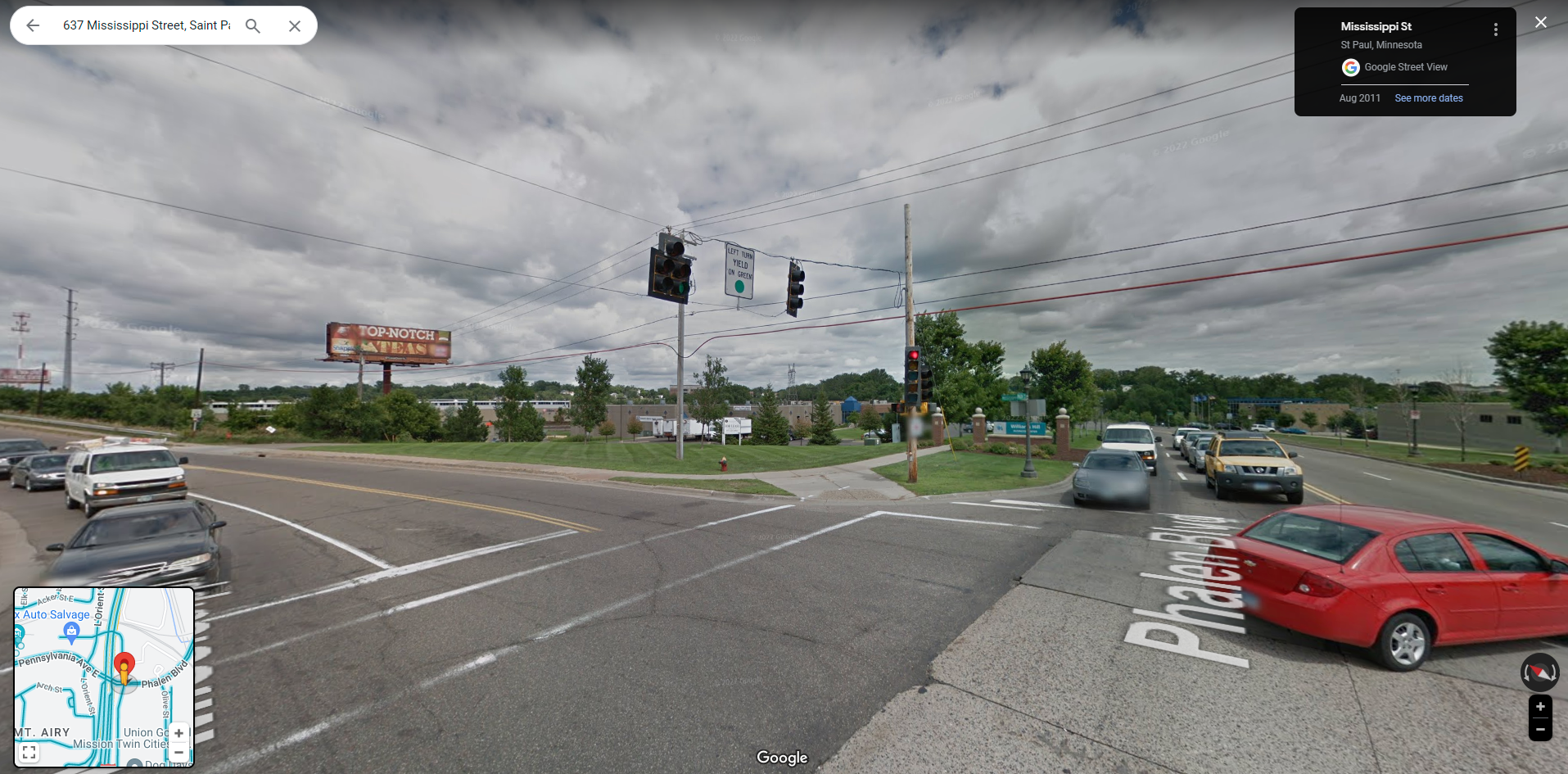
I looked up the address to see if the house was still there (which I knew was unlikely), and not only is the house gone, that entire NEIGHBORHOOD is gone, wiped out in the 50’s as Interstate 35 was built. Here’s where the house used to be:
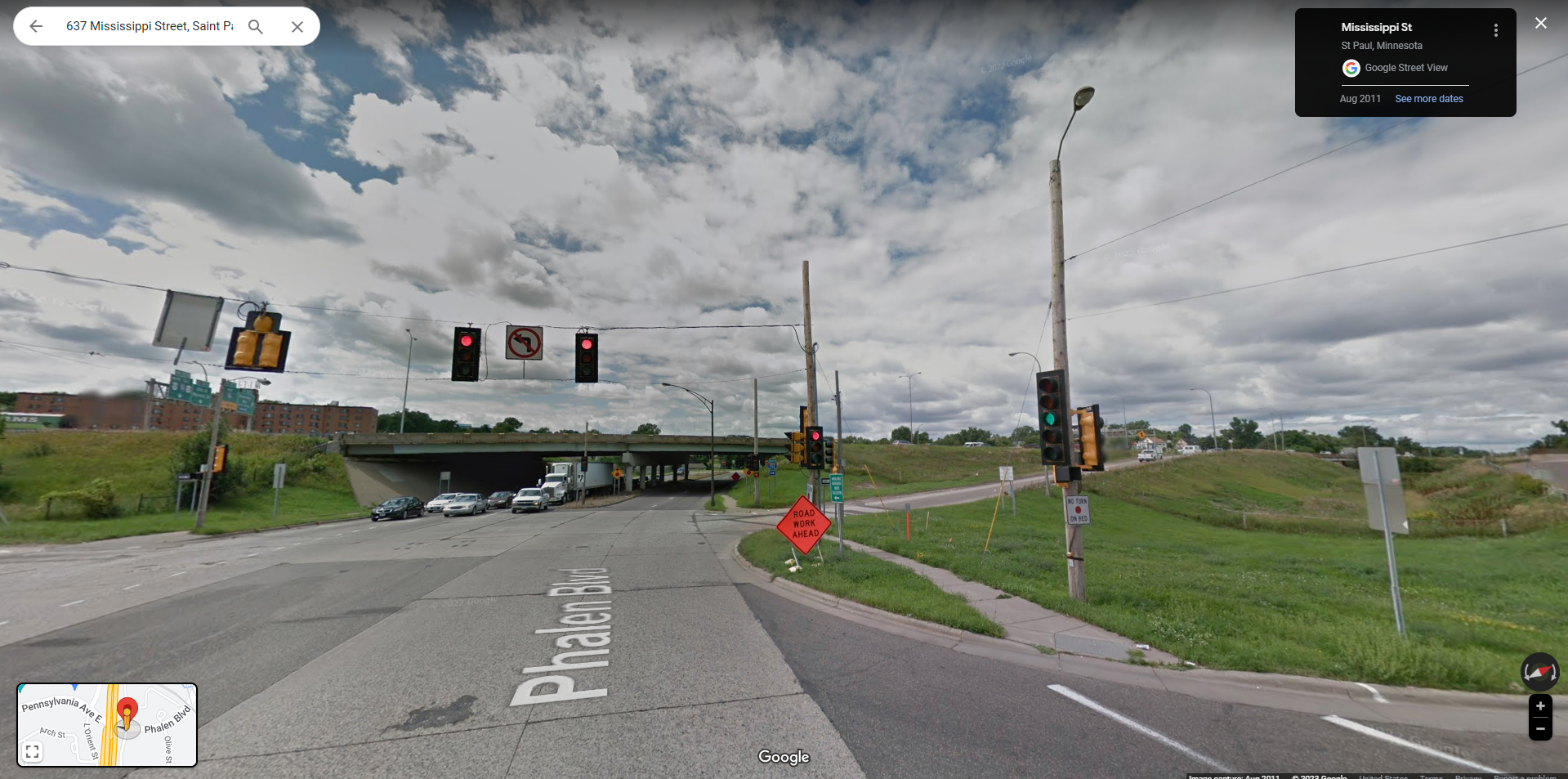
And this is where the bridge used to be (now I-35E), looking from where the house was:
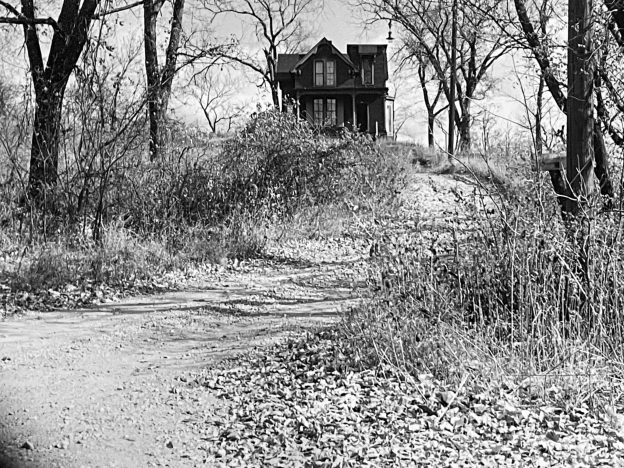
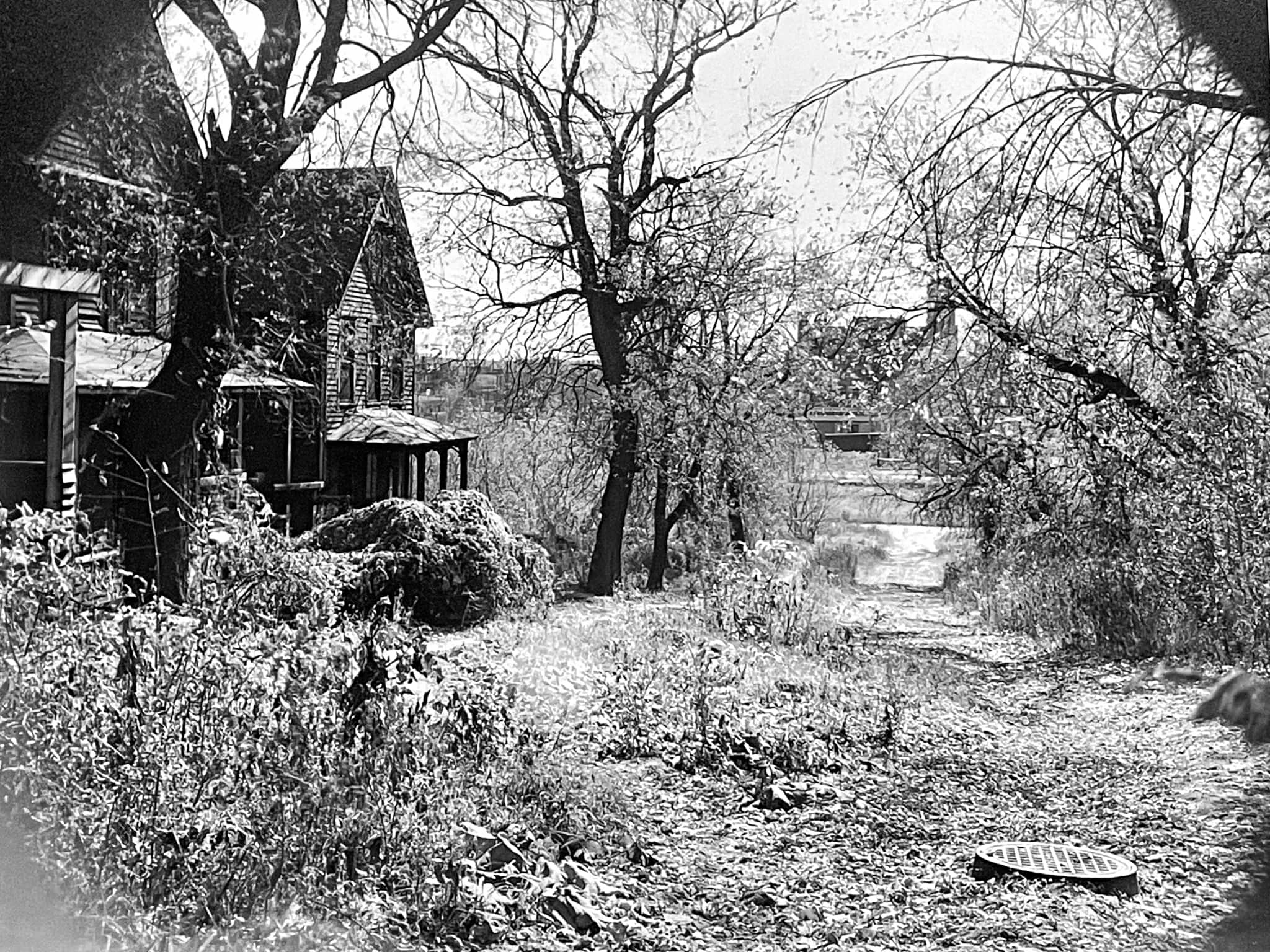
I found an article about his neighborhood, which was called Williams Hill, and I thought these photos of the abandoned houses in the area in the 1950s are just beautiful. I wish they were still there! Sigh…
Arcane Excerpts!
I have in my collection a book entitled “Dr. Chase’s Last Complete Work” (1888), which must have been a essential reference for Victorian households. I enjoy the way Dr. Chase describes diseases and thought I’d share them on occasion. But first, these wonderful illustrations!
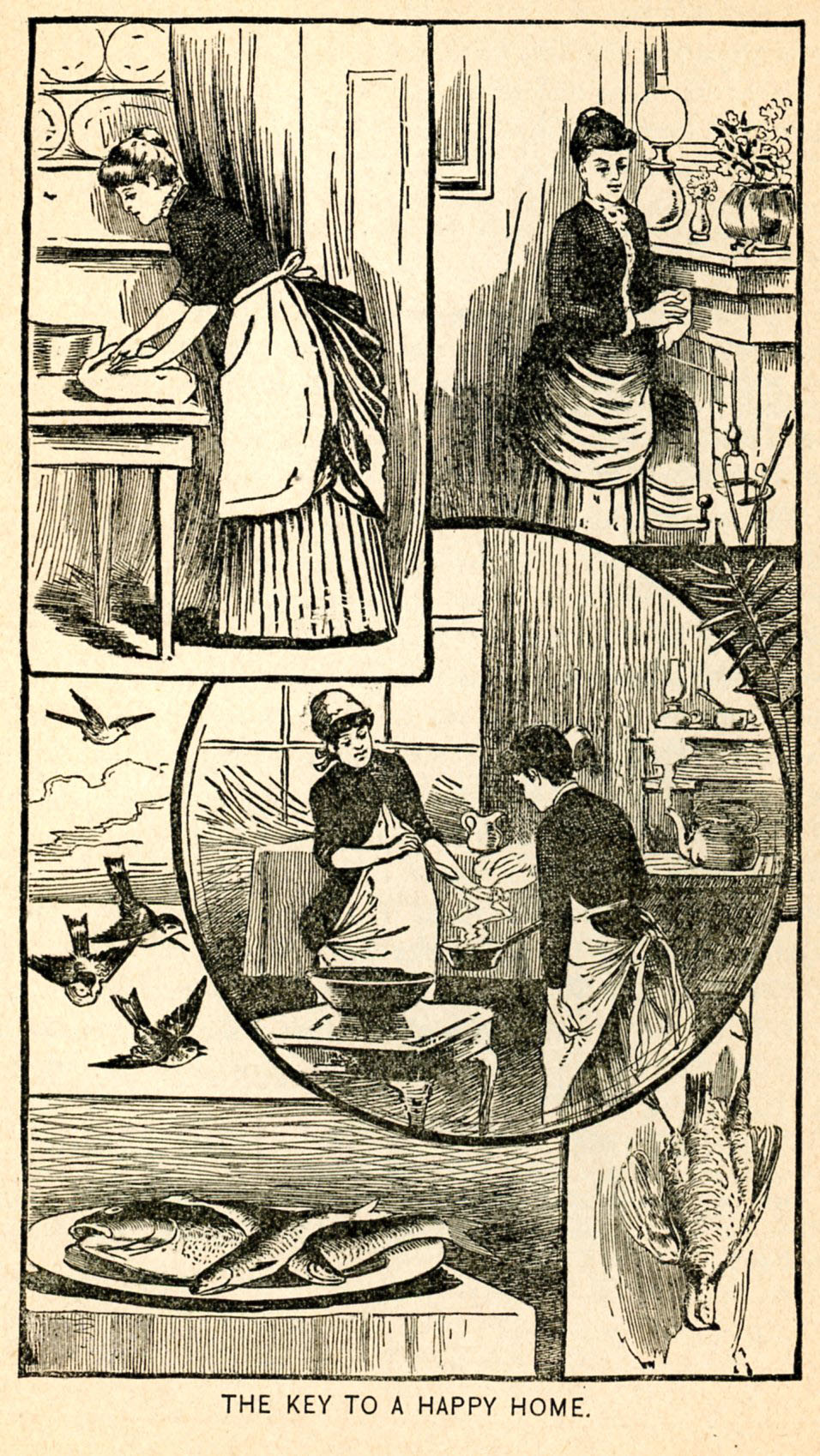
The Key to a Happy Home: Dead Fish, Swallows, Dead Birds, and a Working Woman.
And, also:
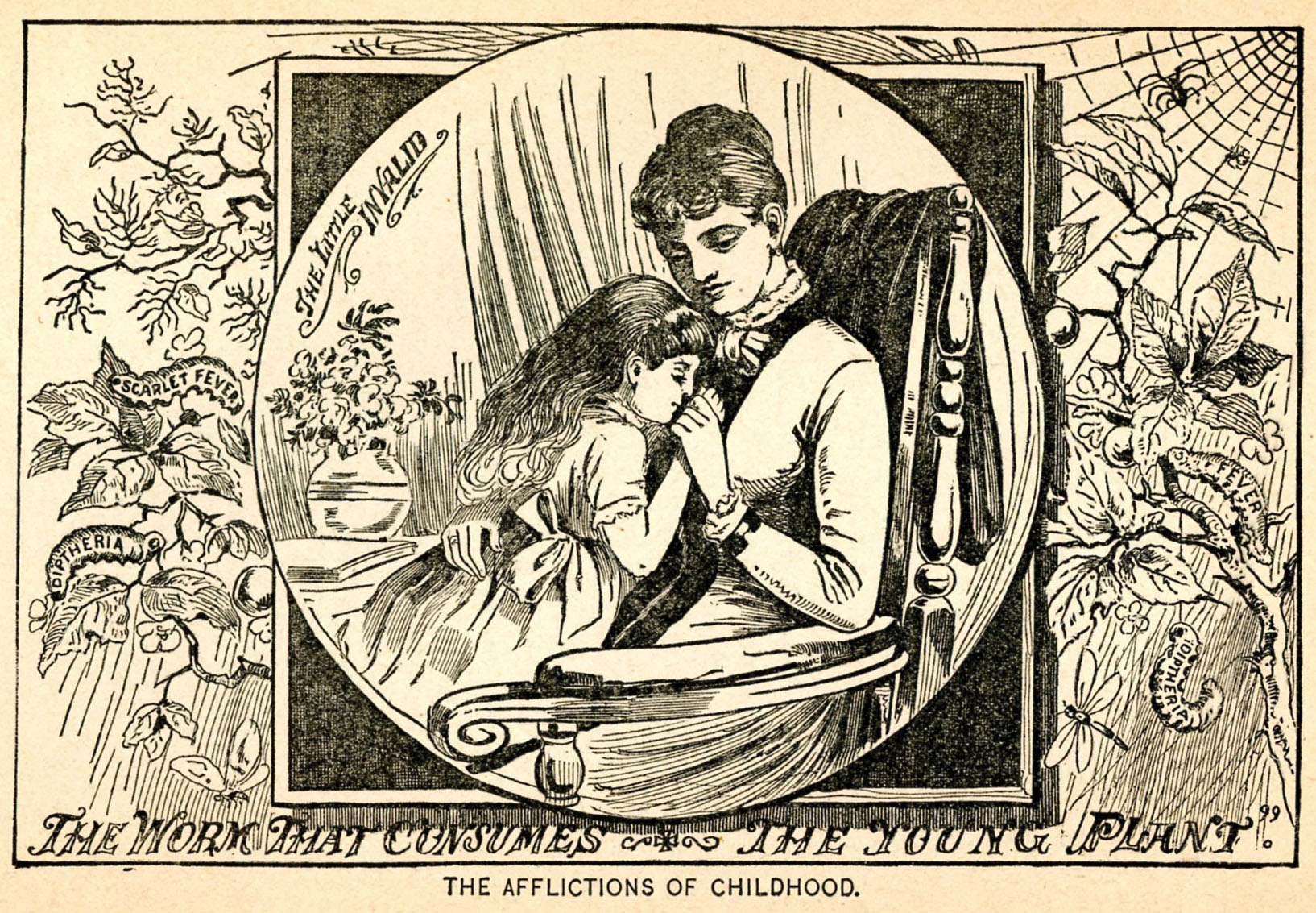
The Worm That Consumes the Young Plant
“Scarlet Fever” “Diptheria” “Fever” “The Young Invalid”
Anyway, here’s the malady du jour. Beware nuptial indulgence when pregnant!:
ABORTION OR MISCARRIAGE.—When a woman in the family way throws off the contents of her womb, or loses her child, during the first six months, the accident is a miscarriage, or abortion; when the same thing happens during the last three months of her term, it is a premature labor.
Andersonville Prisoner Diary Entry Du Jour!
This is the continuation of the 1864 diary of Andersonville prisoner Private George A. Hitchcock (see the archived version for all entries up until now).
Here’s today’s entry:
July 1st. At noon an opening was made through the stockade into the new addition: and during afternoon fifty detachments, or over thirteen thousand men, moved into it, ours among the number. We have now twenty-five acres enclosed, but the camp appears just as crowded as ever.
Jim Miller and I found a 34th Massachusetts man (Levi Shepard) who had a rubber blanket, so we three go in together: my woolen now serves for a shelter from the sun and rain, and Shep’s rubber for the ground, so we are in more tolerable condition. There was some order planned in the arrangement of detachments into streets, but our allotted ground was much too small, so we are in as great a jumble as ever.
Culled from: Andersonville: Giving Up the Ghost