Today’s Robbing Yet Truly Morbid Fact!
William M. Harrall drudged through life in northern California communities, living hand-to-mouth, working as a logger, miner, cowboy, railroad section hand, and as a laborer in the region’s many sawmills. The young father worked at any job that would enable him to feed his family. He had a good reputation as a hard worker, didn’t drink or gamble, and kept to himself, but Harrall could never make enough money to start his own ranch or business.
Harrall was born in 1863 on a farm in Wayne County, New York. When he was seventeen years old, he left his family and headed west to make his fortune. While he was gone, his entire family except for his father, Thomas, died in an epidemic. Thomas traveled west, looking for his only living child. I took him five years to find William, who was working at a ranch near Chico. A short time later, William moved to the village of Delta in northern Shasta County.
Life was looking up for William Harrall. He met a girl, got married, and started a family. By all accounts, Harrall was an excellent father and a loving husband, but he continually had a hard time providing for his family. He often left town for a month or more at a time, telling his family that he had obtained mining work at Cinnebar. In reality, Harrall was robbing stagecoaches all over northern California.
Harrall would efficiently disguise himself, and he wore sacks over his boots so his footprints wouldn’t leave tracks. He worked alone, was polite, and only wanted the Wells Fargo money box. The witnesses could tell police virtually nothing about the robber except that he had “white, soft hands.”
Wells Fargo detectives alerted their employees to check local banks and businesses for a twenty-dollar United States gold certificate, which they knew had been taken in one of the holdups. United States gold certificates were rare in northern California, and most banks and businesses would remember if one had been passed to them.
Eventually, a Wells Fargo shotgun messenger found the certificate at the Bank of Northern California in Redding. The messenger bought the certificate and sent it to John Thacker at the Wells Fargo headquarters in San Francisco. It was eventually traced to a grocery store, where the store manager remembered a man who bought supplies and had them shipped to another man who gave his name as F. W. Lloyd, from Delta.
Wells Fargo detective Charles Jennings went to Delta to investigate, and he soon uncovered F. W. Lloyd’s true identity. When he was certain that Harrall lived there and matched the descriptions that he had of him, Jennings sent for John Thacker to help with the capture.
On October 14, 1897, Thacker arrived in Delta. He teamed up with Jennings, Deputy Sheriff George Stewart, and Siskiyou County Undersheriff William Radford, and the four men approached William Harrall’s home for what they thought would be an easy arrest.
Harrall lived in a cabin located just a few feet from his in-laws’ bungalow. Jennings covered the back of the cottage, while Radford served the arrest warrant, with Stewart accompanying him as a backup. Curiously, just previous to the arrest attempt, Thacker had returned to the railroad station to wait for the men and their prisoner.
Radford knocked on the door and asked Mrs. Harrall if her husband was in. She told the men he was present but closed the door. Seconds later, the door flew open and Harrall stood in the doorway. Stewart, who was standing behind Radford, said, “This is Mr. Radford.” Radford told Harrall that he wanted to see him and held out his hand.
Harrall grabbed Radford’s hand, knocked him off balance, and pulled him inside the house. With his left hand, Harrall pulled out his pistol and shot Radford point-blank in the chest. Radford tried to draw his own weapon, but he was as good as dead. In the last efforts of life, Radford grabbed Harrall around the neck and dragged him down. Stewart stepped through the door, pulled his pistol, and hit Harrall several times over the head with it.
While this was happening, Harrall’s two-year-old daughter screamed while clinging onto her father’s pant leg. Mrs. Harrall screamed and held her husband’s arm. Stewart, seeing that he had a clear shot, fired five times at Harrall, killing him, but not before Harrall shot Stewart in the leg.
Hearing the gunfire, Thacker ran back to the house, where he found the two dead men in a house full of gunsmoke. Radford’s clothes were on fire from the point-blank gunshot. Thacker put out the fire and took the dead deputy home on the next train to Yreka.
Harrall was buried in the potter’s field in Redding.
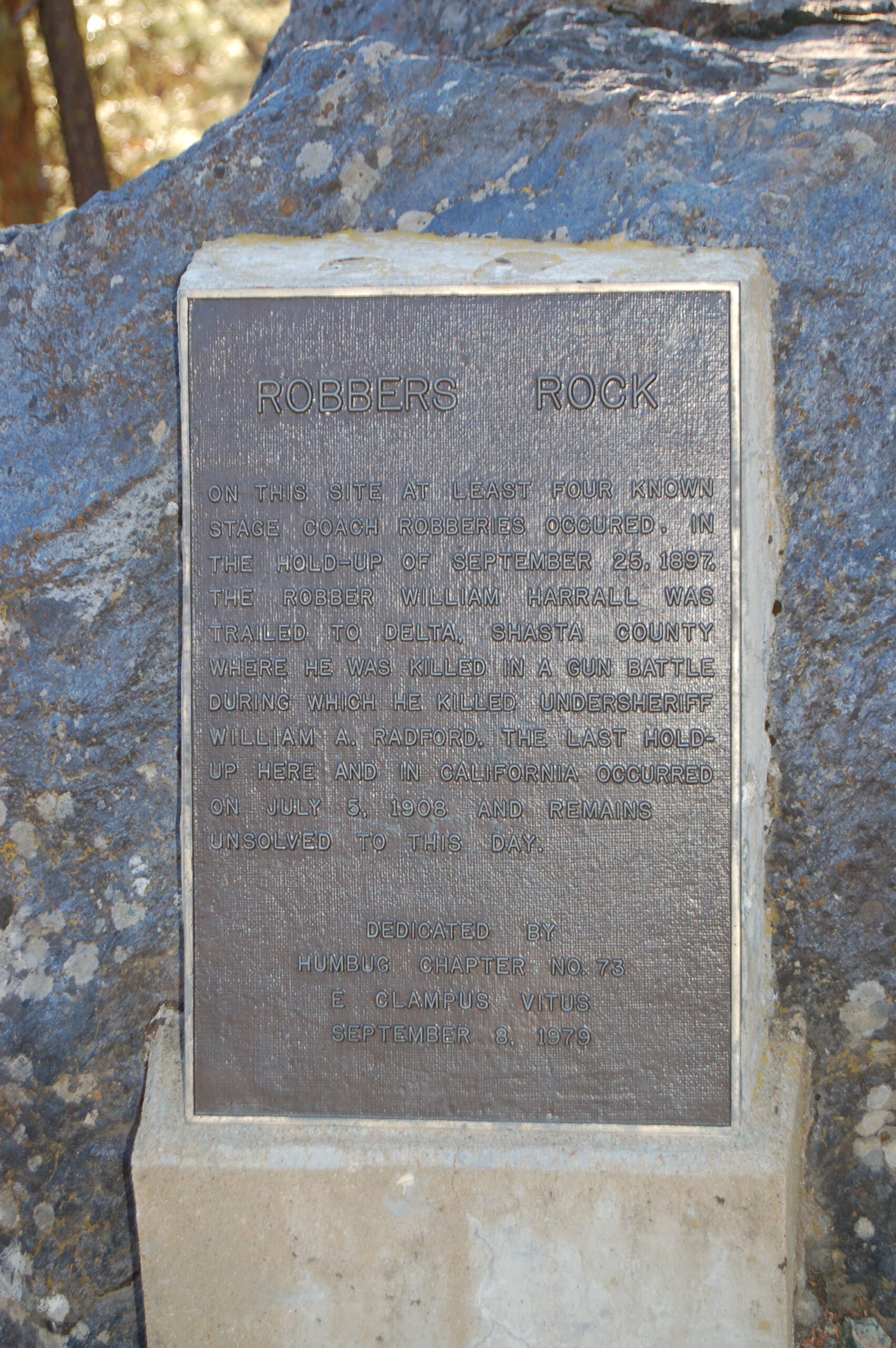
Robbers Rock Marker near Yreka
Culled from: California Justice
Malady Photo Du Jour!
The Dr. Ikkaku Ochi Collection is a fascinating cluster of medical photographs from the late 19th and early 20th century that had been collected by Dr. Ikkaku Ochi in Japan and were found in a box many years later. There was no detailed information available for most of the photos, but the images are compelling because they show composed portraits of people suffering through intense pain caused by conditions that in most cases would be resolved through treatment today. There’s a sense of overwhelming sadness that comes through in these pictures, but also dignity and strength.
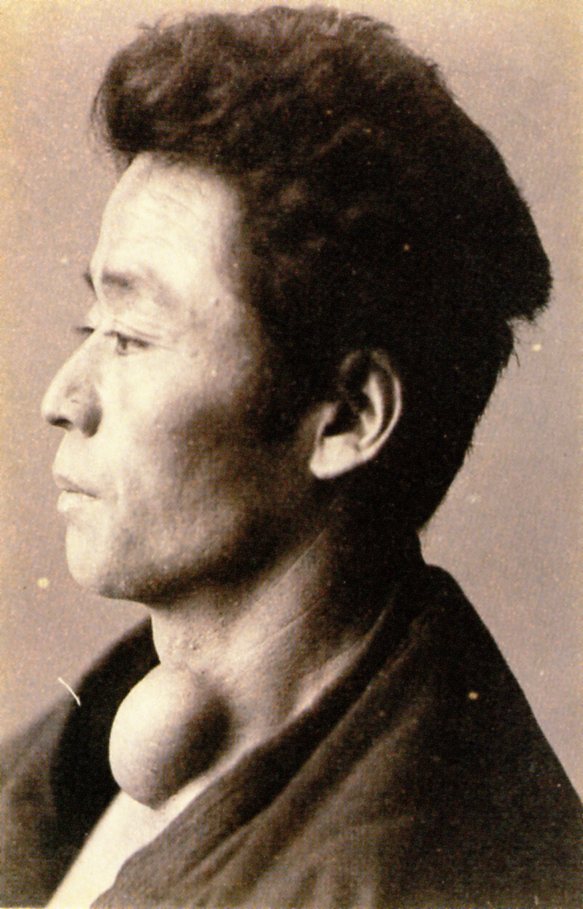
Looks like goiter to me! – Dr. DeSpair
Andersonville Prisoner Diary Entry Du Jour!
This is the continuation of the 1864 diary of Andersonville prisoner Private George A. Hitchcock (see the archived version for all entries up until now).
Here’s today’s entry:
July 27th. Four hundred men from Grant and Sherman came in to-day. One was shot soon after coming in, while reaching under the dead-line for clear water, –probably not knowing the rules; his brains were blown into the water. I traded my ration of pork for cayenne pepper and used it for my throat, which is filling up with canker and very painful.
Culled from: Andersonville: Giving Up the Ghost