Today’s Soft, Silty Yet Truly Morbid Fact!
The 1556 Shaanxi earthquake (Postal romanization: Shensi), known in Chinese colloquially by its regnal year as the Jiajing Great Earthquake or officially by its epicenter as the Hua County Earthquake, occurred in the early morning of 23 January 1556 in Huaxian, Shaanxi during the Ming dynasty.
Most of the residents there lived in yaodongs—artificial caves in loess cliffs—which collapsed and buried alive those sleeping inside. Modern estimates put the direct deaths from the earthquake at over 100,000, while over 700,000 migrated away or died from famine and plagues, which summed up to a total loss of 830,000 people in Imperial records. It was the deadliest recorded earthquake in history, and in turn one of the deadliest natural disasters in Chinese history.

A modern yaodong in China
The epicenter was in the Wei River Valley in Shaanxi Province, near Huaxian (now Huazhou District of Weinan), Weinan and Huayin. Huaxian was completely destroyed, killing more than half the residents of the city, with an estimated death toll in the hundreds of thousands. The situation in Weinan and Huayin was similar. In certain areas, 20-metre-deep (66 ft) crevices opened in the earth. Destruction and death were widespread, affecting places as far as 500 kilometres (310 mi) from the epicenter. The earthquake also triggered landslides, which contributed to the massive death toll. The rupture occurred during the reign of the Jiajing Emperor of the Ming dynasty. Therefore, in the Chinese historical record, this earthquake is often referred to as the Jiajing Great Earthquake.
Modern estimates, based on geological data, give the earthquake a magnitude of approximately 8 Mw on the moment magnitude scale and XI (catastrophic damage) on the Mercalli scale, though more recent discoveries have shown that it was more likely 7.9 Mw. While it was the deadliest earthquake and the third-deadliest natural disaster in history, there have been earthquakes with considerably higher magnitudes. Following the earthquake, aftershocks continued several times a month for half a year.
In the annals of China it was described in this manner:
In the winter of 1556, an earthquake catastrophe occurred in the Shaanxi and Shanxi Provinces. In our Hua County, various misfortunes took place. Mountains and rivers changed places and roads were destroyed. In some places, the ground suddenly rose up and formed new hills, or it sank abruptly and became new valleys. In other areas, a stream burst out in an instant, or the ground broke and new gullies appeared. Huts, official houses, temples and city walls collapsed all of a sudden.
The earthquake damaged many of the Forest of Stone steles badly. Of the 114 Kaicheng Stone Classics, 40 were broken in the earthquake.
The scholar Qin Keda lived through the earthquake and recorded details. One conclusion he drew was that “at the very beginning of an earthquake, people indoors should not go out immediately. Just crouch down and wait. Even if the nest has collapsed, some eggs may remain intact.” The shaking reduced the height of the Small Wild Goose Pagoda in Xi’an by three levels.
Culled from: Wikipedia
Legend Du Jour!
Flames that yielded endless cold
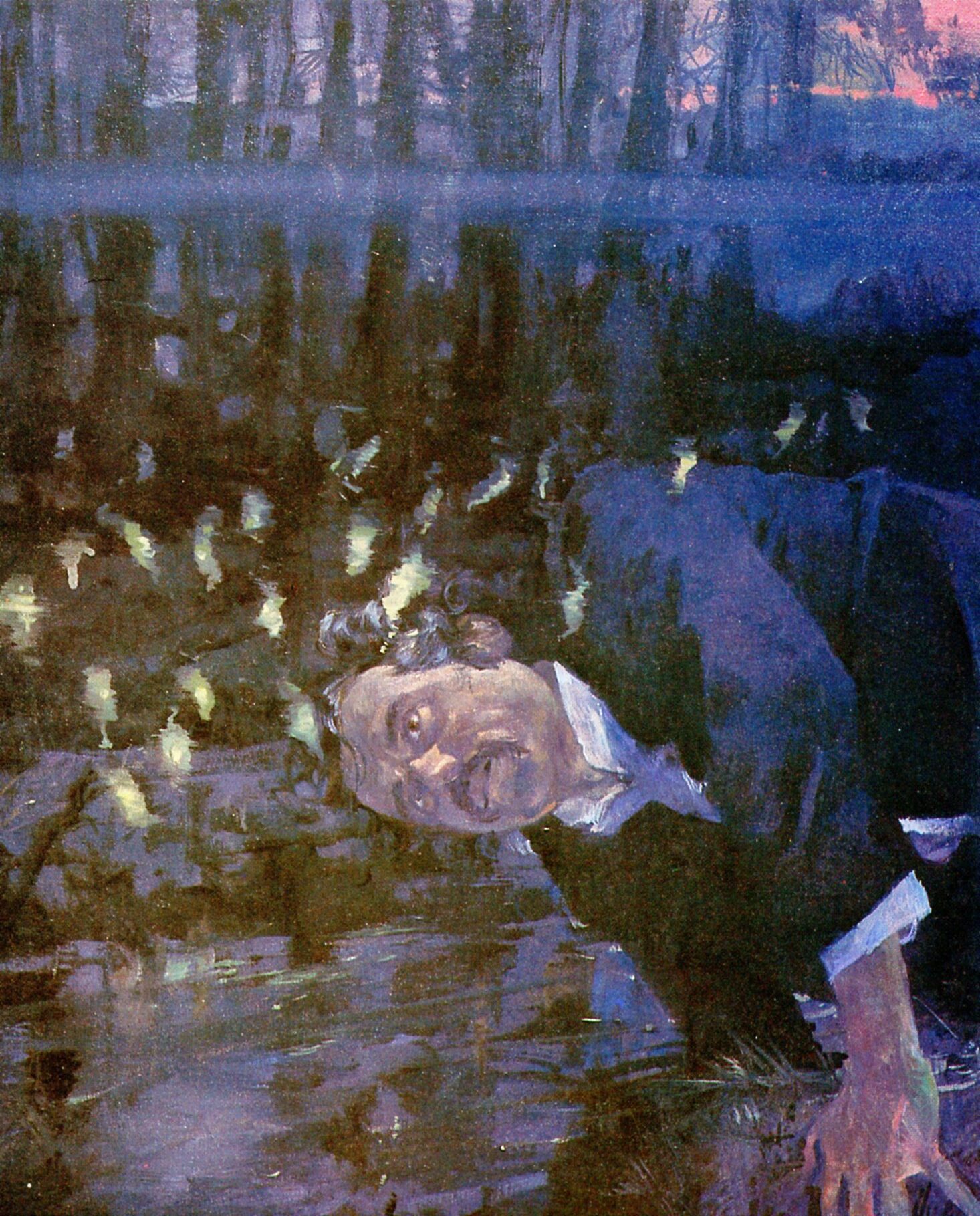
Dancing by night over bogs, brakes and water meadows, the flamelike luminance called ignius fatuus, or “foolish fire,” once was common throughout northern Europe. Although the learned would claim that the flames were caused by marsh gases, country-folk knew better, and tales of mishaps made them wary.
The strange light was given myriad names — “will-o’-the-wisp,” “jack-o-lantern,” “fox fire,” “elf light.” In Wales, the flames were called “corpse candles” [gotta love the Welsh! – DeSpair] and appeared just at the level of a raised human hand when a ghost walked invisible. They were thought to presage the death of those who saw them. Germans said the lights were the ghosts of those who had stolen land. For Finns, such a light was a liekkiö, or “flaming one,” and was believed to be the ghost of a child who had been buried in the forest.
In any case, the dancing flames were dangers to the living. Wayfarers who mistook them for the lights of a far-off shelter sometimes strayed into thickets where the ground grew shifty and sucked them down into the depths of bogs. Those who followed ghost lights, people said, were led to join the company of the Death.
Culled from: The Enchanted World: Ghosts
Andersonville Prisoner Diary Entry Du Jour!
This is the continuation of the 1864 diary of Andersonville prisoner Private George A. Hitchcock (see the archived version for all entries up until now).
Here’s today’s entry:
July 30th. Very hot. Our rebel sergeant has called for shoemakers, and —- sent in his name. The coarse, uncooked corn-meal has brought on the diarrhoea again.
Culled from: Andersonville: Giving Up the Ghost