Today’s Bewildering Yet Truly Morbid Fact!
An account from a teacher of the atomic bombing of Hiroshima on August 6, 1945:
Dashing out of the school into clouds of thick, swirling dark dust, Miss Horibe spotted seven moaning children lying and sitting on the playground where they had been playing hide-and-seek. They were bleeding and blackened by burns. Their school uniforms were in shreds. Patches of skin dangled from their bodies. Miss Horibe saw them but her eyes were hunting for an escape route from the area. The Aioi Bridge would have been perfect, but it was blocked by flames leaping out of nearby buildings.
“To the river,” she shouted to the children. “It’s the only way out!”
Water. The sacred water of the city’s many rivers was on her mind as it was on the mind of everyone that morning. Water would stem the all-consuming fires, and the broad Motoyas River was only a few yards from the Honkawa school. The children understood and dragged themselves slowly across the rubble-filled ground with Miss Horibe’s help. They were crying and shouting how much they hurt, how they hated war and the Americans.
The trek to the river seemed to take forever, and when Miss Horibe reached the steps at the top of the neat, steep, seven-foot seawall she found herself pulled along in a wave of bodies shoving to reach the water. She lost contact with the children from her school and never saw them again. Having reached the river early, she could still squeeze onto the rocky four-foot-wide riverfront, but the water offered no escape. It was a barrier.
The churning Motoyas itself seemed on fire. Flaming debris from burning homes and floating wood from the nearby lumberyards blocked any swimmers. Most of the many bodies floating past Miss Horibe seemed lifeless. She saw people diving from the seawall into this cauldron—she could not tell whether they leaped or were pushed—but most were huddling skin-to-skin along the riverfront, trapped.
“Mother! Mother!” and “This is hell on earth!” were shouts that Miss Horibe could distinguish from some of the survivors pressing against her. Most faces and bodies were grotesquely bloated by burns. Many were obviously dying. Some were clearly dead and Miss Horibe felt that her own life, too, was inevitably over at the age of 18. Her shock was wearing off and she began to feel great pain. Her face, her purple shirt, and her dark blue mompei were spattered with blood. She kept vomiting a strange yellow liquid. Immobilized between watery fires in front of her and fires whipped by westerly sea breezes advancing from the buildings at her back, she was convinced that her world, all Japan, was going under.
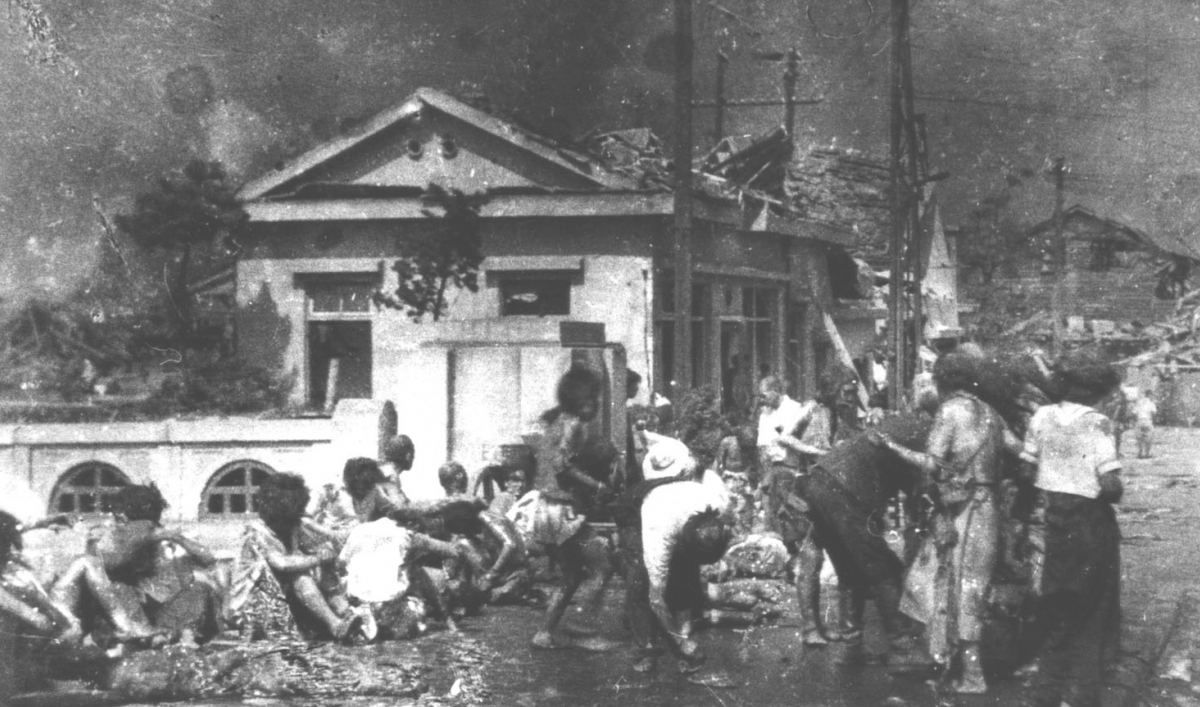
One of a very few images of Hiroshima taken the day of the bombing.
Only the Aioi Bridge seemed as immune as all Hiroshima had been until this morning. She could see it through the smoke. There was no life on it, but it stood.
So did the Tsurumi Bridge, much to the surprise of Mrs. Sakae Ito, who glanced in its direction toward 9 a.m. Looking from the foot of suburban Jijiyama Hill toward the city and the hypocenter, one mile to the west, she could see nothing else standing. But now a mass of blackened, bleeding people surged across the bridge—the lifeline. Their hair, frizzled from burns, was standing on end. Most were nearly naked. Some screamed or whimpered. Many held their hands and arms extended in front of them, with elbows out. Others held on to each other and stumbled because they could not see. When the people reached Mrs. Ito’s elevated spot they stopped, turned toward Hiroshima, and began to cry.
Mrs. Ito was even more bewildered than shocked. Like most Hiroshima citizens, she had at first concluded that she had escaped a nearby hit of a conventional bomb. A tiny, thirty-four-year-old housewife with sparkling dark eyes and a quick smile, Mrs. Ito was one of 10,000 “volunteers” assigned to tear down houses to clear fire lanes that morning. She was the deputy leader of a group of some forty of her neighbors and proud of her job. She was doing something for the war, just like the men.
By 8:15 her team had lined up before a row of wooden homes they were supposed to wreck. Their thick cotton air-raid hoods dangled down their backs. A handful of the oldest workers had been designated to stay behind and watch the lunches. “We envy you!” Mrs. Ito called out to them, and everybody laughed. “Let’s go!” commanded the group leader, a stockbroker, and suddenly Mrs. Ho’s right shoulder was on fire. She slapped the flames with her work gloves. The gloves caught fire. And then it was dark, her fires extinguished, and Mrs. Ito was frantically clawing out from under the debris of the house she was supposed to wreck.
Her fellow workers were screaming. “Help! Help!” from under other houses, and Mrs. Ito, a large patch of skin dangling from her burned shoulder, began pulling out one after another. Their faces were so hugely swollen from burns that they thought they were blind. Their leader was among those who could not see, so Mrs. Ito called the roll. Only about a third of the original group responded.
Rain fell. It was black, gritty, and left big greasy spots on their clothes, but Mrs. Ito and her fellow survivors were so dazed they barely noticed this eerie phenomenon. When the smoke lifted and revealed the rubble that had been Hiroshima, one of the men said: “Strange to see the whole city bombed all at once. This must be a new kind of bomb!”
The arrival of more people fleeing across the Tsurumi Bridge stirred Mrs. Ito’s leadership instincts. A naked father cradling a baby tried to give it water from a tap that still worked, not realizing that his child was dead, and the desperate crowd from town kept growing. The people had to keep moving up Hijiyama Hill, where no fires were burning, and where somehow, sooner or later, someone might at least soothe the pain of their burns. Mrs. Ito found a few soldiers and policemen who had been stationed nearby. She told them to lead the refugees up the hill and returned to what she considered her principal responsibility: digging out more of her teammates who were moaning for help from underneath the houses they would no longer have to tear down.
Culled from: Day One: Before Hiroshima and After
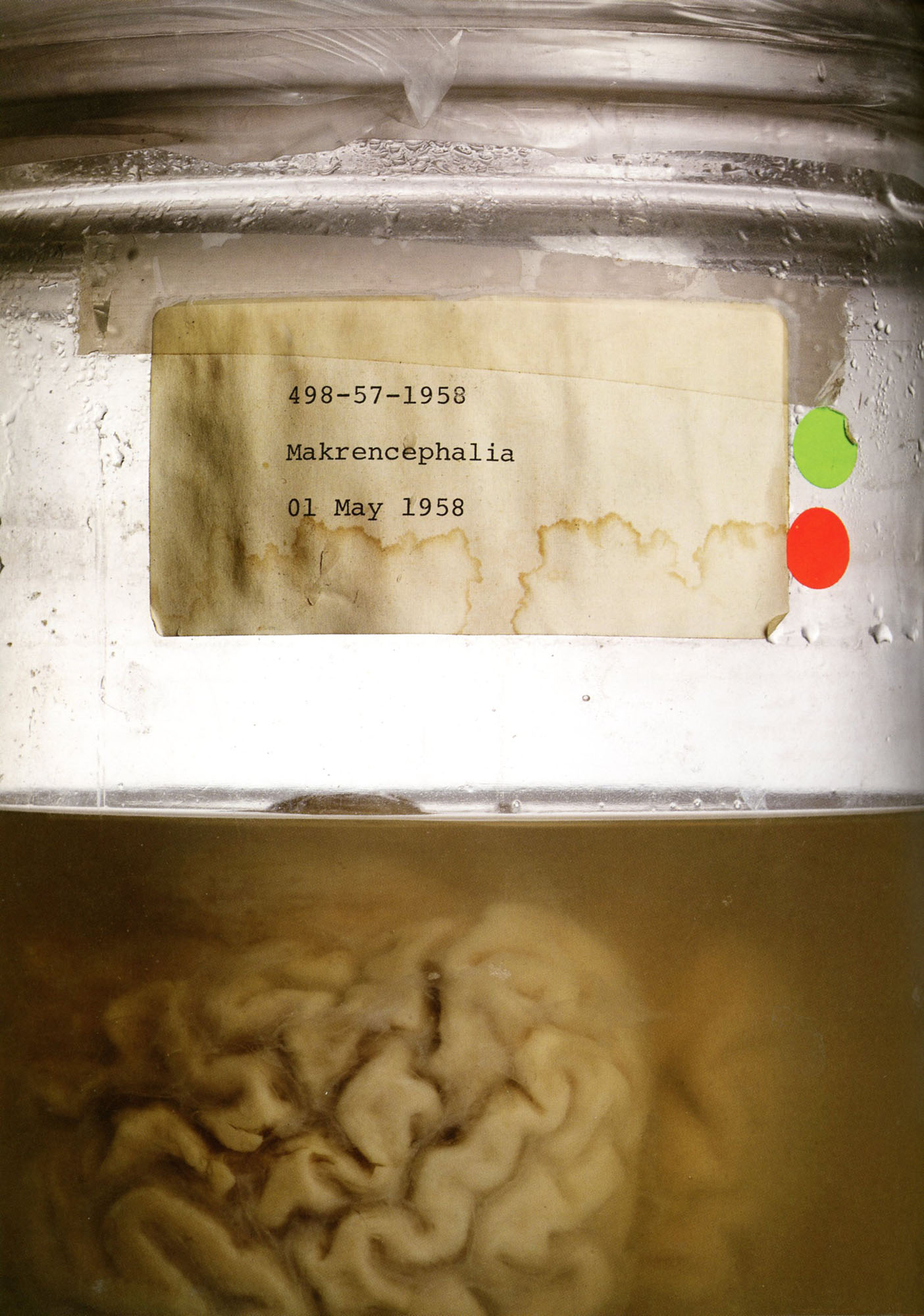
Malformed Brain Du Jour!
Here’s another excerpt from Malformed: Forgotten Brains of the Texas State Mental Hospital.
Andersonville Prisoner Diary Entry Du Jour!
This is the continuation of the 1864 diary of Andersonville prisoner Private George A. Hitchcock (see the archived version for all entries up until now).
Here’s today’s entry:
August 1st. Very hot; rain last night. I was sick all night, but feel better this morning. A preacher from outside held services in camp, and read the exchange report in the newspaper. Ambulances have been taking out sick all the afternoon.
Culled from: Andersonville: Giving Up the Ghost