Today’s Smoggy Yet Truly Morbid Fact!
“Smog” is a portmanteau word (“smoke” plus “fog”) that a Glasgow sanitary engineer coined in 1905. Its widespread use today makes it seem new, but the phenomenon it describes has long existed. Smoke and acrid vapors smothered the industrial cities of the post-Civil War U.S., and municipal control of offending plants was as sparse as clean air in Lower Manhattan.
As the largest city, with 287 foundries and machine shops, a printing industry powered by 125 steam engines, bone mills, refineries and tanneries, New York in 1880 was at one time both major sinner and major victim, symbolizing the unpleasant aspects of industrialization.
The crux of New York’s filthy air was Hunter’s Point, on the rim of the Bronx, where established industries had moved out in force by the late 1870’s. Out of sight perhaps, but not out of smell. Grievous odors from the Point poured over Manhattan, affecting all who lived there regardless of rank or address. Frederick Law Olmsted, architect of Central Park, complained that “the stench [was] borne to his residence in 46th Street, between 7th and 8th Avenues.”
But by 1881 even the doggedly patient New Yorkers had coughed enough and angrily compelled the State Board of Health to investigate the origin of their misery. During the inquiry ninety witnesses specified the ingredients that gave the city air its rich flavor: sulfur, ammonia gases, offal rendering, bone boiling, manure heaps, putrid animal wastes, fish scrap, kerosene, acid fumes, phosphate fertilizer and sludge. Such an impressive menu enforced the Board’s conclusion that the pollution was harming the citizens’ health.
In their testimony a number of doctors spoke of the violence of the stenches; of oil refineries endlessly puffing black smoke “… to produce sickness and depression”; of acid fumes “irritating lungs and throat”; of odors causing “an inclination to vomit”.
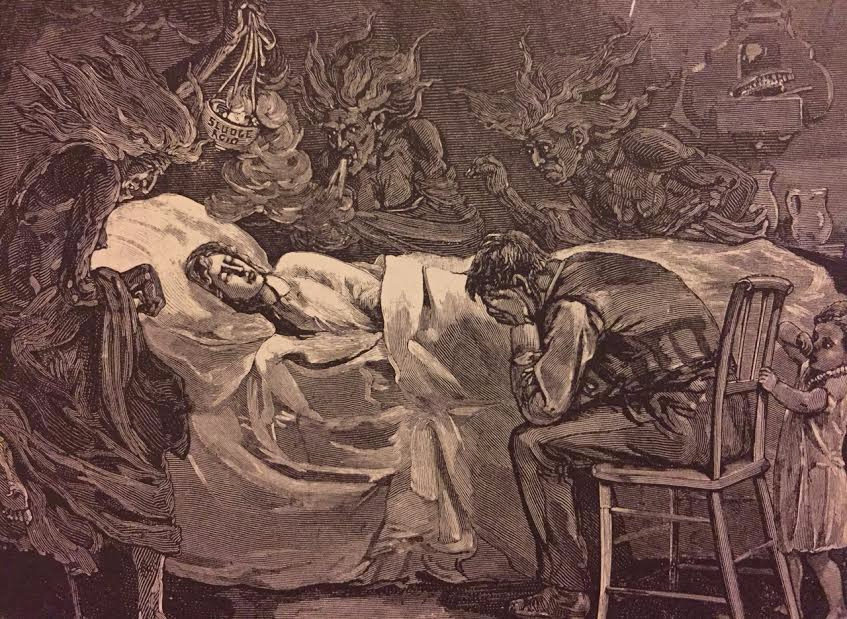
New Yorkers didn’t call it smog in the good old days, and perhaps they were wise. Considering what they breathed daily, the word sounds almost inoffensive.
Culled from: The Good Old Days – They Were Terrible! by Otto L. Bettmann
Believe It Or Not!
I thought I’d share morbid excerpts from Ripley’s Believe It Or Not occasionally. This one? I don’t believe it!

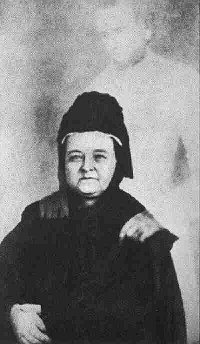
And here’s the actual photograph. Nope, doesn’t look fake at all…. What’s that you say? The photo was taken by “spirit photographer” William H. Mumler whose photographs are all considered to be hoaxes now? Shocking.