Today’s Notorious Yet Truly Morbid Fact!
On October 15, 1721, the Paris paper Barbier’s Journal excitedly announced that ‘Cartouche, the notorious robber who was sought everywhere and found nowhere, is captured! He has been discovered committing a robbery, and M. le Blanc, Secretary of State for War, who conducted the whole affair, took with him forty picked soldiers and a number of policemen, who had orders to take Cartouche dead or alive, that is, to fire on him if he attempted to run away.’
It would seem that the house had been surrounded. When caught, the much-wanted criminal had six pistols on the table. Arrested, he was taken to the Chatelet prison, where he was confined in a cell with triple doors and not only guarded by four men but was also chained to a stake attached to a pillar.
But who was this desperado who, with his gang, had terrified the worthies of Paris? Louis Dominic Cartouche, thief and pickpocket, although only four and a half feet tall, was the scourge of the French gendarmie. A typical Parisian gamin, unable to read or write, but inherently intelligent and cunning, he soon recruited a large gang of miscreants and remained at large for many years.
Despite all the precautions taken in the prison he, with the aid of his cellmate, a mason, managed to make a hole in the sewer gallery beneath the floor. Falling into the water, they waded to the end of the gallery and, removing a large stone, emerged in the cellar of a greengrocer’s. In the shop itself they disturbed the man’s dog, its barking raising the alarm, and although the greengrocer would have allowed them to flee, four policemen, alerted by the uproar, arrived and recognized Cartouche by the short lengths of chain still attached to his wrists and ankles.
Because of this escapade, Cartouche was transferred to the dreaded Conciergerie prison and sentenced to be tortured, then broken on the wheel. Charles Sanson, as his duty demanded, visited his client, and later commented that Cartouche’s head was extraordinarily developed; his hair was thin and shaggy and the eyes were not wanting in malice. He also expressed his surprise that a man so ugly should have been reputedly such a ladykiller.
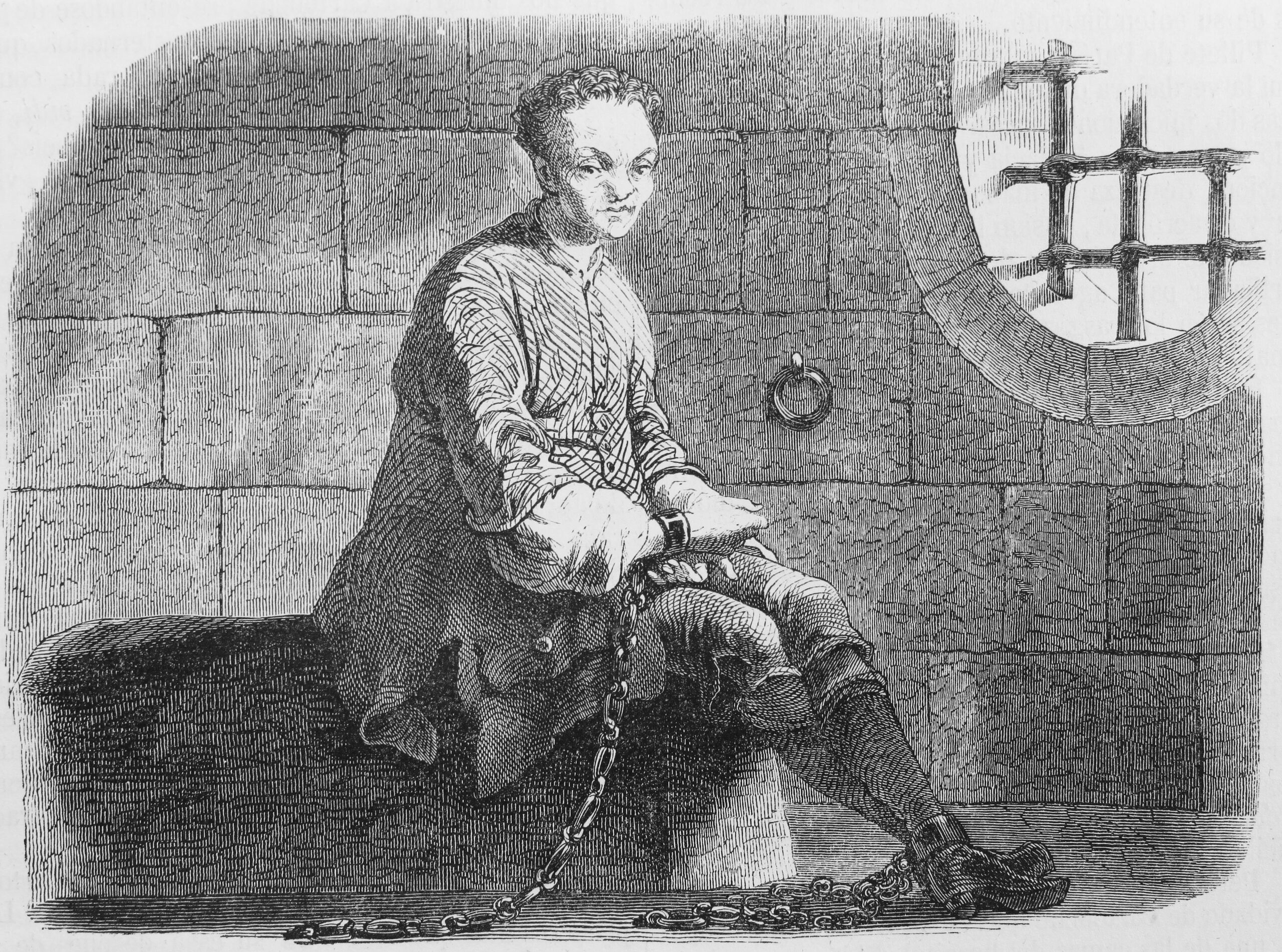
The Notorious C.A.R.T.O.U.C.H.E.
On November 27, Cartouche was tortured in the brodequins but refused to divulge the names of his accomplices. Meanwhile, carpenters were preparing the scaffold. But let Barier’s Journal take up the tale:
‘All night long, on Thursday 26th, fiacres [four-wheeled cabs] carried passengers to the Place de Grève, until it was jammed with people all waiting for the event. Windows facing the square were lit all night. The cold was biting, but the crowd lit fires right in the square and local merchants sold food and drink. Everyone was laughing, drinking, singing. Most of the spectators had had their places reserved for over a month…’
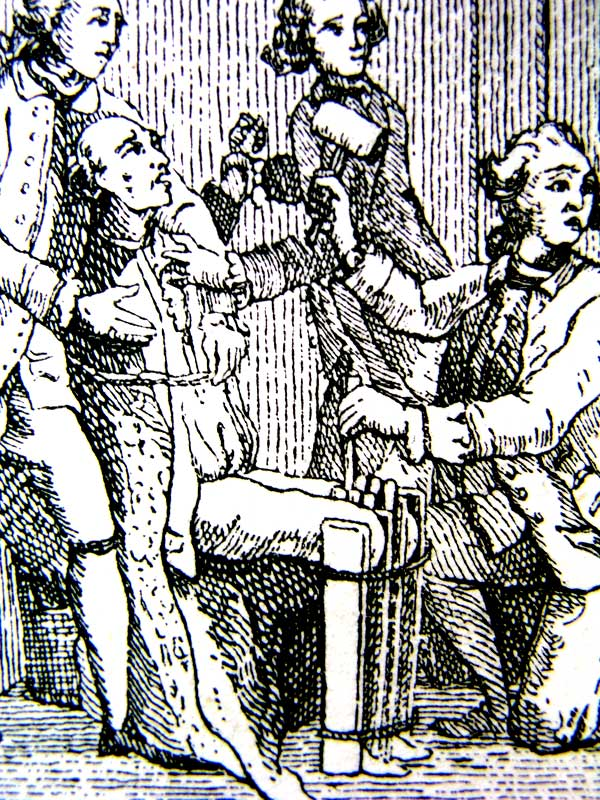
Example of the Brodequin torture method by which the legs were damaged.
About four o’clock on execution day, Sanson, accompanied by his assistants, went to the Conciergerie, where the clerk, having first read out the sentence to the prisoner, handed him over to them. Cartouche was very pale, but neither the sufferings he had endured nor the prospect of his approaching death had made any impression on him: he was buoyed up by the prospect of being acclaimed a public hero once the crowds saw him on the scaffold. Once there, he was bound to the croix de St. André. As the spectators crowded nearer, the iron bar descended, methodical blows shattering shin and thigh, lower and upper arm, the voice of Cartouche growing fainter as agony overwhelmed him.
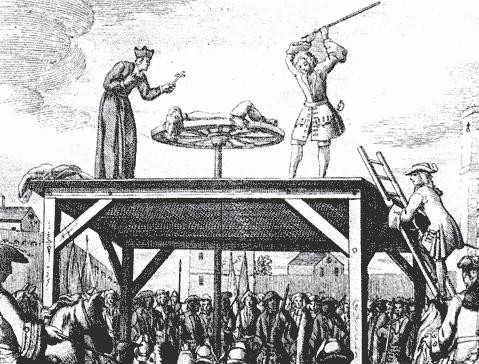
Owie!
As serious as his crimes were, he had been granted the privilege of retentum, to be strangled after a certain number of blows. But his had been omitted form the warrant, and Sanson later commented that, to his surprise, Cartouche was not only strong enough to endure eleven blows of the club but actually lived for twenty minutes after first being placed on the wheel.
Culled from: The Book of Execution: An Encyclopedia of Methods of Judicial Execution
Vintage Crash Du Jour!
One of my favorite books is Car Crashes and Other Sad Stories by Anaheim photographer Mell Kilpatrick. It’s a collection of car crash photos from the 40’s and 50’s, often with corpses still strewn across the enormous interior (or out of it, since there were no seat belts in those days). It combines my love of old cars with my love of morbidity and is the perfect ambulance chaser book!
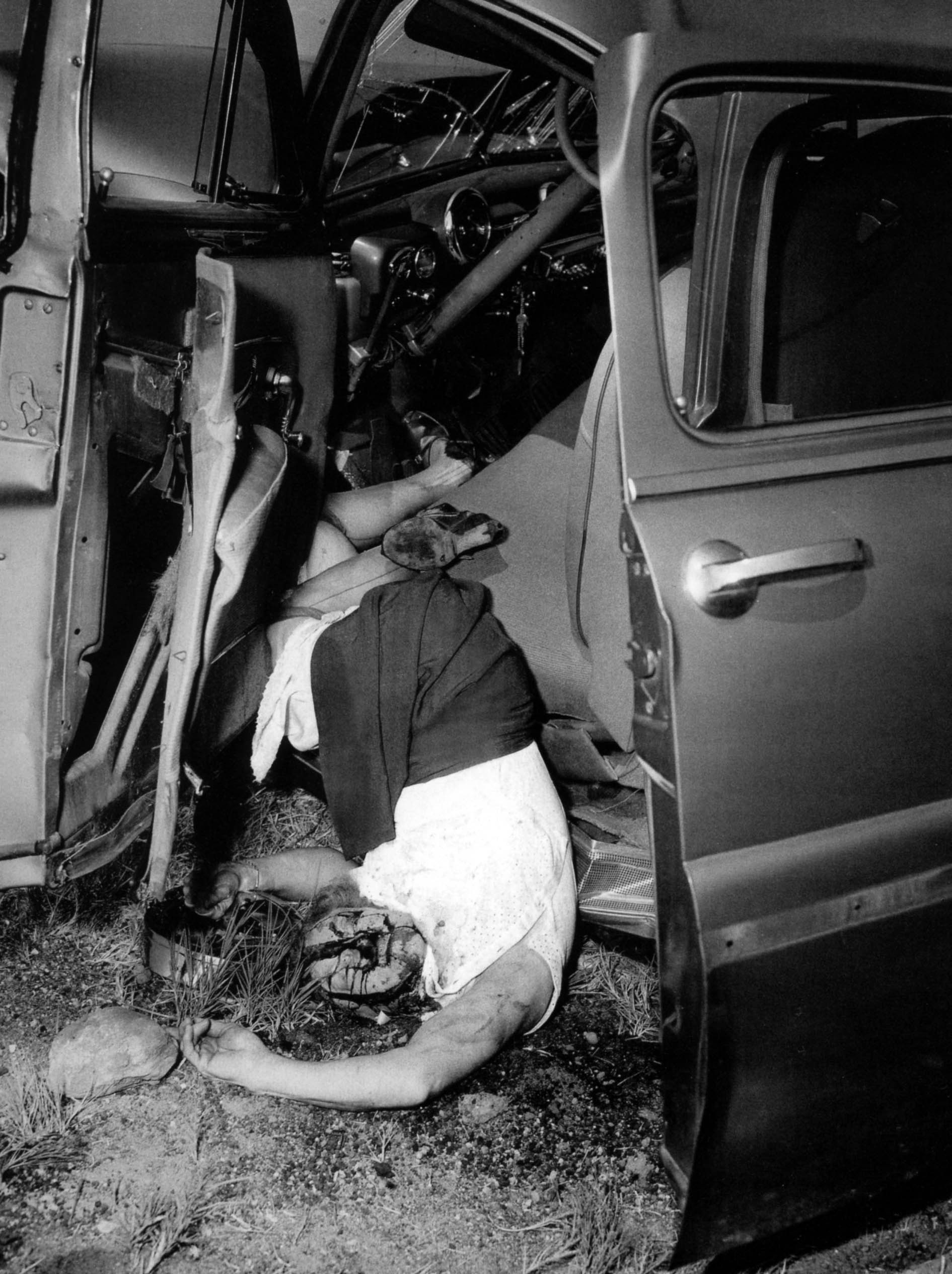
McArthur Blvd – Fatal.