Today’s Savage Yet Truly Morbid Fact!
On this Juneteenth, I wanted to share a reminder of the brutal, unforgiving horrors that African Americans have had to endure – and a promise that I will not forget those who have suffered or stop sharing their stories. Say their names: Bessie McCroy, Laura Nelson, Will Green, Daniel Barber, Henry Noles, Jesse Washington. Let’s evolve, America!
************************
Neither women nor entire families escaped the savagery of white mobs in early 20th century America. Bessie McCroy, along with her son and daughter, were removed from a jail in Carroll County, Mississippi, and taken to the edge of town, where a crowd of five hundred men hanged them and riddled their bodies with bullets. Members of a mob in Okemah, Oklahoma, entered the local jail to seize Laura Nelson, accused of murdering a sheriff, then raped the black woman before hanging her along with her teenage son. When a white farmer in Gray, Georgia, was found dead in his home, suspicion fell on Will Green and his seventeen-year-old son. Despite their pleas of innocence, a mob lynched both of them and riddled their bodies with bullets. Authorities subsequently determined that neither the father nor the son had anything to do with the farmer’s death.
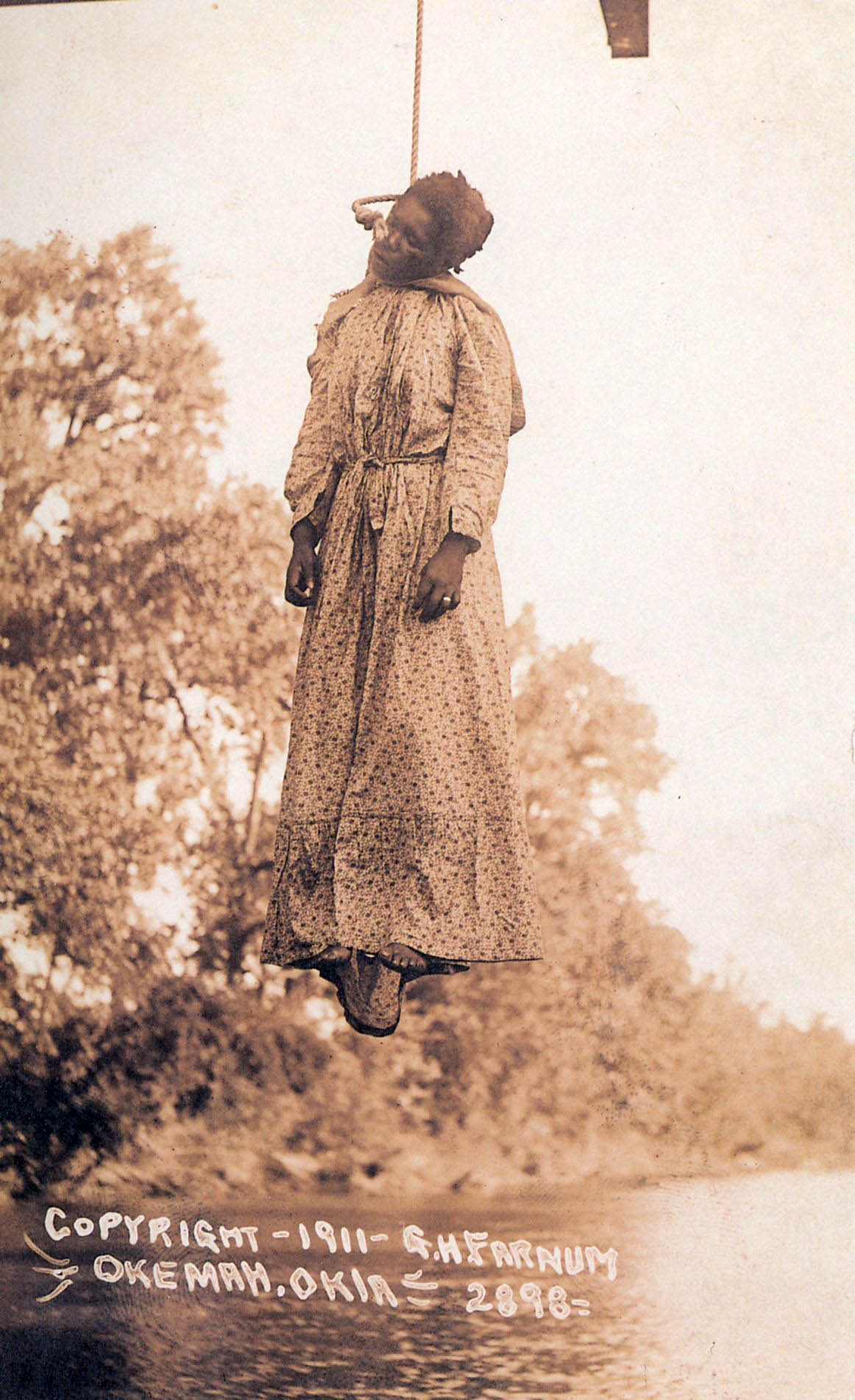
Poor Laura Nelson. R.I.P.
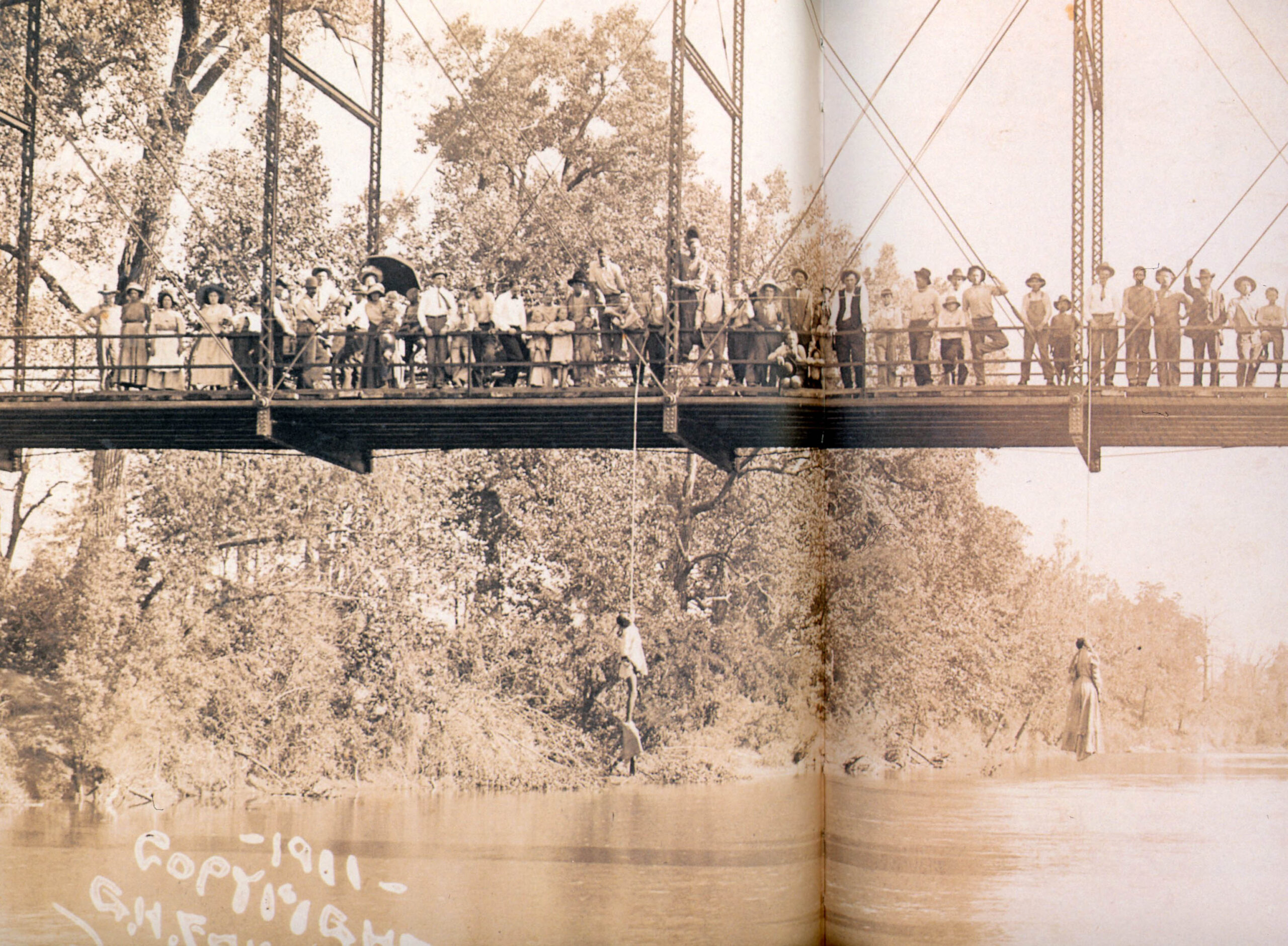
Laura Nelson, her son, and their murderers.
The way whites in Monticello, Georgia, dealt with a black family in 1915 was no doubt meant as a warning to all blacks who dared to challenge white authority. When the local police chief came to the home of Daniel Barber to arrest him on a bootlegging charge, Barber and his family forcibly resisted the officers. After police subdued and arrested the Barbers, some two hundred enraged whites stormed the jail and dragged Barber, his son, and his two married daughters to a tree in the very center of the black district. The mob chose to hang the entire family, one by one. Daniel Barber had to watch each of his children die before the noose was tightened around his neck.
When permitted to speak before being lynched, some of the victims professed their guilt and asked for forgiveness, while others protested their innocence. Many simply tried to make peace with their God. Before his burning, Henry Noles of Winchester, Tennessee, confessed his crime and asked his friends to “meet him in glory.” He mounted the stump “stolidly” and laughed as the told the mob, “Tell all my sisters and brothers to meet me in glory. I am going to make that my home. Tell my mother to meet me where parting will be no more.” Taken from the stump, he was then chained to a tree and his body saturated with oil. Soon “the quivering body was enveloped in flames.” A lynch mob in Cuthbert, Georgia, agreed to the victim’s request that they take his picture and send it to his sister. She collapsed upon receiving the photo showing him hanging in a tree. Jesse Washington, a black youth, pleaded his innocence with the lynch mob (he had been retried after a judge had expressed doubt over a guilty verdict), but to no avail. The crowd, made up of “the supposed best citizens of the South,” looked on with approval as the flames enveloped the squirming youth. Souvenir hunters then proceeded to hack his body with penknives, carrying away their human loot. One white spectator failed to share the carnival mood of the crowd. “I am a white man, but today is one day that I am certainly sorry that I am one,” he wrote afterward. “I am disgusted with my country.”
The Lynching of Jesse Washington:
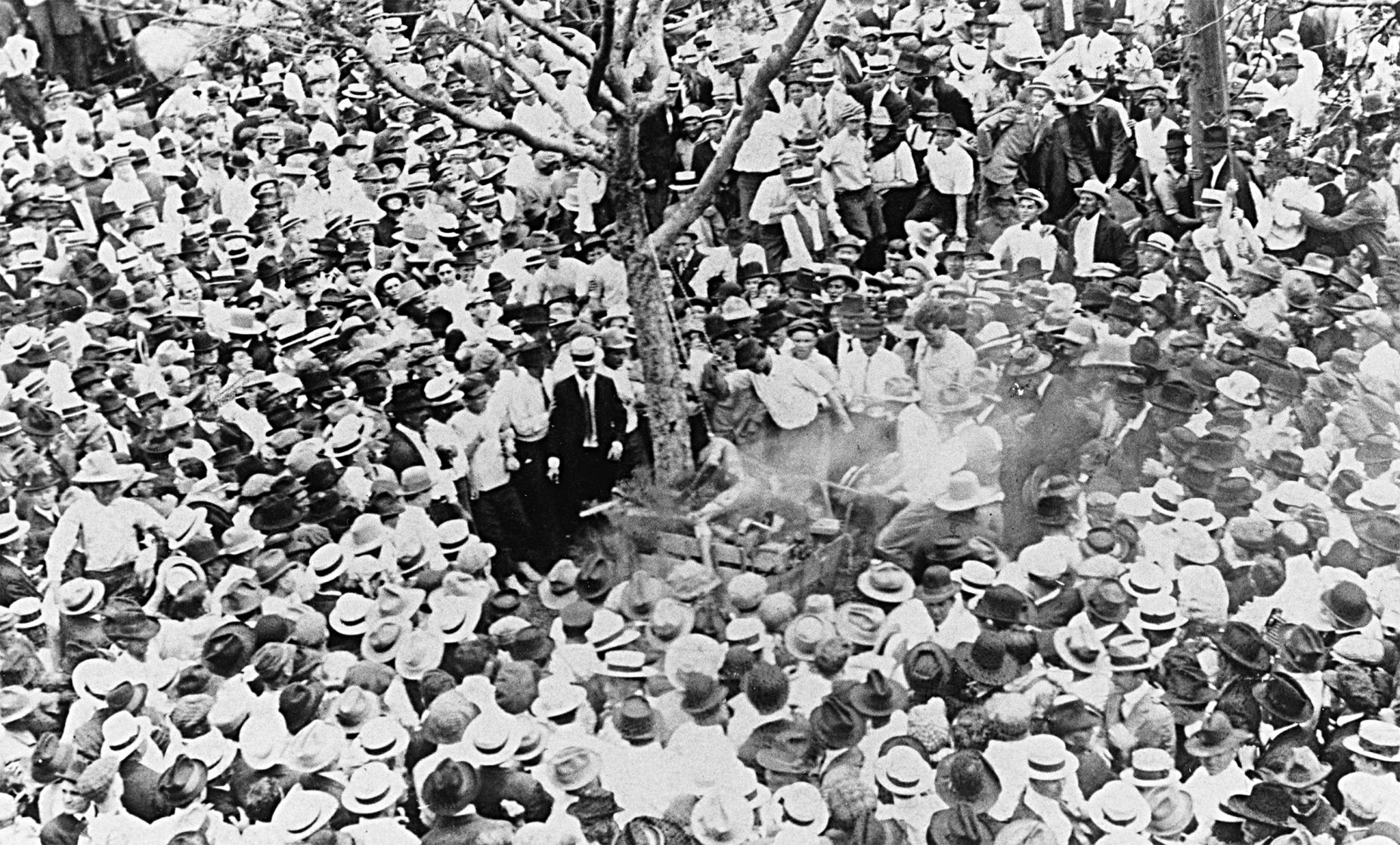
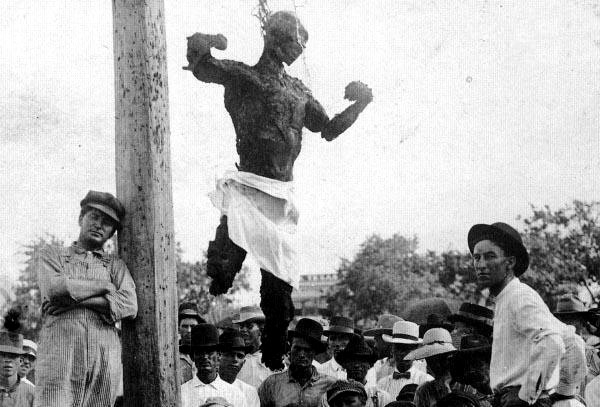
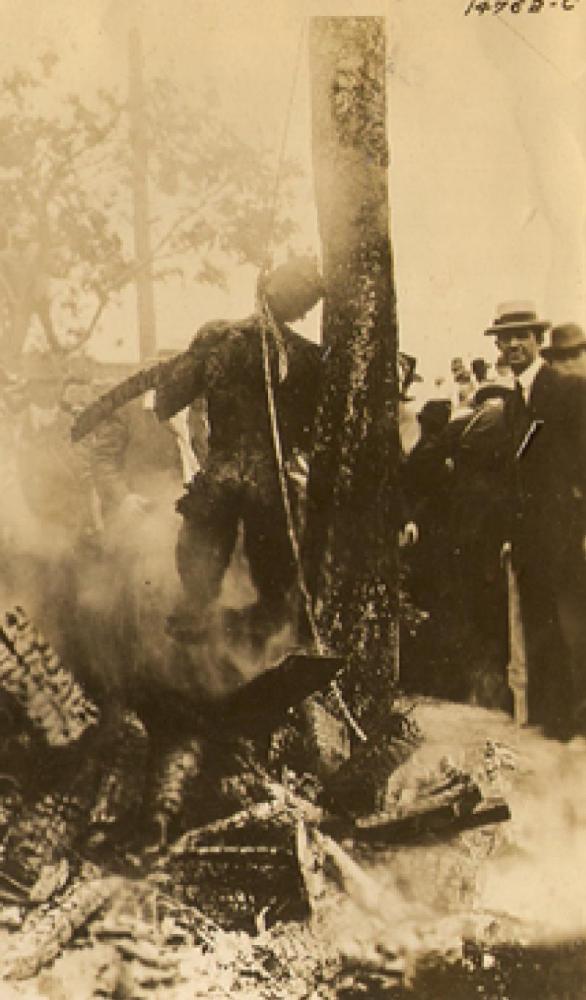
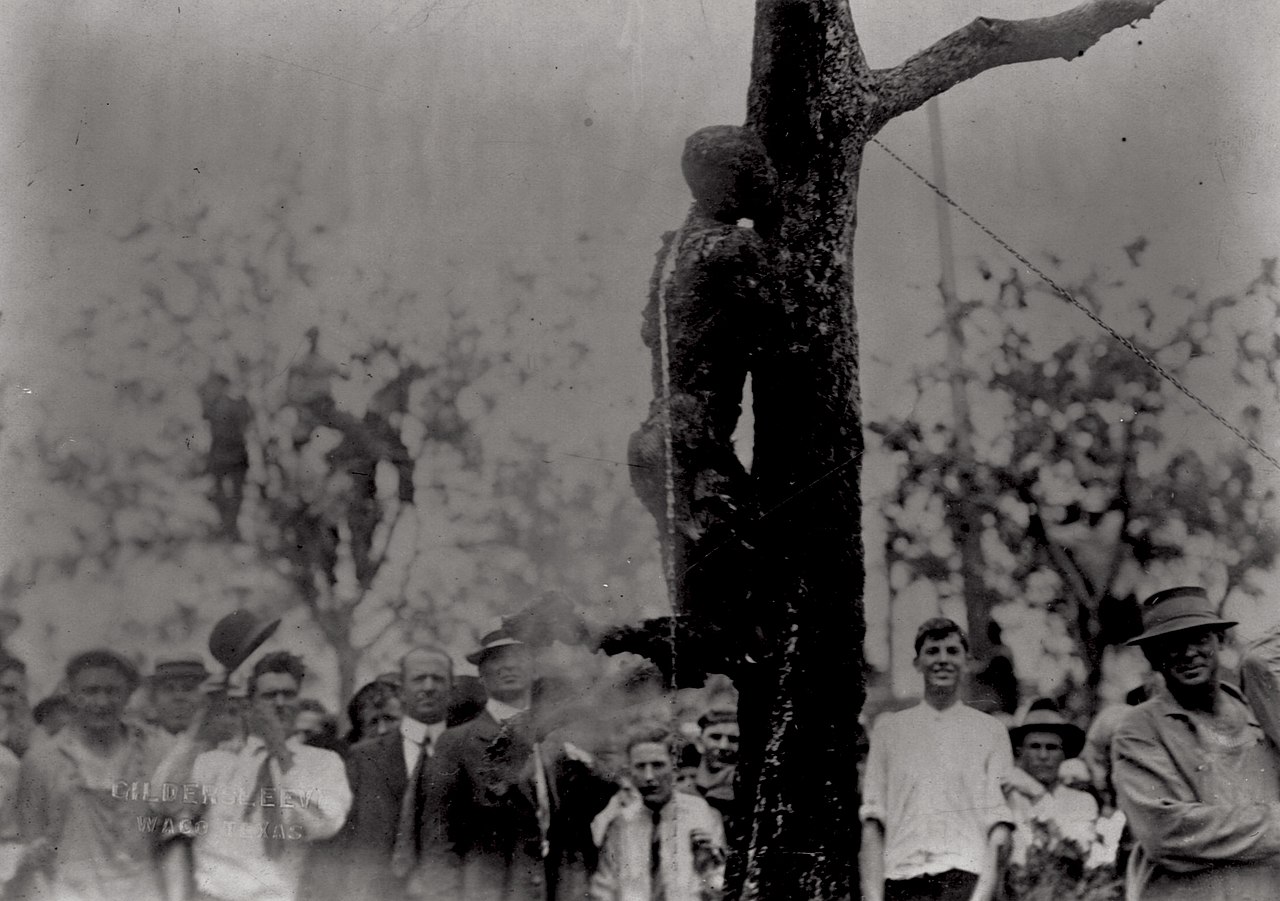
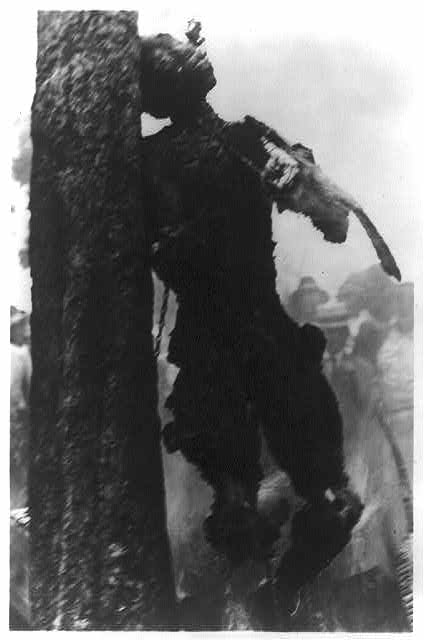
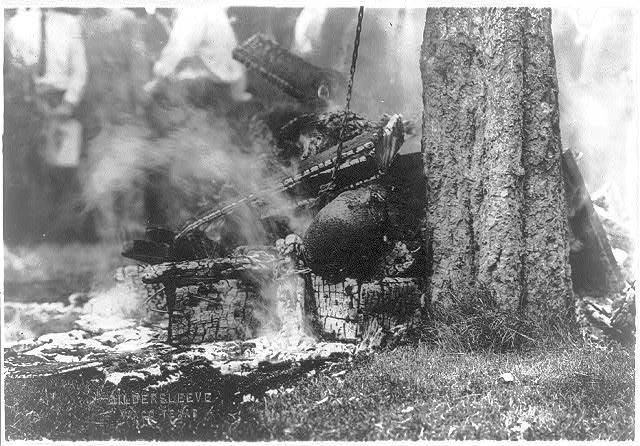
R.I.P. Poor Jesse.
Culled from: Without Sanctuary: Lynching Photography in America