Today’s Torturous Yet Truly Morbid Fact!
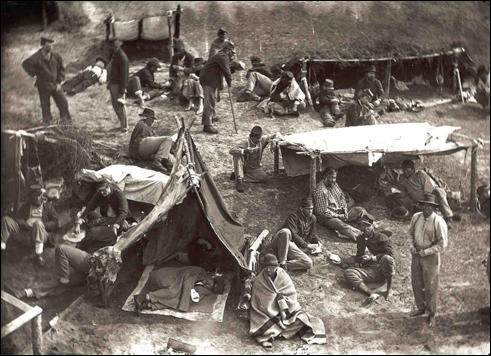
Between February, 1864 and April, 1865 it is estimated that 45,000 Union prisoners were confined in the Confederate stockade, Camp Sumter, near Anderson Station, Georgia, forever to be remembered as Andersonville. Of that number, approximately 25,000 men survived their prison experience and returned home to tell their tale of suffering. It is unknown how many survivors, with their health and lives shattered, died as a direct result of their captivity after returning to civilian life. Close to 13,000 Union soldiers did “give up the ghost” at Andersonville, and it was the ghost of Andersonville that haunted the survivors for the rest of their lives.
The following is the account of William W. Jellison, Company E., 96th Illinois Infantry, Fourth Corps, age 31:
I was captured at Atlanta about the 20th of August, 1864; was taken to Andersonville with a number of Stoneman’s raiders; was robbed of coat, hat, and all the little treasures I had on my person; was told by my captors that I would have good quarters in the prison. One man took my rubber coat, another traded hats with me and gave me one of much less value. Soon another came and traded also. They kept on trading until I was hatless and coatless, and in this situation was turned into that slaughter-pen at Andersonville. It would be useless for me to attempt to describe my feelings as I entered the gate of that prison and looked upon the ghastly corpses of some seventy-five prisoners, naked as when they were born, bloated and dirty, many of them covered with filth; eyes staring wide open, and limbs drawn up. This was my first introduction, — this was the first sight that met my gaze. I firmly believe, and shall till my dying day, that my hair rose on end and the blood curdled in my veins as I beheld that sight. There crowded around me living skeletons, with sunken eyes and long mattered, tangled hair, dirty and filthy, many of them with not enough clothing to cover their nakedness. I find that language is too weak to picture the horrid scene. Had I the tongue of an angel I could not do it. None can understand what I write — only those who witnessed the same. Those Southern prison hells are in one respect like religion. To understand it, you must have an experience. Every survivor of Andersonville that was there in the fall of ’64 will know whether I am writing truth or fiction. As those sickly, starved, and grimy looking beings crowded around me, so eager to hear the news from the army, I looked upon them and grew sick at heart. That scene will haunt me while I live. For a little while only I gave up in despair, and made my mind that I, too, would soon be as one of them. I believe that if ever I offered an earnest prayer it was at that darkest of all dark hours.
I prayed fervently for grace to sustain me, for I saw no ray of hope or spark of light from the dreary scene around, and, like one of old, I can truthfully say God heard and answered my prayer. Had I at that time given way to that awful feeling of despondency that was creeping over me, like many others I would have been carried out and my dust be mingled with that of thousands of others in South Georgia.
I was turned into the prison about four p.m., as near as I can recollect, the 24th of August, 1864, and was placed in a detachment. I then had time to think and look around, and wonder where the good quarters were that my captors told me I would have; — so good and comfortable that I would not need coat or hat. While I was looking and wondering, my name was spoken, and looking behind me I saw one of my company boys (Charley Heath), who was captured at Chickamauga. He invited me home with him. I asked him where he lived, and he led the way to his abode, which was a hole in the ground. I remained with him as long as prison life lasted. It seemed they had just drawn their rations. As he was ready to dine, he asked me if I would share his hospitality. His bill of fare consisted of corn-meal gruel, quite thin and saltless. I tasted thereof, and came near heaving Jonah. He remarked that I would come to it before long.
After we had conversed together in the darkness and gloom of that prison until the sentinels had called out “ten o’clock and all is well,” Heath said: “I guess we had better retire,” and we both crawled into the hole which he called his home. Then commenced the bodily torture of being eaten up alive. I had been a soldier for over two years and a half, and thought I knew something about graybacks [lice], but my pen fails me when I attempt to describe how they tortured me that night and all the following nights of my prison life. The whole pen was literally alive with crawling vermin. I lay about thirty minutes, but could stand it no longer; got up and attempted to walk around, but the darkness was so intense that I could not see where I was going; so I had to stand and stamp and shake myself hours, and each hour seemed an age. I thought morning would never come. That night seemed longer than the two and a half years of active soldier life on the battlefield. All through those hours of intense suffering I thought of home and loved ones, of wife and sweet babies, wondering if I should ever see them again. Morning came at last. Weary and exhausted with the sufferings of the past night, in which I had not slept one wink, I began to look around me, and the horrors that met my gaze that day will haunt me while I live.
Culled from: Andersonville Giving Up the Ghost: Diaries & Recollections of the Prisoners
Vintage Crime Scene Photo Du Jour!
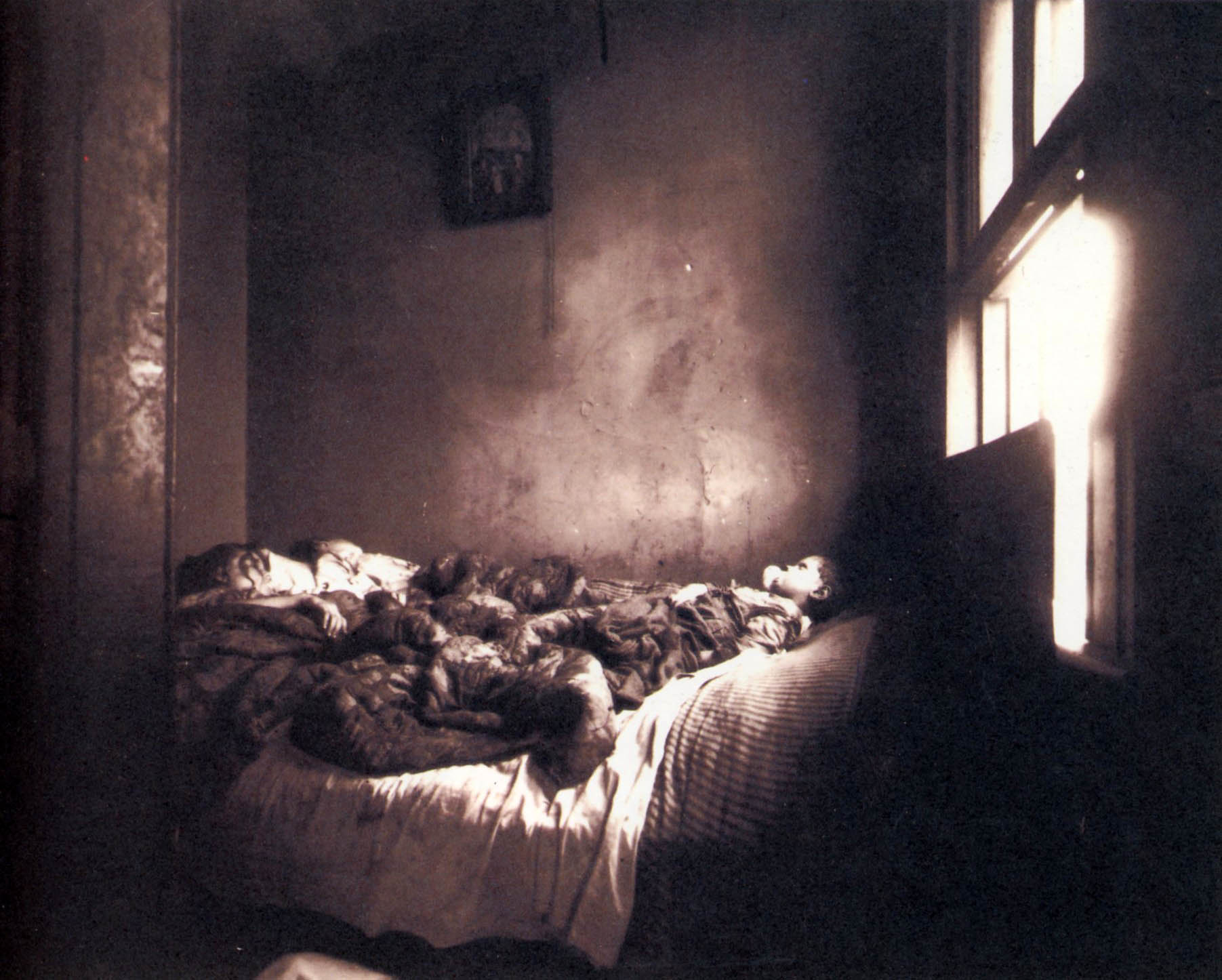
New York Crime Scene Photograph culled from Harms Way.