Today’s Wrathful Yet Truly Morbid Fact!
The young man grew up in Athens surrounded by luxury and showered with privilege. His father owned gold mines, so money was never a problem. A brilliant scholar, the man indulged himself by spending his days discussing philosophy with one of the great masters of his age. It was a leisurely life of the mind, unsullied by worldly concerns.
Until, one day, a plague descended upon the city.
The sickness came in the year 431 B.C. The citizens were used to illnesses and deaths but nothing had prepared them for this tragedy. For more than a year, the epidemic raged, laying waste to every structure of the carefully built society, creating a cataclysm that shook the confidence of scientists and doctors, changing history. It seemed truly a work of wrathful gods. The young man, Thucydides, was its chronicler.
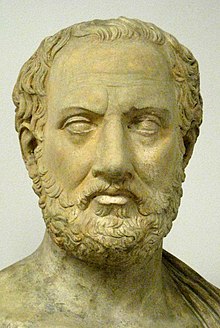
Thucydides, himself.
The symptoms were frightening. Strong and healthy young people would suddenly be afflicted with “violent heats in the head, and redness and inflammation in the eyes, the inward parts, such as the throat or tongue, becoming bloody and emitting an unnatural and fetid breath,” Thucydides wrote. The hapless victims sneezed, their voices became hoarse. Their chests hurt so they produced “a hard cough.” Some suffered agonies of abdominal cramps. “Discharges of bile of every kind named by physicians soon ensued, accompanied by great distress.” People would retch and heave as their intestines went into spasms.
The plague’s victims were so hot they felt on fire and they burned with thirst. They yearned to plunge into cold water, and some did, hurling themselves into rain tanks, trying to slake their “agonies of an unquenchable thirst.”
Sick and dying citizens turned to their doctors, pleading for relief. But to no avail. No medicine, no salve could ease the suffering. Even worse, the doctors themselves began falling ill from exposure to the legions of the sick.
Terrified citizens turned from medicine to religion, crowding into temples and praying to the gods to grant them relief. But it was no use, Thucydides explained. “Supplications in the temple, divinations, and so forth were found equally futile, until the overwhelming nature of the disaster at last put a stop to them altogether.”
Thucydides described scenes out of nightmares: “The bodies of dying men lay upon one another, and half-dead creatures reeled about the streets and gathered round all the fountains in their longing for water.” So many died that burial rituals went by the wayside and “they buried the bodies as best they could.”
No one knew what to do or where to turn for help. A sniffle or a headache could be the first sign of doom, and there was no way to stave off the sickness once it took hold. Those who began to feel ill would despair and that despair itself “into which they instantly fell took away their power of resistance, and left them a much easier prey to the disorder.”
It was normal – expected, in fact – for the healthy to aid the sick. Those who tried, however, would catch the disease themselves. Athenians had to decide: Should they nurse their friends and relatives and risk becoming ill, “dying like sheep”? Or should they turn coldly away and attempt to save themselves?
The answer, for the frightened Athenians, was obvious. People began holing up in their homes, afraid to visit friends, relatives, or neighbors. The sick began to perish from neglect.
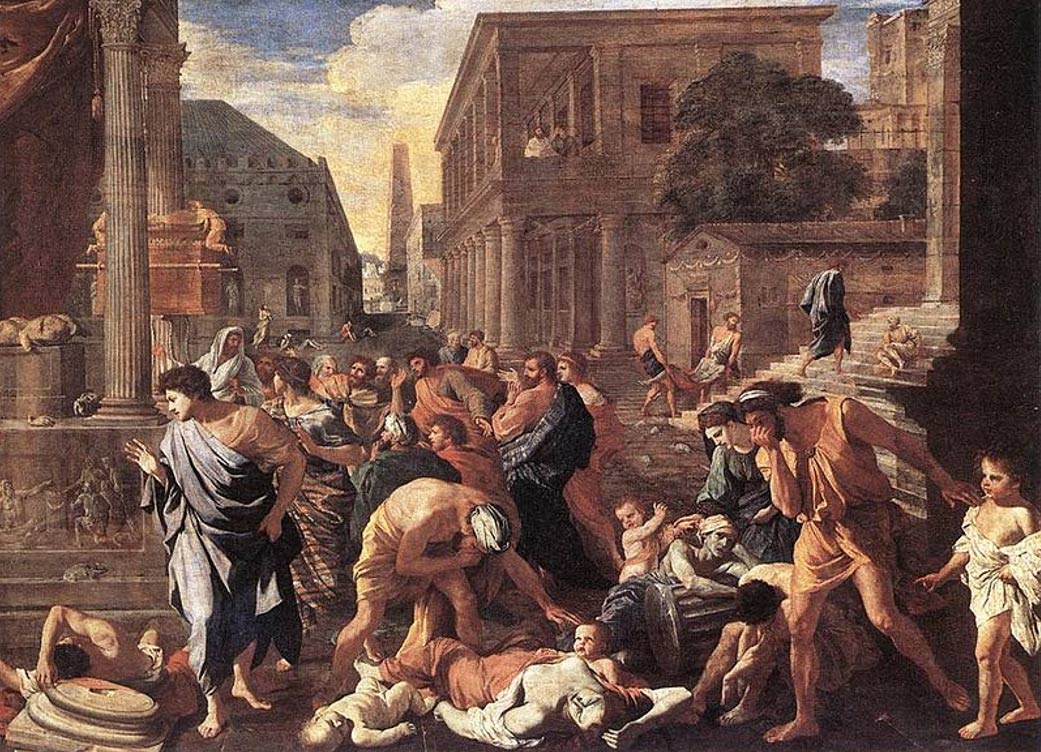
Them was rotten times!
The order of a civil society quickly disintegrated. The epidemics, Thucydides relates, brought forth a wild recklessness, a “lawless extravagance which owed its origins to the plague.”
“Men now coolly ventured on what they had formerly done in a corner,” he said. Athenians could not forget the sight of rich men dying suddenly and those who had had nothing seizing the rich men’s property. What was the use of saving or living frugally, many asked, when death could come at any moment and the poor could descend like vultures? “So they resolved to spend quickly and enjoy themselves, regarding their lives and riches as alike things of a day.”
Traditional notions of honor were abandoned, and, instead, “It was settled that present enjoyment, and all that contributed to it, was both honorable and useful.” Lawlessness took hold. “Fear of god or law of man there was not to restrain them,” Thucydides wrote. Why worship gods, many asked, when “they judged it to be just the same whether they worshipped them or not, as they saw all alike perishing”? And why obey laws when “no one expected to live to be brought to trial for his offenses”?
The city was never the same after that plague. In fact, Thucydides implied that the plague was a reason why Athens failed in its plans to defeat Sparta and the Peloponnesian League.
Thucydides’ story marked the start of the age of chronicled plagues. To this day, no one knows the source of the illness that struck Athens and no one can convincingly rule out competing theories. Influenza? Toxic shock? What remains is the horror.
Culled from: Flu: The Story of the Great Influenza Pandemic of 1918 and the Search for the Virus That Caused It
I was thinking, sounds like Ebola to me, and stumbled upon this article with the same hypothesis:
Professor reveals evidence that Athenian epidemic of 430 BC was first recorded Ebola outbreak
Malady Du Jour!
Here are more wax model images from the 1910 medical textbook Dermochromes – III.
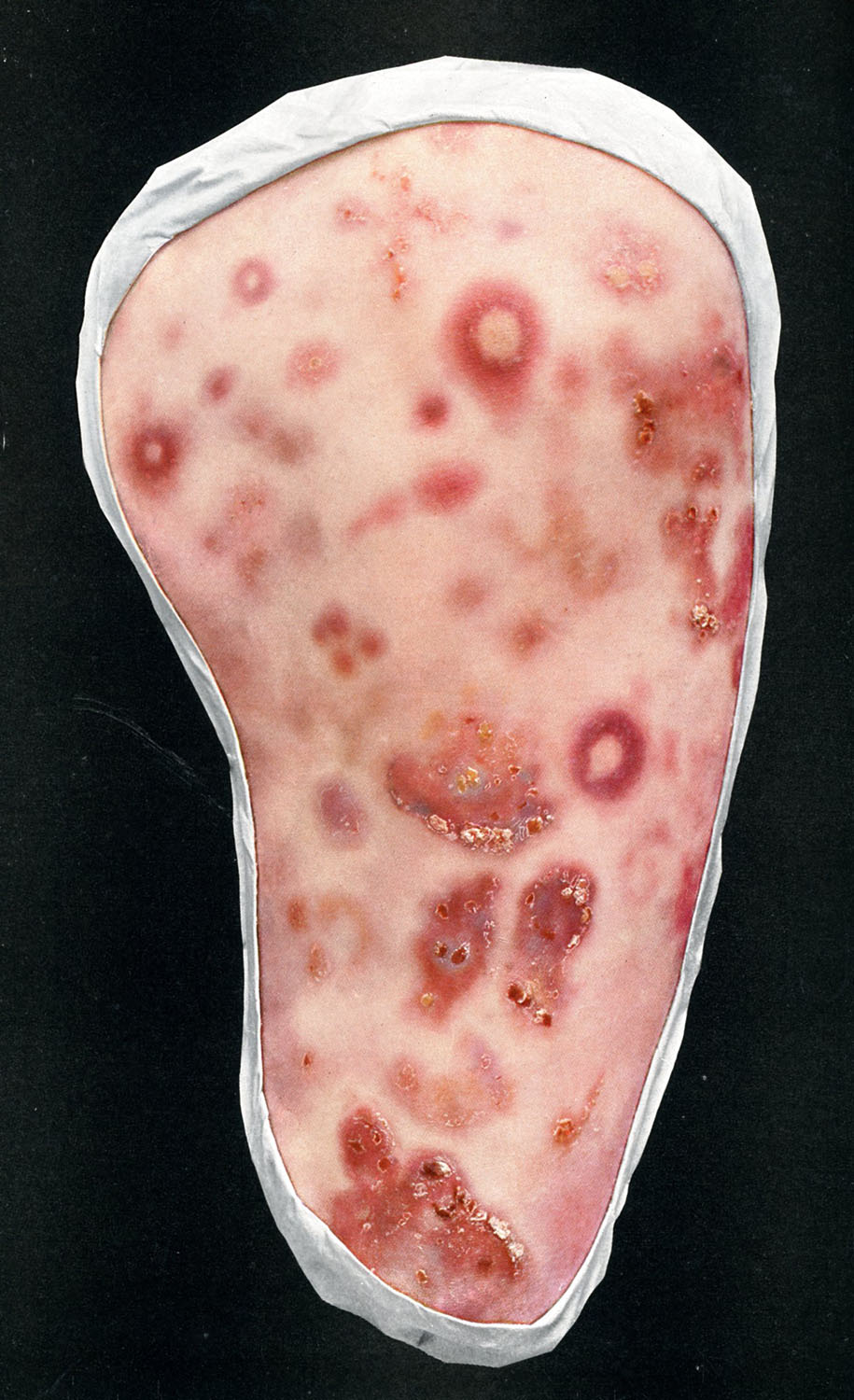
Figure 157. Model in Neisser’s Clinic in Breslau.
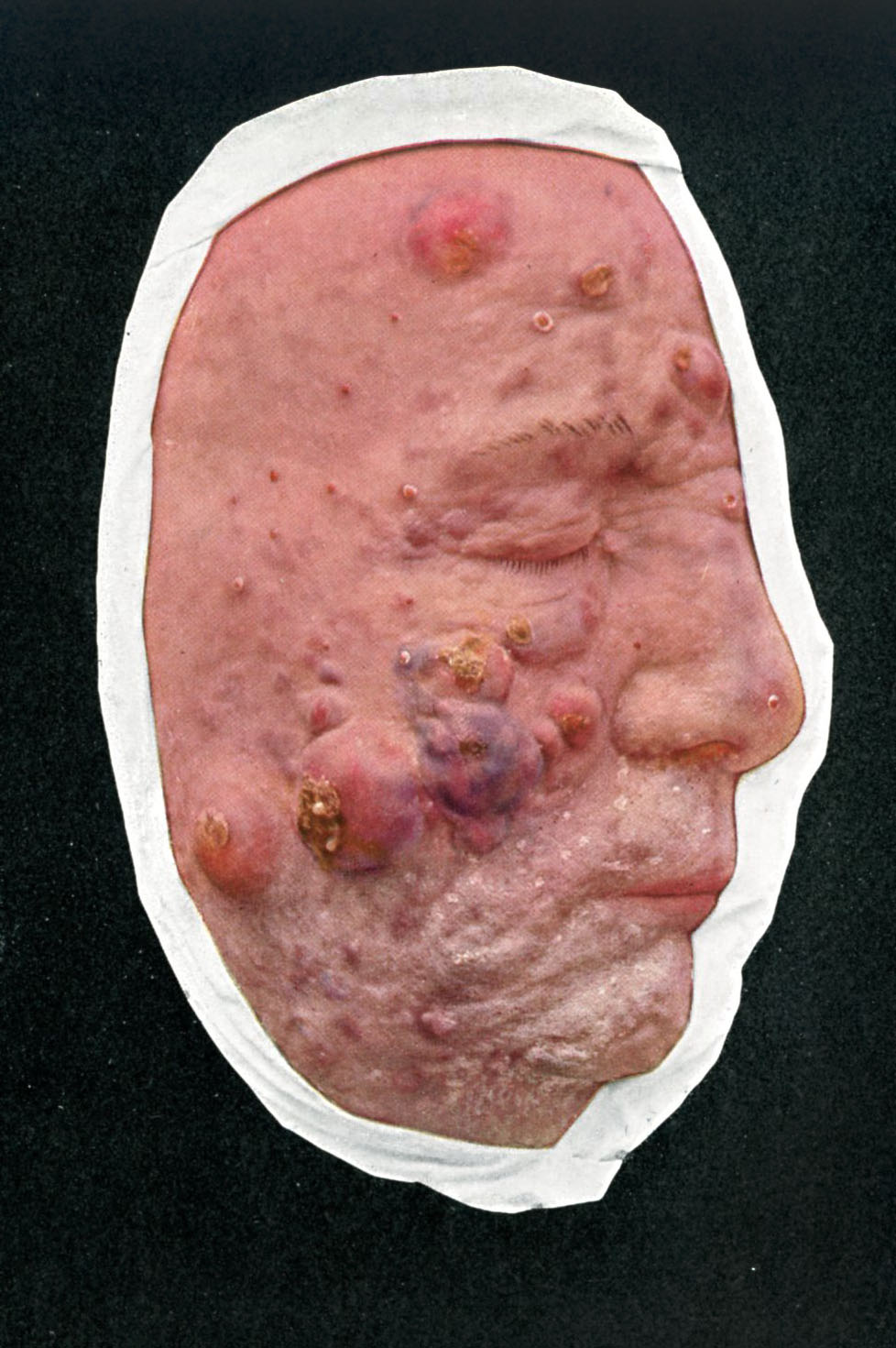
Figure 158. Model in Saint Louis Hospital in Paris.
Mycosis Fungoides.
The first stage of Mycosis (or Granuloma) fungoides is characterized by the appearance of violently itchy, very chronic patches on the skin, which resemble eczema or psoriasis, but resist all treatment suitable for these diseases (Fig. 157). After the inflammatory, infiltrated patches have lasted for years, tomato-like tumours develop either from them or rise abruptly from healthy skin; they are of bluish or reddish-brown colour and sometimes ulcerate on the surface (Fig. 158). After a prolonged duration of the malady death ensues from marasmus [undernourishment – DeSpair], often with internal secondary deposits. In very rare cases the pre-mycotic stage is absent.
The Etiology is unknown. The tumours present anatomical characters somewhat similar to those of sarcoma.
The Diagnosis is extremely difficult in the earlier stages, and can only be established by the extraordinary resistance of the patches to ordinary therapeutic measures, by the violent itching, and by the prolonged duration of the disease. In the second stage the characteristic tumours render the diagnosis a matter of no great difficulty.
The Prognosis is very unfavourable.
Treatment — Cures by arsenic have been reported, but the remedy is utterly unreliable.
Though they don’t use the ‘C’ word, this is obviously a type of cancer, as explained on by the Cleveland Clinic:
Mycosis fungoides is a type of skin lymphoma (cancer). It occurs when white blood cells become cancerous. Often, a skin rash is the first sign of mycosis fungoides. It doesn’t have a cure, but many people who receive timely treatment experience long periods with no symptoms.
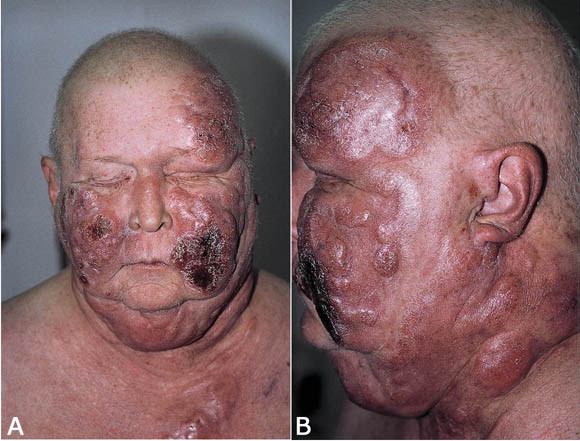
And as these photos attest, it’s every bit as awful as the wax models suggest: