Today’s Gnawed Yet Truly Morbid Fact!
The first evidence of any concerns in England over the signs of death and the risk of premature burial appears in Sir Francis Bacon’s Historia vitae et mortis (1623). He knew that the famous philosopher John Duns Scotus had been liable to some obscure kind of fits, during which he became surprisingly deathlike. When he was staying in Cologne, he was declared dead and buried after a fit, but his servant came up and said that the wretched man had probably been buried alive. He, the servant, had been instructed to prevent this at all costs, but he had taken a detour and arrived too late. When Duns Scotus’s coffin had been exhumed, it was seen that the corpse’s hands were torn and the fingers gnawed, from which it was concluded that the servant’s apprehensions had been only too valid. For many years, Duns Scotus’s tomb had a plaque with a Latin inscription, which was translated as follows:
Mark this man’s demise, o traveler,
For here lies John Scot, once interr’d
But twice dead; we are now wiser
And still alive, who then so err’d.
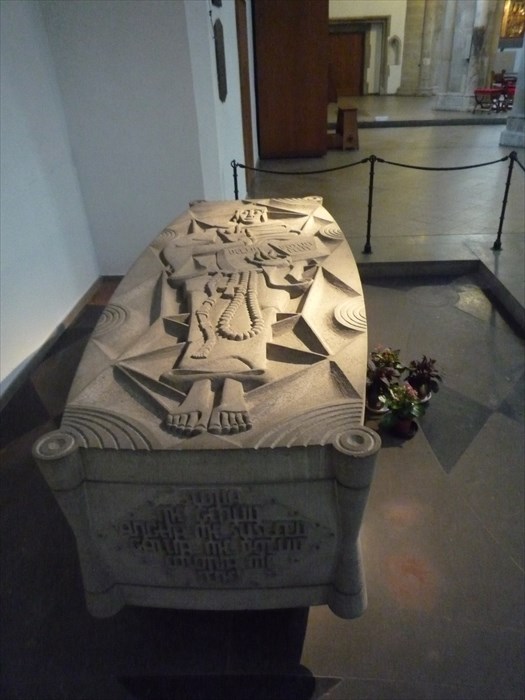
The Grave of John Duns Scotus, Cologne, Germany.
Culled from: Buried Alive: The Terrifying History of Our Most Primal Fear
Dissections Du Jour!
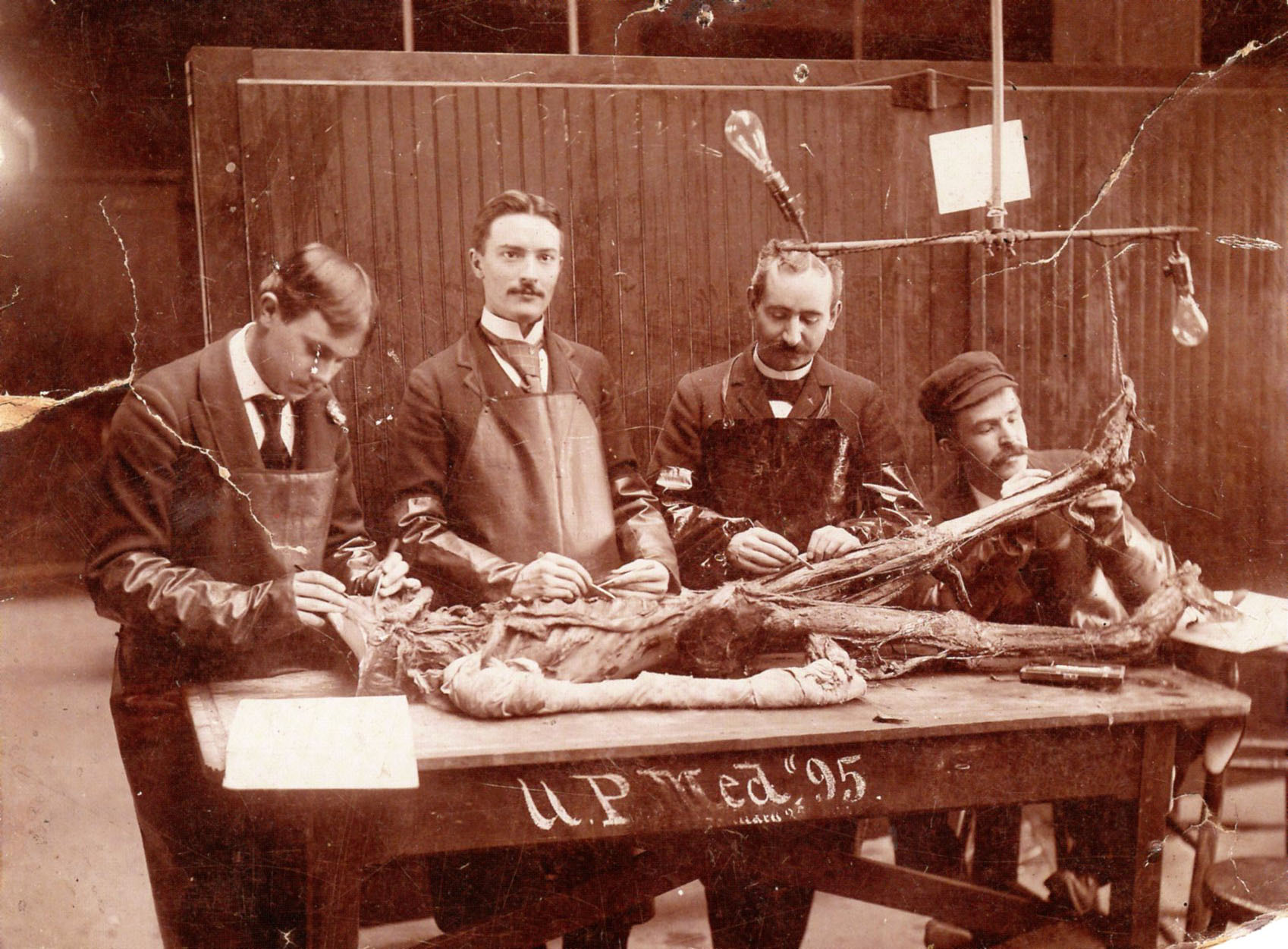
Here are a pair of dissection photos taken at the University of Pennsylvania School of Medicine, Philadelphia, 1895 (top) and 1896 (bottom). European-American dissecting teams and African-American teams were racially segregated after the medical student body at the University of Pennsylvania was integrated.
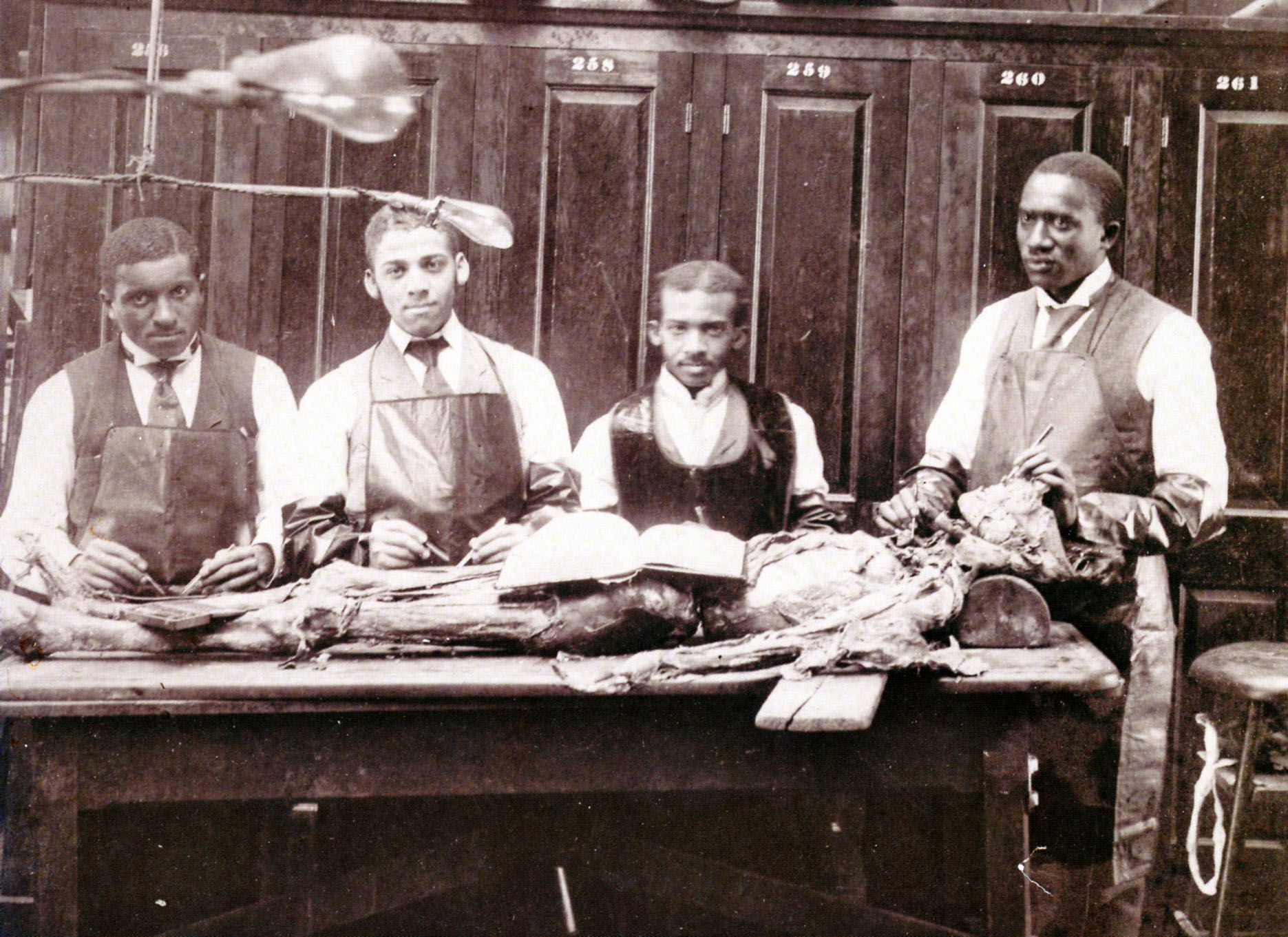
Left to right are: Samuel Patterson Stafford, Eugene Theodore Hinson, Samuel Clifford Boston, and Francis Julius LeMoyne Johnson. Dr. Stafford would practice in St. Louis, Missouri for more than fifty years, while Dr. Johnson, who practiced in Washington, Pennsylvania, died less than a decade after this photograph was taken.
Culled from: Dissection: Photographs of a Rite of Passage in American Medicine: 1880-1930