Today’s Narrow Yet Truly Morbid Fact!
Between February, 1864 and April, 1865 it is estimated that 45,000 Union prisoners were confined in the Confederate stockade, Camp Sumter, near Anderson Station, Georgia, forever to be remembered as Andersonville. Of that number, approximately 25,000 men survived their prison experience and returned home to tell their tale of suffering. It is unknown how many survivors, with their health and lives shattered, died as a direct result of their captivity after returning to civilian life. Close to 13,000 Union soldiers did “give up the ghost” at Andersonville, and it was the ghost of Andersonville that haunted the survivors for the rest of their lives.
The following is the account of:
Private Ichabod Preston
Company D, 85th New York Infantry, Fourth Corps.
Age: 25.
Captured at Plymouth, N.C. on April 20, 1864.
Entered Andersonville on May 1, 1864.
Early in June, I was taken sick with typhoid fever and removed to the hospital, where I remained about three months, and made a narrow escape from death. When I became convalescent I was detailed as an assistant hospital steward, and served quite a long time. I was then assigned to the duty of getting out the medicine at the drugstore, and was provided with a pass which permitted me to leave the stockade at any time during the day. I was in habit of going over to the depot, and in that event to visit three boys of Company H, of my regiment. They were on a detail in the commissary department. While visiting them one day, I slipped over and gave a piece of poisoned sponge to a bloodhound. I did not dare to mention the fact to anybody while I was at Andersonville, for one could hardly trust his best friend there. I heard a rebel sergeant say the next day that it was a damned Yankee that had done it, and that he would give $100 to find out who it was. The sergeant’s name was Smith – Crooked Neck Smith, we used to call him. I wonder if he would give as much now? It was my intention to give the rest of the dogs a similar dose, but was afraid of being caught. Detection would have meant death to me, beyond a doubt. But for those dogs I would not have staid [sic] in that prison hell as long as a whole year, as I did. I always believed I could out-general the rebs but for the dogs.
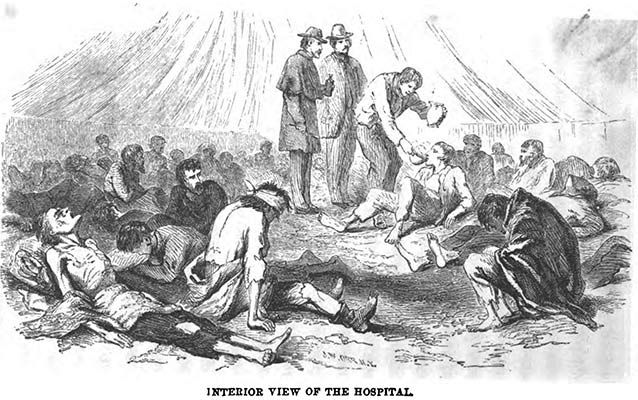
Culled from: Andersonville Giving Up the Ghost: Diaries & Recollections of the Prisoners
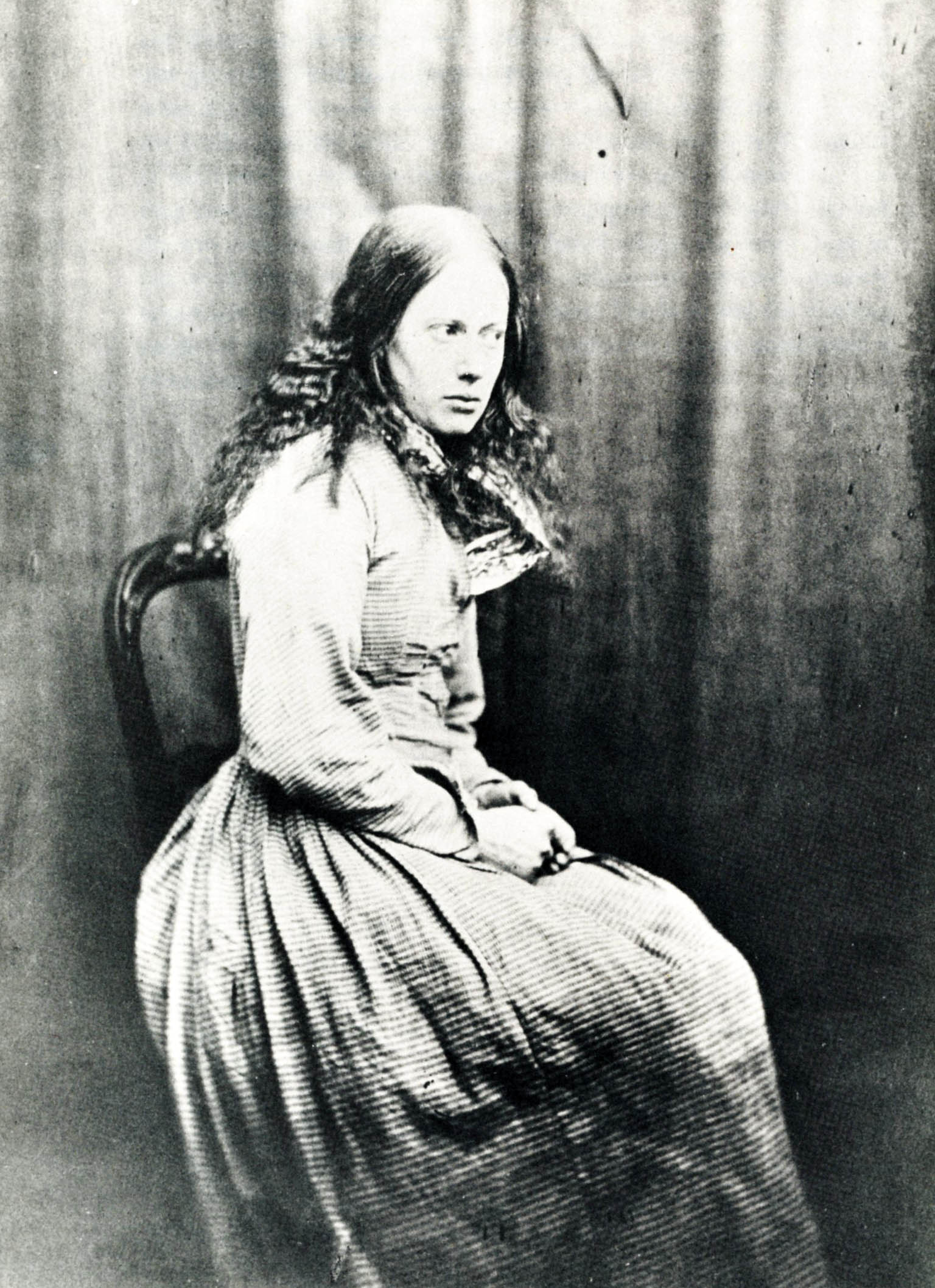
Asylum Inmate Du Jour!
In The Library Eclectica, I have a book entitled The Faces of Madness: Hugh W. Diamond and the Origin of Psychiatric Photography (edited by Sander L. Gilman), 1977. It contains a wonderful collection of photographs of asylum inmates taken in the 1850’s by pioneering medical photographer and psychiatrist Dr. Hugh W. Diamond. Here’s one of the inmates: