Today’s Insensible Yet Truly Morbid Fact!
The Radlett murder, also known as the Elstree murder, was an 1823 murder in Radlett, Hertfordshire, England, in the United Kingdom. The victim, William Weare, was killed in Radlett and the body disposed of in a pond in nearby Elstree. The crime gained a great deal of attention and was the subject of numerous books and stage plays. It is commemorated by the rhyme:
They cut his throat from ear to ear,
His head they battered in.
His name was Mr William Weare,
He lived in Lyons Inn.
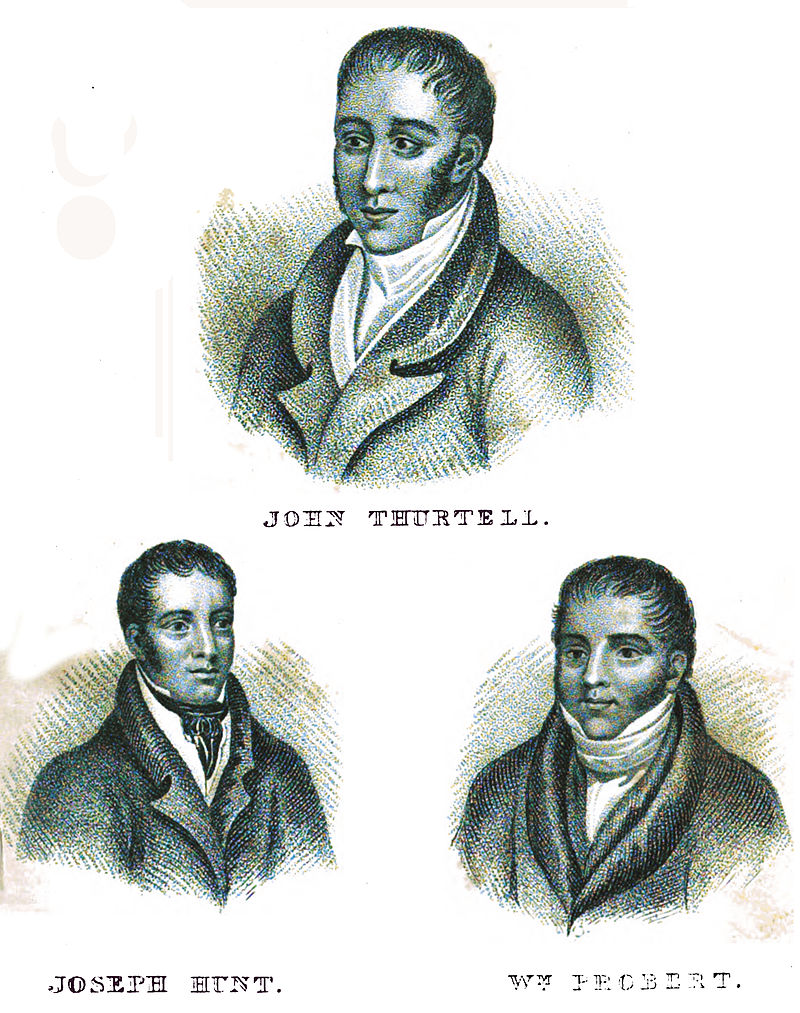
William Weare was a gambler and a solicitor of Lyon’s Inn. His killer was John Thurtell (1794–1824), a sports promoter, amateur boxer, a former Royal Marine officer and a son of the mayor of Norwich. Thurtell owed Weare a gambling debt of £300, an immense sum at the time (equivalent to £24,500 in 2015), which he believed Weare had gained by cheating. Whatever the truth, when Weare demanded the money Thurtell decided to murder him rather than pay up.
Thurtell invited Weare to join him and his friends – Joseph Hunt, a tavern landlord, and William Probert, a former convict and alcohol merchant – for a weekend of gambling at Probert’s cottage at the site of Oaks Close off Gills Hill Lane (subsequently popularly known as Murder Lane), Radlett. On 24 October 1823 they journeyed from London in Thurtell’s horse-drawn gig, but Weare was killed in a dark lane just short of their destination.
Thurtell shot Weare in the face with a flintlock muff pistol, but this failed to kill him. Weare escaped from the gig but did not get far before Thurtell caught him. As Weare lay injured, Thurtell slit his throat with a knife before driving the pistol into his head with such force that his brains were dashed over the ground. Assisted by Hunt and Probert he hid the corpse in a pond near the cottage. This hiding place was judged too unsafe for Probert, however, and the body was moved to another pond in Elstree. By this time both weapons had been found, as Thurtell had left them on the road. The pistol was one of a pair, the other still in Thurtell’s possession. The culprits were identified and caught. Hunt himself led the authorities to the body.
Thurtell, Hunt and Probert were indicted for murder. The foreman of the grand jury which indicted them was William Lamb, who as Lord Melbourne would later become Prime Minister. The three were tried at Hertford Assize Court. Even though Hunt had cooperated the most with the authorities, it was Probert who was offered the chance to save himself by turning King’s evidence against the other two in exchange for freedom. Hunt was tried as an accessory to murder; his counsel was Frederic Thesiger, a future Lord Chancellor (head of the English judiciary).
Thurtell and his associates’ actions pursuant to the murder were as widely reported and commented upon as the crime itself. Having temporarily disposed of Weare’s corpse, “the trio entered the house, Hunt was introduced to Mrs Probert, directions were given to cook some pork chops for supper, and then Thurtell took the two men to the field, where they rifled the body, and left it lying enveloped in the sack. After supper a jovial evening was spent, Hunt sang several songs over the grog, and Thurtell gallantly presented Mrs. Probert with the gold chain he had taken from the body.” A contemporary street ballad, The Hertfordshire Tragedy, did not fail to emphasize the particulars:
Although his hands were warm with blood,
He down to supper sat,
And passed the time in merry mood,
With drink and songs and chat.
The singing in particular commanded attention. In discussing post-homicide cold-blooded tranquility, H.B. Irving (a Victorian barrister and oldest son of the Victorian stage star Sir Henry Irving), author of the Book of Remarkable Criminals remarks, “Such callousness is almost unsurpassed in the annals of criminal insensibility. Nero fiddling over burning Rome, Thurtell fresh from the murder of Weare, inviting Hunt, the singer and his accomplice, to ‘tip them a stave’ after supper . . .” Nor were the proceedings of the trial lacking in amusement, supplied generously by Hunt’s testimony in court. Hunt was questioned about the supper indulged in immediately after the murder: “Was the supper postponed?”—“No, it was pork.” Another piece of testimony had literary value: when someone was asked about the character of Thurtell, the answer was that he was a gentleman because he kept a gig. Thomas Carlyle seized upon this as a definition of a false gentility, writing about “gigmanity”.
Thurtell was hanged on January 9, 1824, aged 29, by Thomas Cheshire assisting James Foxen. Having always denied his crime, he admitted it on the gallows. On the day after his death, Thurtell’s body was dissected (part of the sentence for murderers at the time). A waxwork of his body was displayed in Madame Tussauds for 150 years. Although Thurtell had been popular and had received public sympathy, some of his relatives still chose to change their names to avoid being associated with him.
Hunt was also sentenced to death, but in recognition of his cooperation his sentence was commuted to transportation to an Australian penal colony for life. He was taken to Botany Bay, where he rehabilitated. After serving his time, Hunt gained his freedom and started a life in Australia, marrying and raising a son and a daughter. He became such a respected man that he became a police constable. Hunt died in 1861.
Probert was never punished for Weare’s death. However reports of his involvement in the newspapers meant he was reviled and became a social outcast. Unable to find work, Probert resorted to crime to support himself and his wife, and in 1825, at 33, was hanged at Newgate Prison for stealing a horse worth £25 from a relative.
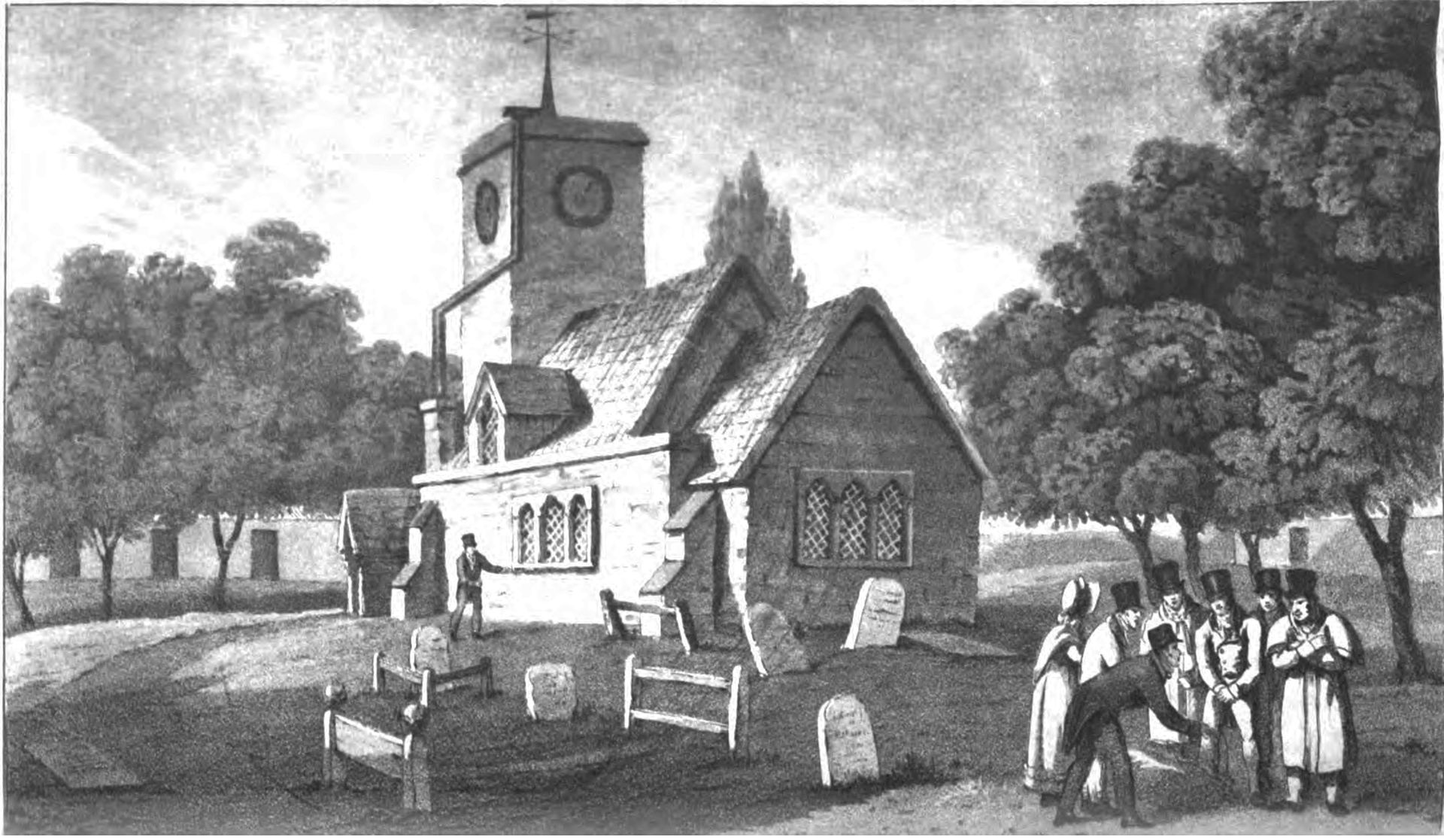
The Burial of William Weare
Culled from: Wikipedia
Arcane Excerpts!
Ah, vintage children’s books – always so full of cheer!
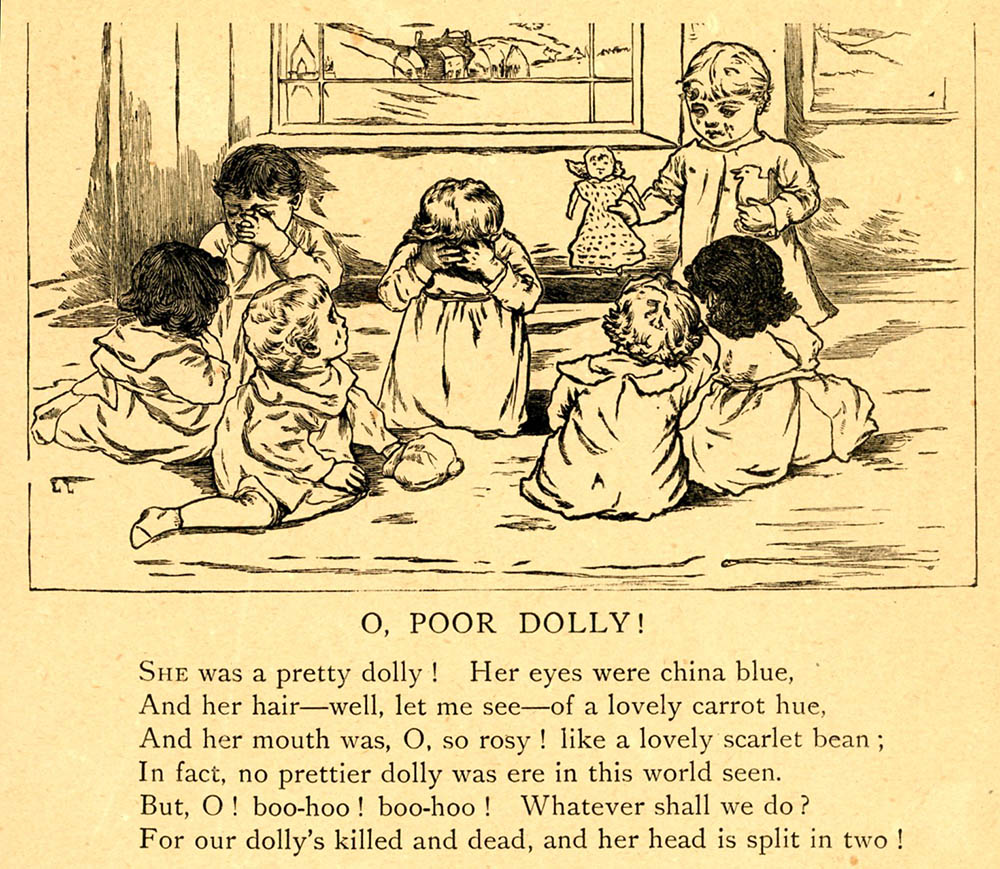
Culled from: Cosey Nook Picture Book, 1895