Today’s Homicidally Desperate Yet Truly Morbid Fact!
The Mike Malloy murder conspirators numbered four: Tony Marino; his bartender, Red Murphy; the local funeral home director, Francis Pasqua; and the fruit vendor from down the street, Daniel Kriesberg. The well-connected Pasqua set up meetings with insurance agents. By the time February 1933 came around, the conspirators had wrangled three life insurance policies taken on Malloy. One policy was with Metropolitan Life for $400 and two smaller policies with Prudential. It wasn’t much money but with double indemnity for accidental death, the policies would bring in almost $1,500.
Malloy would do anything for his friends at the speakeasy—and for the unlimited drinks that Marino promised him. With no apparent suspicion, the old man signed the insurance policies, agreeing to let Pasqua pay the premium and Murphy to be named his brother and beneficiary.
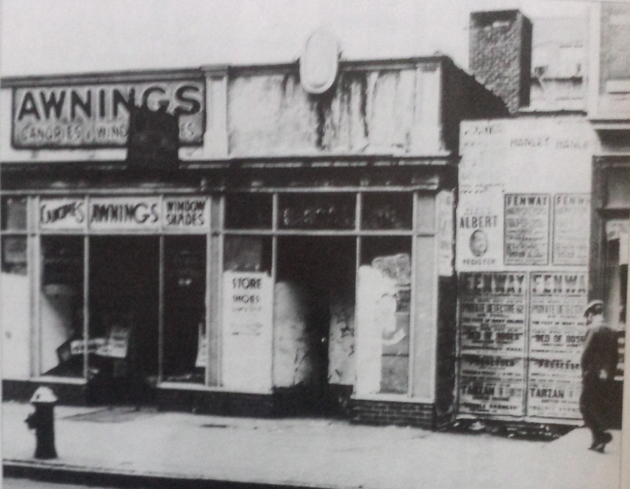
Marino’s Speakeasy
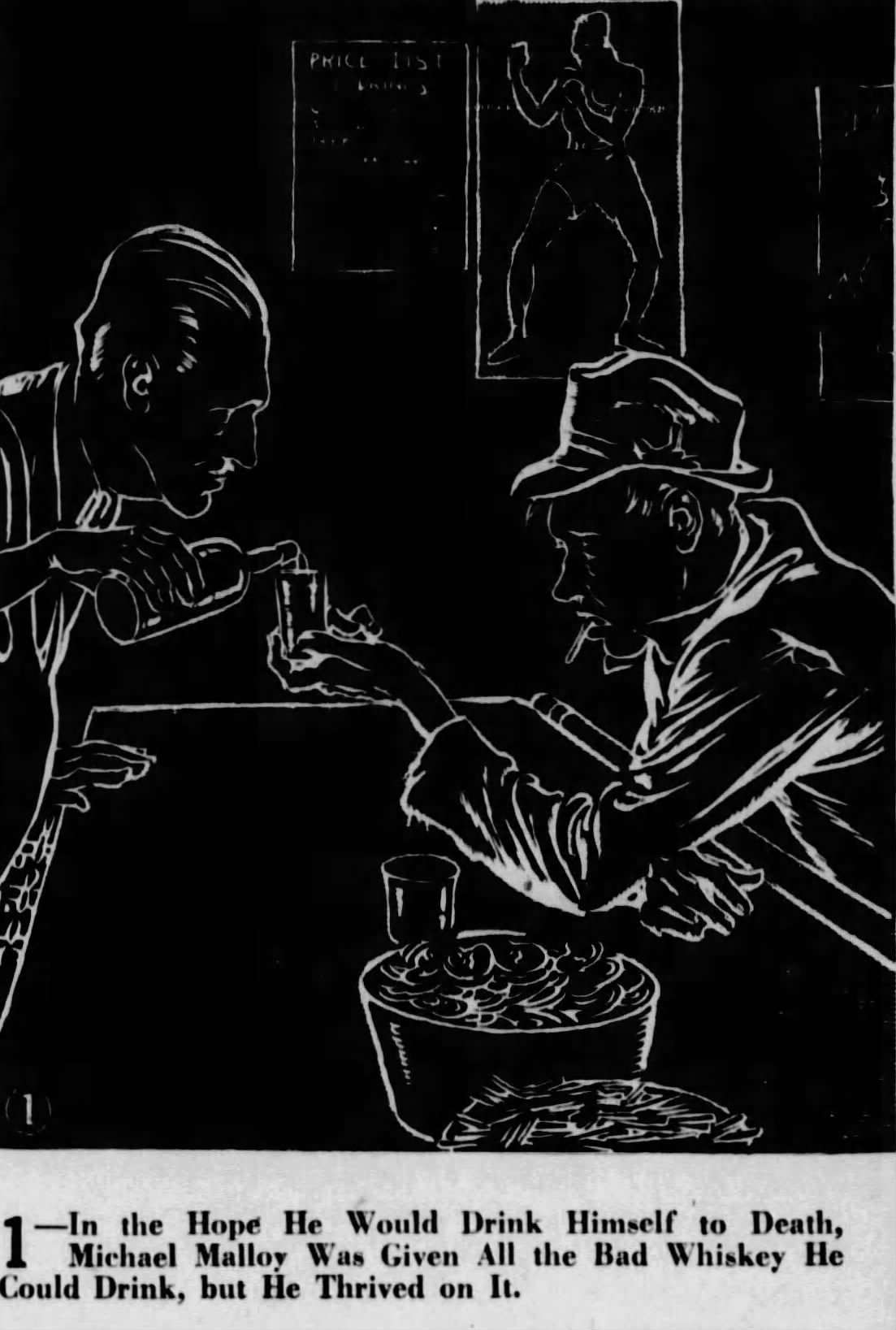
Malloy was an aging wreck, maybe sixty, and homeless except when Pasqua let him sleep in the funeral home. He had the yellowed-scarecrow look of a longtime boozer. The members of the murder club figured that a mere week of unlimited alcohol would finish him off. But two weeks later, offered nightly meals of whiskey along with the sardines and crackers served as bar food, Malloy was instead thriving. He seemed to have gained a little weight and hadn’t missed a personal happy hour yet.
Maybe, Marino reasoned, the problem was the liquor. Malloy was obviously well-accustomed to large quantities of regular alcohol—too well, maybe. Undoubtedly, he needed something stronger. Everyone knew—hadn’t he medical examiner’s office been preaching it for years?—that methyl alcohol made a potent drink. So Marino hurried off to acquire a supply of industrial alcohol from a gasoline station.
Red Murphy served the straight stuff to Malloy—a tumbler full on the rocks. The insurance syndicate watched the old drunk expectantly. But he didn’t fall unconscious to the ground; his breathing continued with rasping regularity. He drained the tumbler and held it out for a refill. The next night he was back again. Still sucking down Marino’s good liquor.
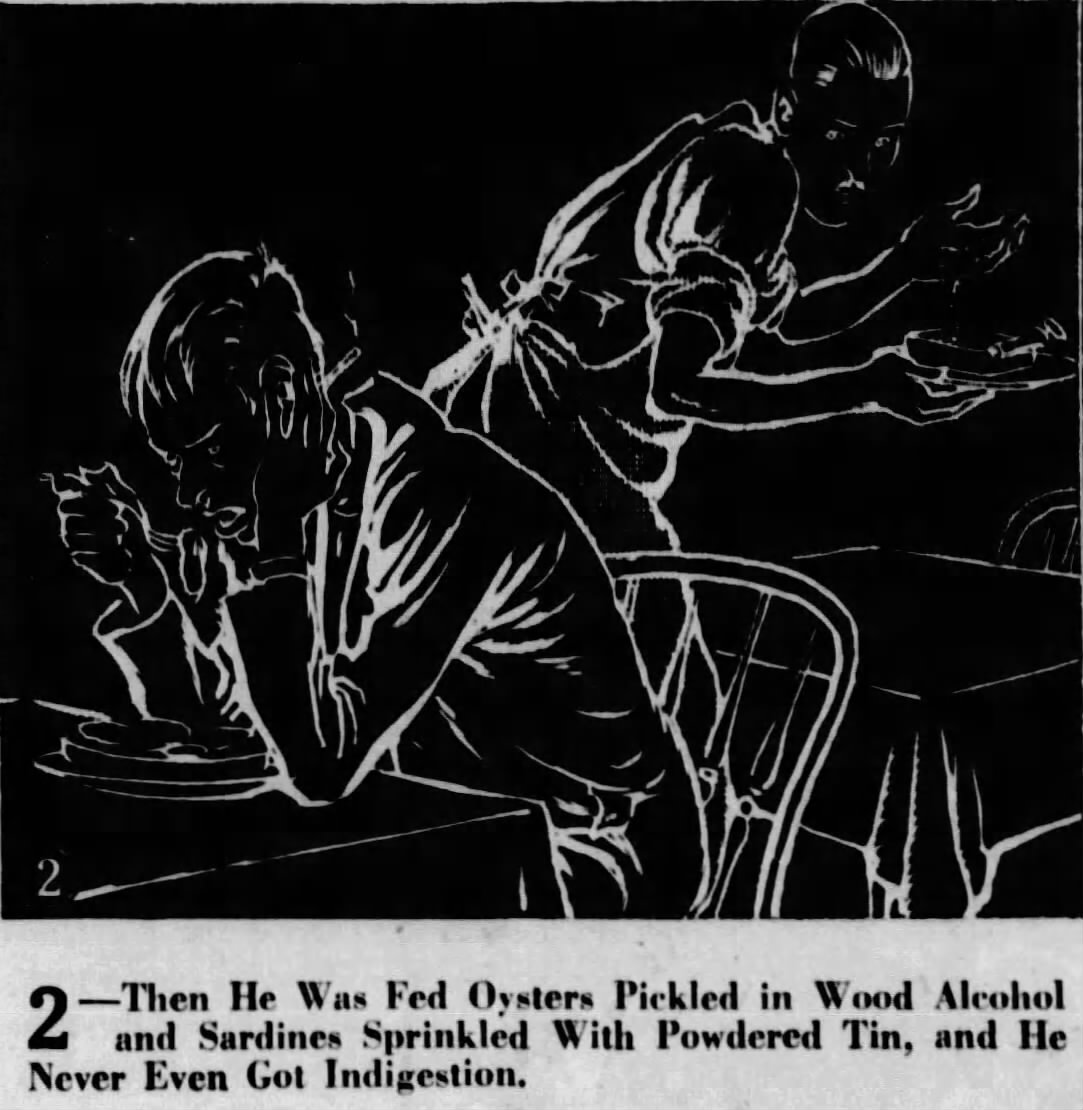
By mid-February, the conspirators gave up on alcohol poisoning.
Marino decided to kill Malloy with food instead—one of his more inventive attempts was a sandwich of rotting sardines, ground glass, and metal shavings. It failed. So did oysters marinated in wood alcohol.
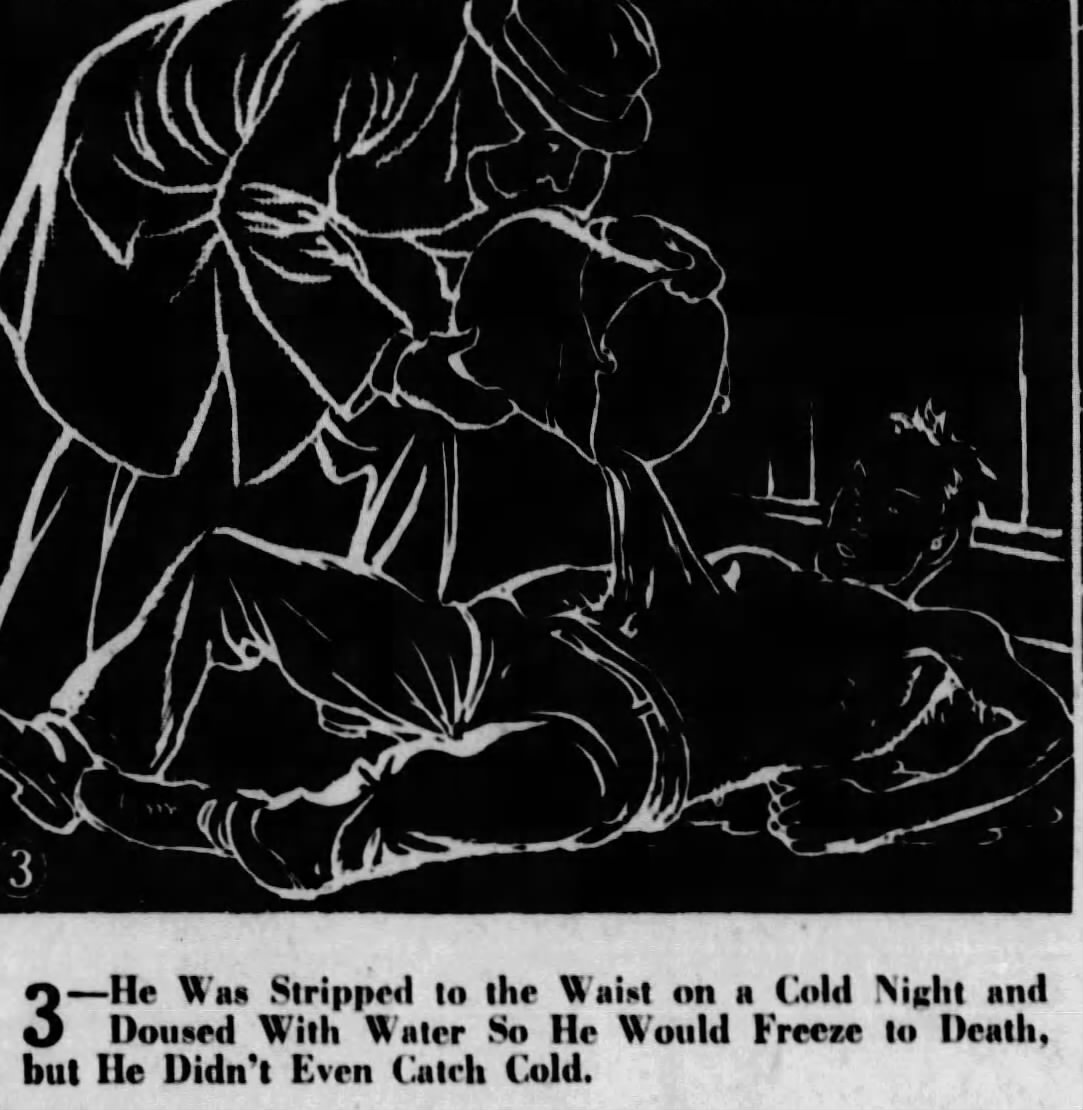
On an exceptionally cold night they waited until Malloy passed out, put him outside, and poured water over him. But that didn’t work either; the icy water had awakened him and he’d returned to Marino’s speakeasy to sleep it off on the floor.
By this time Marino had achieved a state of homicidal desperation. He brought another bar patron into the conspiracy, a cab driver named Hershy Green. He hired Green to drive over Malloy, promising that the chosen victim would be passed out and lying in the street. The payment would be $150, as soon as the insurance checks came through. The next night the conspirators lugged Malloy’s unconscious body to a dark side street. Green revved the cab and the impact sent Malloy flying onto the sidewalk. They left his body for strangers to find, but in the next few days they puzzled over the lack of any newspaper story about the derelict’s death.
A week later Mike Malloy limped back into the bar.
He’d been in the hospital, he told them, recovering from being hit by a car. He didn’t remember it, wasn’t sure how it happened. But he learned that a policeman had found him crumpled on a sidewalk and gotten him off to a hospital. He’d had a fractured skull and some broken bones, but they’d patched him back together.
Man, it still hurt though. He really could use a drink—any old bootleg variety would do.
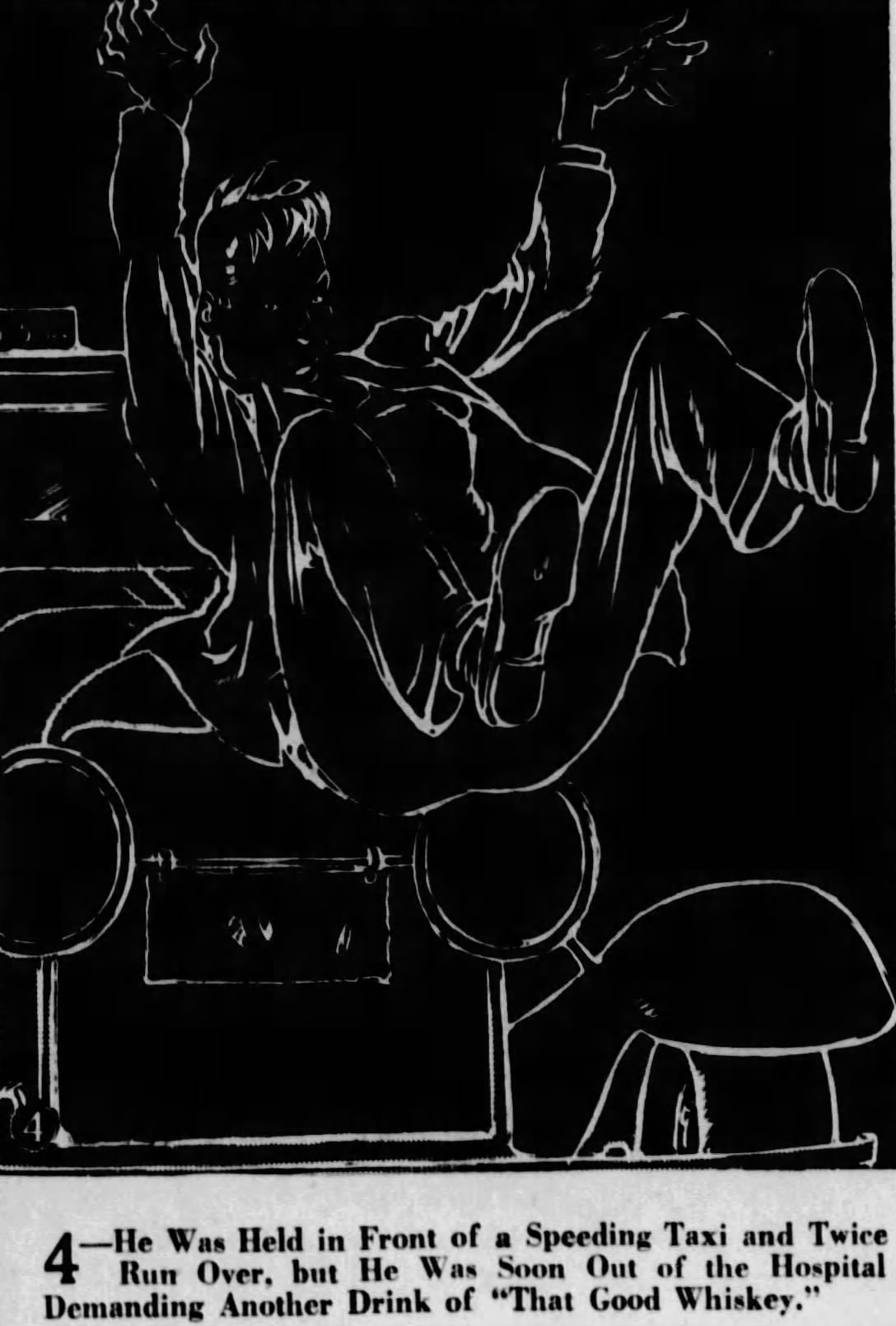
Later in February the frustrated Malloy conspirators came up with yet another murder scheme. This one would be so successful that it would mock all their earlier efforts. They would use one of the most reliable of all poisons—carbon monoxide at an unbearably high dose.
Posing as factory workers, Red Murphy and Daniel Kriesberg rented a room in a nearby boardinghouse. True, it had only a bed and no other furniture, but the room was lit by gaslight; the nozzle for the illuminating gas was right on the wall above the bed.
On the night of February 22, Murphy kept Malloy’s glass full until the old man again slid unconscious to the floor. Marino, speaking loudly enough that all could hear, suggested to Murphy that he take the unconscious man home, to sleep it off. Murphy and Kriesberg then carried Malloy out the back and half-dragged, half-hauled him to the boardinghouse. The landlady, watching the trio stagger up the stairs, asked if their friend was sick. No, just drunk, they answered cheerfully.
Once they had him in bed, with the door shut, Murphy and Kriesberg worked fast. They attached a rubber hose to the gas valve and put the other end of the hose into Malloy’s mouth, packing a towel over his face to close off his nostrils. Then they turned on the gas.
Malloy had withstood ethyl alcohol, methyl alcohol, rotten fish, fermented oysters, broken glass, metal slivers, an ice-water soaking, and an automobile ambush. But carbon monoxide was something else again. Later Murphy would estimate it took less than five minutes before Malloy was dead.
Kriesberg, once he confessed, would add a little color, emulating the sound of the gas hissing like a snake as it flowed through the little rubber tube. He’d listened to it until he suddenly realized that Malloy was no longer breathing, that he could hear only the snakelike hiss of illuminating gas going into a dead man’s lungs.
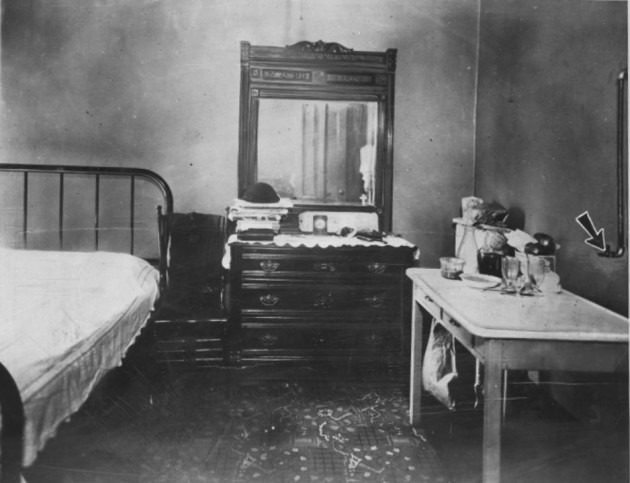
The room in which Iron Mike Malloy finally perished.
To be continued…
Culled from: The Poisoner’s Handbook
Asylum Inmate Du Jour!
In The Library Eclectica, I have a book entitled The Faces of Madness: Hugh W. Diamond and the Origin of Psychiatric Photography (edited by Sander L. Gilman), 1977. It contains a wonderful collection of photographs of asylum inmates taken in the 1850’s by pioneering medical photographer and psychiatrist Dr. Hugh W. Diamond. Here’s one of the inmates:
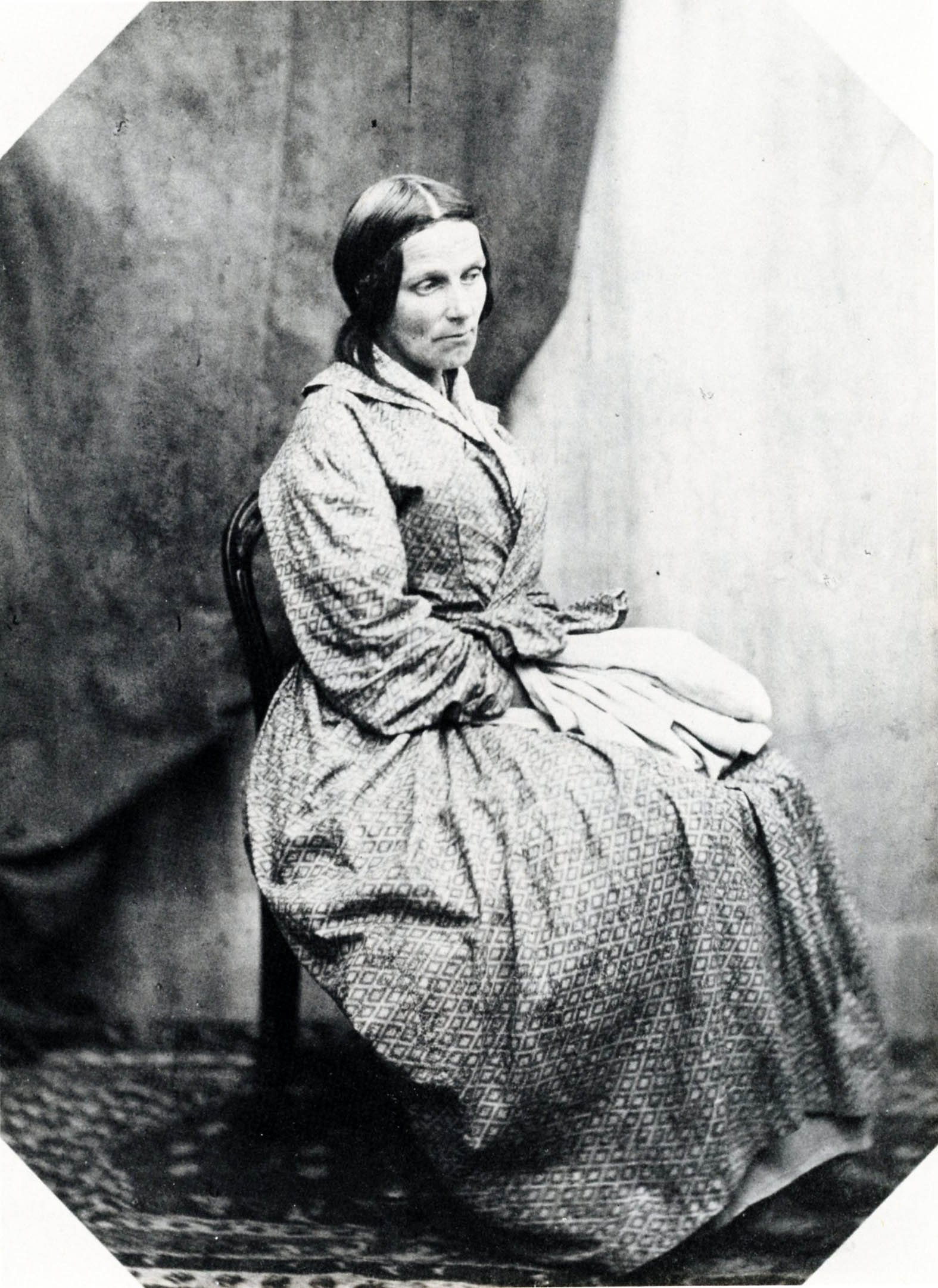
What do you suppose her diagnosis was? My guess is just plain old Grief-Induced Melancholy. Probably lost all 7 of her children in a yellow fever epidemic.
The writer of this piece should have taken a look at the photo (with its helpful arrow): the gas nozzle was not “right on the wall over the bed,” but on the opposite side of the room.
Yeah, you know, I just caught another mistake the writer made while transcribing today’s fact. Disappointing. I think I’ll use a different source for today’s portion.