Today’s Pockmarked Yet Truly Morbid Fact!
Other than quarantine, the only effective means of combating smallpox was through deliberate infection. It had been observed in India and China that pockmarked survivors never again contracted the disease. This observation led to the idea of preventing natural smallpox by making small incisions in the skin of healthy people and inoculating them with scabs or pus from smallpox patients who had a mild form of the disease. Known as “buying the smallpox” or “variolation,” the practice of smallpox inoculation began in India sometime before 1000 B.C., spread to Tibet, and was introduced into China by monks at a Buddhist monastery in Sichuan province around A.D. 1000.
For some unknown reason, introducing smallpox through the skin rather than the respiratory tract, the natural route of infection, had the effect of reducing the fatality rate from 30 percent to about 1 percent. In most cases, only a few dozen pustules appeared around the inoculation site, yet the resulting lifelong immunity was equivalent to that produced by the full-blown illness. Variolation entailed substantial risks — about one in a hundred people developed a fatal case of smallpox — but when faced with the near-certainty of contracting the natural disease, many willingly took the gamble.

Illustration of Variolation
Different forms of variolation were practiced in various parts of the world. A Chinese method, known as “insufflation,” involved grinding dried smallpox scabs into a fine powder, which was then sucked into the nose through an ivory straw in the manner of taking snuff. Yu T’ien-Chich described this technique in his book, Miscellaneous Ideas in Medicine, published in 1643. In Russia, recipients went to a bathhouse and had their skin slapped with branches that had previously been used on a smallpox victim. During the mid-seventeenth century, merchant caravans brought knowledge of variolation to Arabia, Persia, and North Africa, and it came to be practiced at the folk level throughout the Ottoman Empire, mainly by old women. The Turks used the method of skin inoculation, which they called “engrafting”.
Culled from: Scourge: The Once and Future Threat of Smallpox
Concentration Camp Victim Du Jour
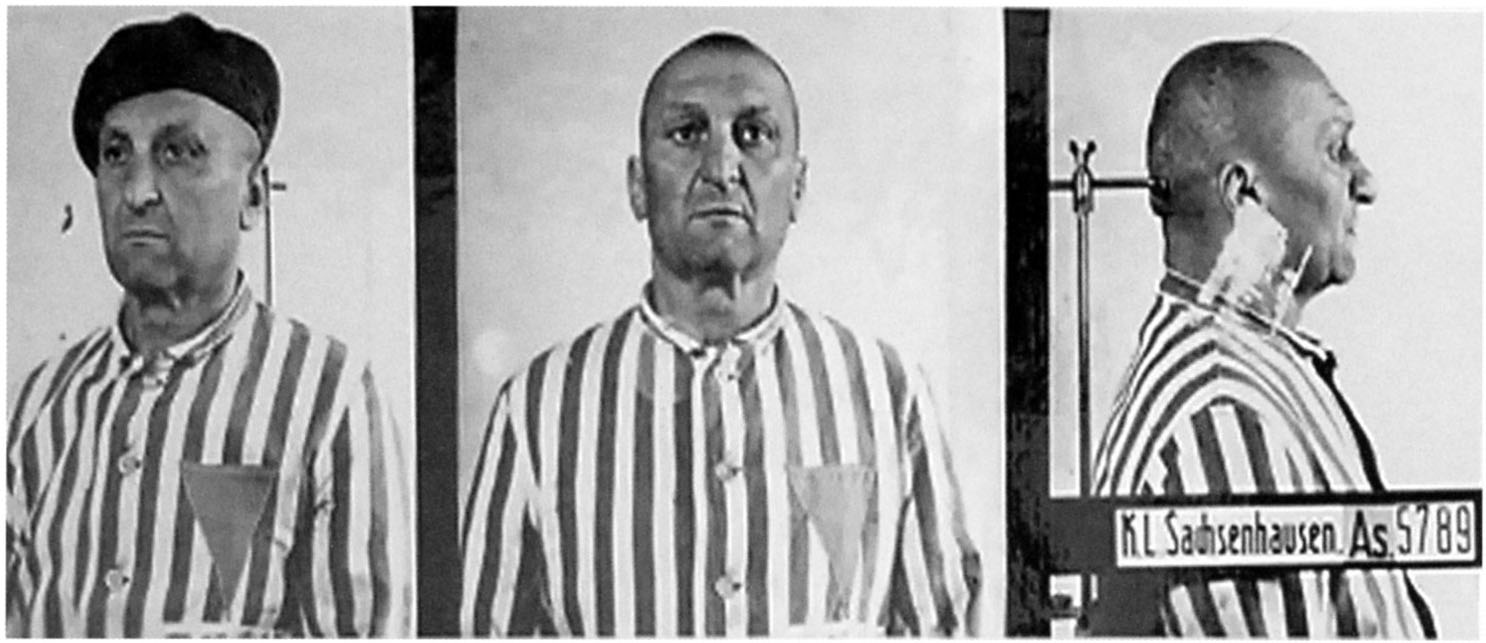
Persecuted as an “antisocial”, identity photo, June 1938
More than 6,000 people were brought to Sachsenhausen in June 1938 during “Operation Work-shy Reich” and forced to work there. According to the Nazi definition, “anti-socials” were people “who did not [want to] fit in to the national community.” This photo shows Georg F., a 43-year-old, who was classified in this category and was put in the camp on June 23rd, 1938,
Culled from: Sachsenhausen Concentration Camp