Today’s Disguised Yet Truly Morbid Fact!
In 1893, Hawley Harvey Crippen married his second wife, Cora Turner, in Jersey City, America. Seven years later, in 1900, they moved to London. He was employed as a representative for Munyon’s Remedies, a company making homeopathic remedies while Cora, using the name Belle Elmore, had aspirations to be a music hall artist. Unfortunately, Belle had no talent whatsoever.
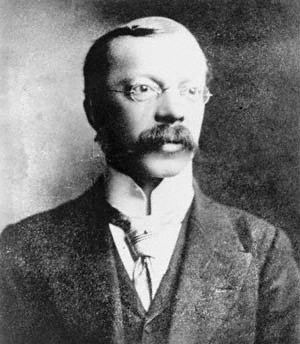
Hawley Harvey Crippen
In fact, neither Belle nor Cora was the real name of Mrs Crippen. She had been born Kunigunde Mackamotzki and was the daughter of a Russian-Polish father and a German mother. She was also a most overbearing and dominant character. Her long-suffering husband supported her ambitions to be first an opera singer and, when that didn’t work out, a singer in the music hall but she had very little success. All she did manage to get out of her ‘career’ was a few showbusiness friends and the position of Treasurer of the Music Hall Ladies Guild in London.
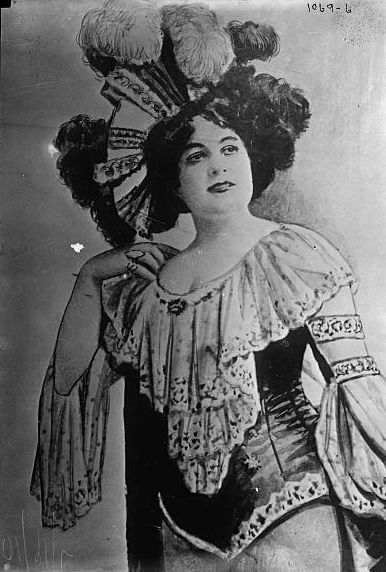
Belle Elmore
In September 1905, Dr Crippen and his wife took a lease on 39 Hilldrop Crescent in Holloway. Part of the thinking behind this move was that the pair could now have separate bedrooms. Belle had never really been a sexual person and according to what Crippen would later say, all physical relations between them ceased in 1907. Crippen, meanwhile, had fallen in love.
The object of his desire was Ethel Le Neve, a typist who worked for him. At about the same time that Crippen stopped having sex with Belle, he and Ethel became lovers. This situation continued until 1910.
On the evening of Monday, 31 January 1910, the Crippens threw a dinner party for two close friends of Belle’s: Paul and Clara Martinetti. The meal passed pleasantly enough, except for one incident. Paul Martinetti had asked to use the toilet and because Crippen didn’t escort him upstairs to show him where it was, Belle berated him. By the time the Martinettis finally left, it was around 1 a.m. on Monday, 1 February. It would be the last time that anyone saw Belle Elmore alive.
Over the next week or so people began to ask where Belle was. Crippen said that she had gone to America. As the days passed, this story was amended and now she had fallen ill. Finally, Crippen told people that his wife had passed away. There was, however, one problem with this. Ethel Le Neve had started wearing some of Belle’s jewelry and, by the end of February, she had moved in with Crippen at Hilldrop Crescent. Friends grew suspicious and in due course those suspicions were passed on to the police.
On 8 July, Chief Inspector Walter Dew called at Hilldrop Crescent where he found Ethel alone. Crippen, it seems, was at work, so Dew visited him there and the two returned together to Hilldrop Crescent where Crippen happily showed the officer around the house. He also told Dew a different story. Belle had left him for another man, almost certainly Bruce Miller, an American she had met in late 1903. Dew told Crippen that it would be better if Belle contacted him to confirm this story and Crippen said that he would place an advertisement in certain newspapers, asking for her to make contact.
Things now moved very quickly. The next day, 9 July, Crippen shaved off his distinctive moustache and with Ethel Le Neve disguised as a boy, travelled to Brussels. There they bought tickets for passage to Canada, travelled on to Antwerp and there boarded the SS Montrose, travelling as father and son.

Ethel Le Neve disguised as a boy
At about the same time, Chief Inspector Dew returned to Hilldrop Crescent. He was surprised to find Crippen and Ethel missing and decided to make another routine search of the house. In the cellar he noticed some loose bricks in the floor. Officers were ordered in to make a more thorough search and beneath those bricks they found the remains of a body. The body was headless, limbless and boneless – little more than pieces of flesh, but it was female. It was time to find Crippen.
Aboard the Montrose, the father and son were watched with interest. They seemed to be unduly affectionate and were constantly holding hands. Added to that, the boy’s clothing seemed to be very ill-fitting. Captain Kendall had his suspicions and telegraphed a message to Scotland Yard. Dew, now determined to intercept the ‘father and son’, boarded a faster ship, the SS Laurentic, and the hunt was on.
On Sunday, 31 July, Dew and other officers boarded the Montrose as it sailed up the St Lawrence. The father and son were identified as Crippen and Ethel Le Neve, both were arrested and, after three weeks, were escorted back to England to face trial.
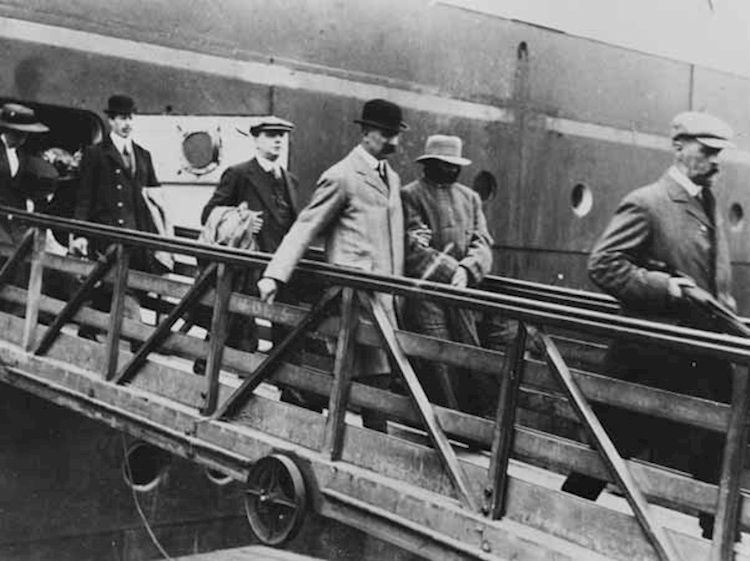
Inspector Dew descending the steps of the Montrose next to a disguised and handcuffed Crippen
It was decided that the pair should not be tried together. Crippen would face his trial first and, once that verdict had been determined, Ethel Le Neve would take her turn in the dock, to be tried as an accessory. So it was that on 18 October, Crippen stood alone in the dock at the Old Bailey before the Lord Chief Justice of England, Lord Alverstone. The proceedings would last until 22 October.

Crippen’s defence was simple. The body found in the cellar of his home was not Belle’s. The body must have been of some poor unknown woman and been placed there before he and Belle had moved in. It was, therefore, crucial to the prosecution to prove that the body was Belle’s.
One piece of the flesh found in the shallow grave had borne a scar and medical records showed that Belle had such a scar on her lower abdomen. More conclusive was the fact that the remains had been wrapped in a pyjama jacket and a tag inside that jacket led to the manufacturers: Jones Brothers. They confirmed that this particular cloth and pattern were not issued until late 1908, proving that the body must have been placed there after that date. This, and the scar, was consistent with the body being that of Belle Elmore.
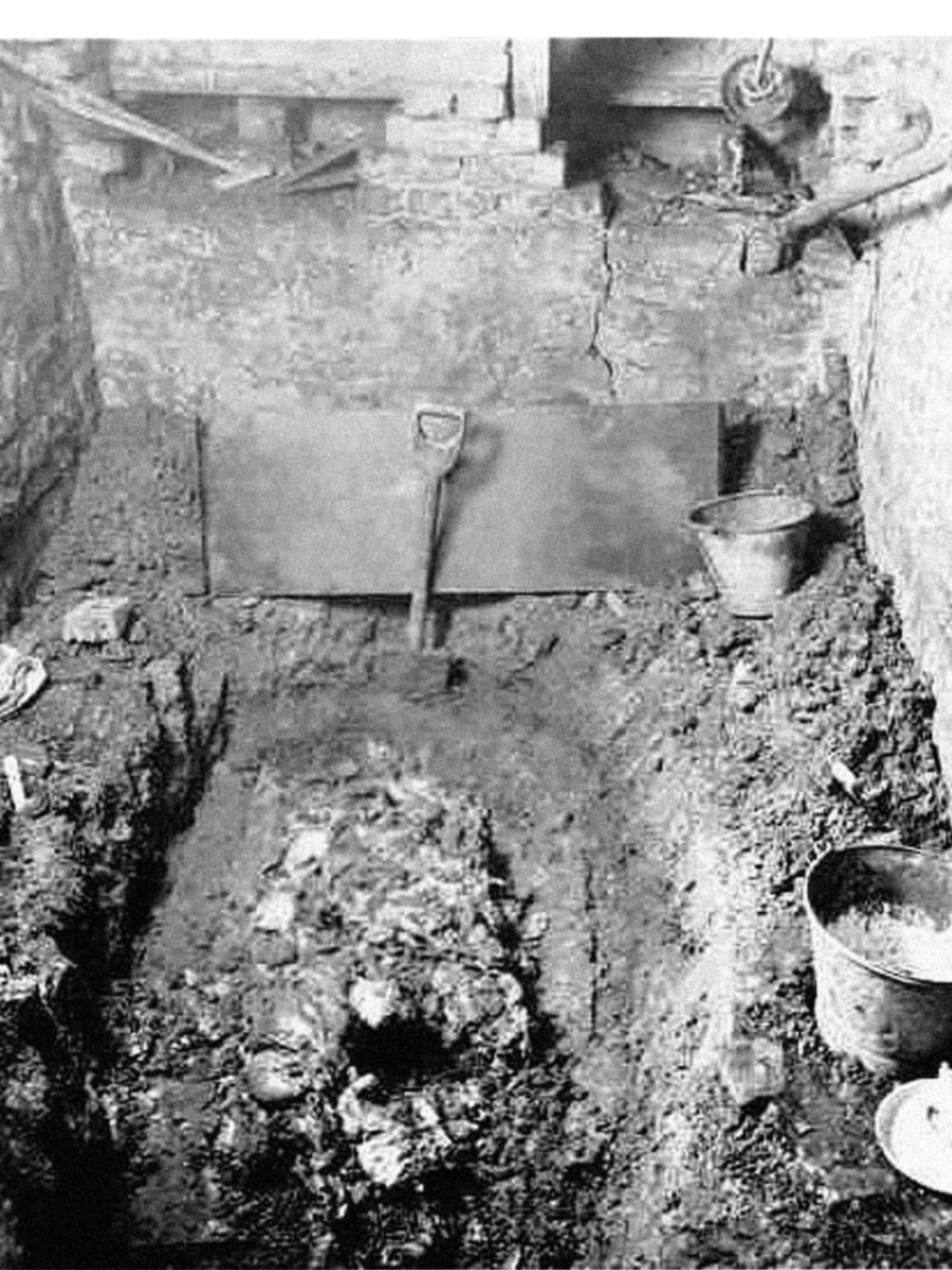
Crippen’s cellar
Medical tests had shown that the flesh contained traces of hyoscine, a poison, and it was known that Crippen had purchased five grains of that substance on 17 January, two weeks before Belle had vanished. It was enough for the jury, who took just under thirty minutes to find Crippen guilty of his wife’s murder.
On 25 October, Ethel Le Neve was put on trial as an accessory to murder and found not guilty. A subsequent appeal on behalf of Crippen was dismissed and his death sentence was confirmed.
On Wednesday, 23 November 1910, 48-year-old Crippen was hanged at Pentonville by John Ellis and William Willis. Crippen’s last request had been for a photograph of Ethel and some of her letters to be buried with him in his unmarked grave. The request was granted.
Culled from: The History Press
Of course, the great Erik Larson has written a book about this case, though I haven’t read it yet: Thunderstruck.
Civil War Portrait Du Jour!

Southern boys like Private Edwin Francis Jamieson (see MFDJ 08/12/23) fought Northern boys like New York volunteer Private George A. Stryker, prictured here, in the kind of action Warren Lee Goss, a Massachusetts private, described at Malvern Hill:
Night came, yet the fight went on… The lurid flashes of artillery… the crackle of musketry, with flashes seen in the distance like fireflies; the hoarse shriek of the huge shells from the gun-boats… made it a scene of terrible grandeur. The ground in front… was literally covered with the dead and wounded. At nine o’clock the sounds of the battle died away, and cheer after cheer went up from the victors on the hill.
Culled from: Portraits of the Civil War
Andersonville Prisoner Diary Entry Du Jour!
This is the continuation of the 1864 diary of Andersonville prisoner Private George A. Hitchcock (see the archived version for all entries up until now).
Here’s today’s entry:
June 18th. Our squad was called to the gate and divided. As several of our number could not be found, the Dutchman informed us that we would not have any rations until the missing men were produced. It seemed like hunting for a needle in a hay-mow, but our stomachs craved, and each man made an energetic search until all were found.
We are formed into the eighty-third detachment (of 270 men each). Each detachment is divided into three squads, of 90 men each. Rebel sergeants call the roll of the detachments every morning. A Union sergeant is assigned to each squad, and, when the ration wagons come in, goes with a detail from the squad and gets and distributes their rations. These are the only camp regulations. The rations are brought into camp in the latter part of the afternoon. The view of the country outside is a dreary swamp, where all refuse matter of 25,000 men is thrown and deposited. It has become a mass of corruption, living with worms, and would alone be reason enough for the dreadful mortality which increases every day. Several prisoners for [Maj-Gen Franz] Sigel’s West Virginia Army came in to-day, many of them wounded, whose wounds have not yet been dressed. Thirty-six prisoners while out under guard getting wood, escaped by overpowering the guard, driving them along with them. Our rations to-day were corn-bread, two inches square, and sow-belly.
Culled from: Andersonville: Giving Up the Ghost