Today’s Boastful Yet Truly Morbid Fact!
Summary of the Second Manassas Battle, American Civil War
August 29-30, 1862
Fed up with General McClellan’s timidity after the Seven Days campaign, Lincoln finally relieved the Young Napoleon, replacing him with two veterans from the West. Henry “Old Brains” Halleck became General-in-Chief of the United States Army, and John Pope took over McClellan’s troops north and west of Richmond. A condescending braggart, Pope was not only unpopular with his fellow officers, he was as despised by the common Union soldier as McClellan was beloved. Confederate soldiers hated Pope for the harshness with which he treated Southern civilians. As soon as it was clear that McClellan no longer threatened Richmond, Lee—again defying traditional military doctrine—split his command in two and headed north to “suppress” the “miscreant” Pope.
Stonewall Jackson caught up with Pope’s troops on August 9 at Cedar Mountain near Culpeper Courthouse in Virginia and fought them to a standstill that may be counted a Confederate victory. J. E. B. Stuart struck next, raiding Pope’s headquarters, confiscating $35,000 in cash, a notebook indicating the disposition of Union troops, and Pope’s dress coat. In a long, clockwise flanking march that was fast becoming a typical Lee stratagem, Jackson first turned west, then east on August 26 to lead his 25,000 men on a remarkable two-day, fifty-six-mile journey to cut Pope’s railway communications. Though Herman Haupt, the North’s railroading wizard, had the tracks repaired and the trains running within four days, Pope was not equal to Haupt’s engineering genius. In fact, while the tracks were being repaired, Pope had lost all trace of Jackson. He found him two days later, ensconced on Stony Ridge, overlooking the Manassas battlefield of the year before.
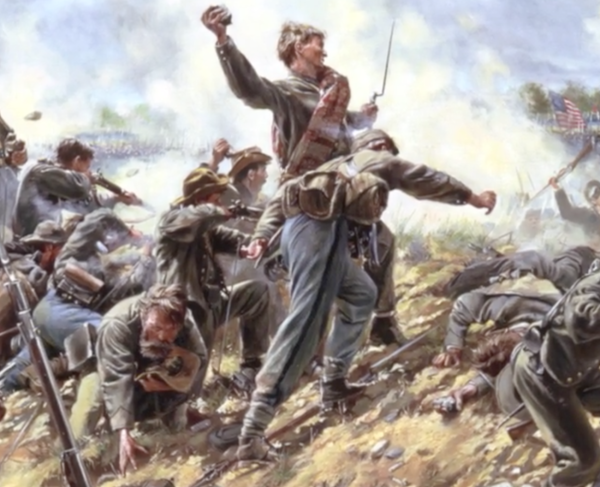
Boasting he would “bag the whole crowd,” Pope launched an attack on August 29, 1862. The Rebels held, though late in the battle many of them were reduced to hurling rocks at the Yankees, having run out of bullets. Convinced they would flee, Pope was promising a relentless pursuit for the next day just as the second half of Lee’s command, under Longstreet, arrived at 2 P.M. Five divisions stormed into the Union Flank along a two-mile front. By the time it had ended, the Union had suffered some 16,000 casualties, more than five times the number killed, wounded, or missing at the first Manassas. Lincoln, his troops demoralized, his cabinet openly critical, his political enemies in an uproar, reluctantly sent he disgraced Pope off to fight Sioux in Minnesota and gave McClellan back his command.
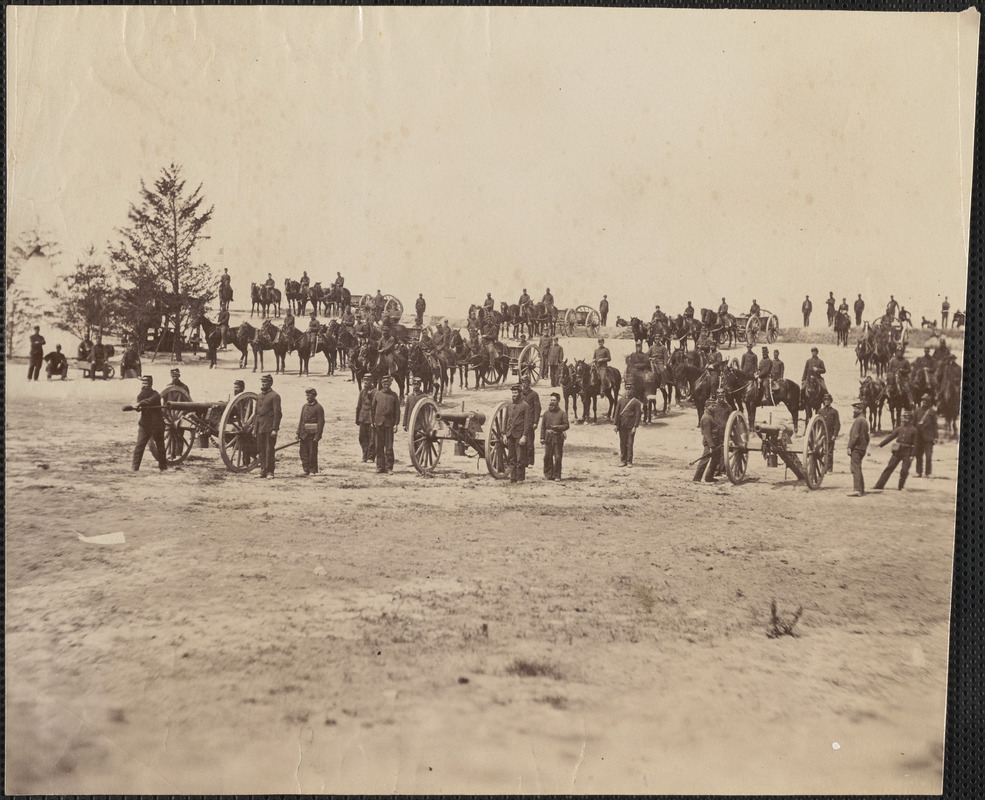
Pennsylvania’s “Keystone” artillery, pictured here at drill, was among the Union forces deployed at Second Manassas.
From the relatively distant perspective of Union General John Pope’s headquarters, the spectacle of Second Manassas struck D. H. Strother as rather beautiful:
The sparkling lines of musketry shone in the darkness like fireflies in a meadow, while the more brilliant flashes of artillery might have been mistaken for swamp meteors. The show continued for an hour, the advancing and receding fires indicating distinctly the surge of the battle tide… It seemed at length that the fire of the enemy’s line began to extend and thicken, while ours wavered and fell back… Between eight and nine o’clock it ceased entirely…
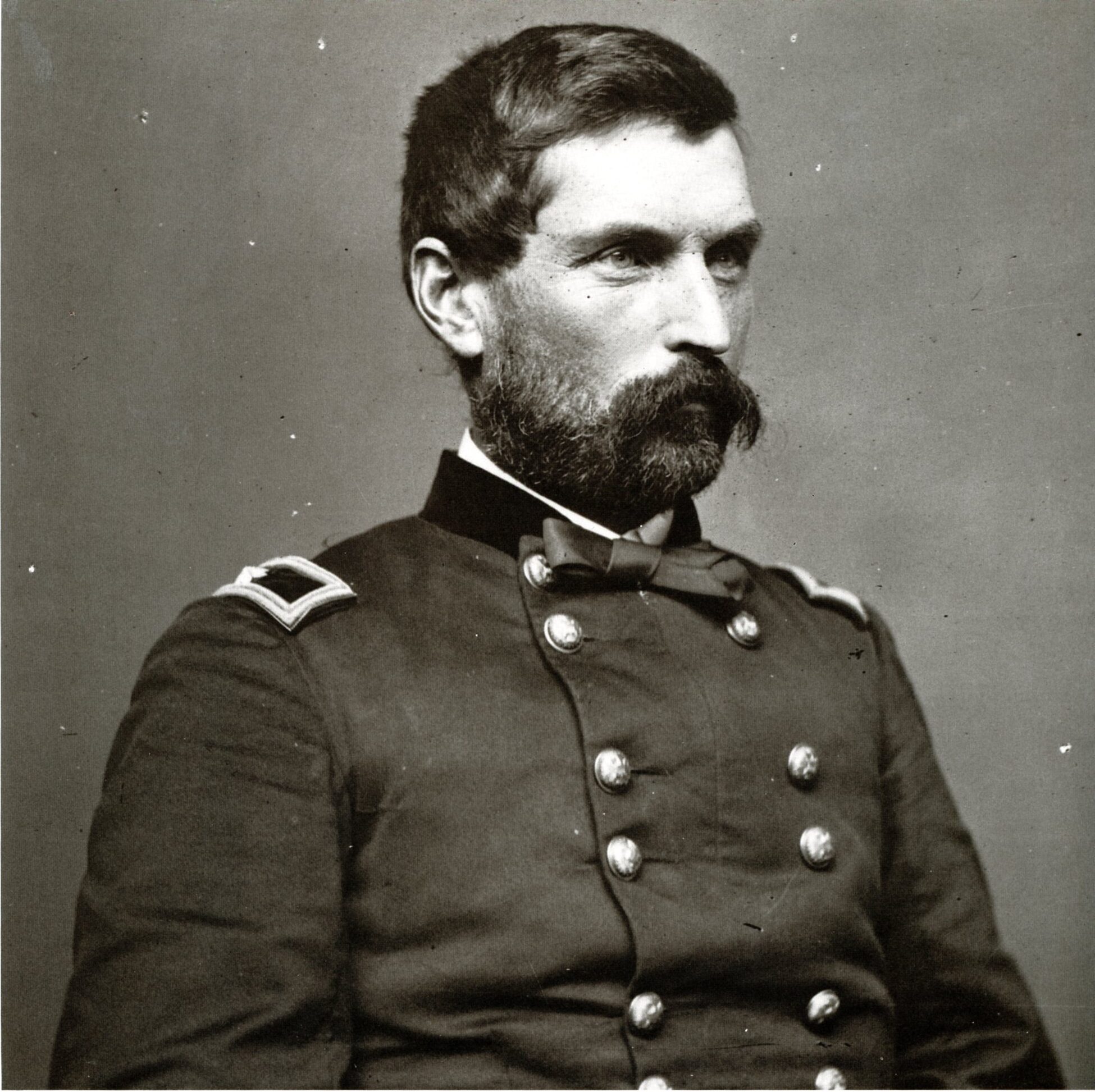
Brigadier General John Gibbon, shown in this wartime portrait, saw it close up as commander of the famed Iron Brigade, which distinguished itself in engagement against Stonewall Jackson at Groveton during the battle and suffered 33 percent casualties. Gibbon was twice seriously wounded, at Fredericksburg and at Gettysburg. After Appomattox, he fought on the Indian wars, led the relief column at Little Big Horn, and buried George Armstrong Custer and his command.
Culled from: Portraits of the Civil War
Nazi Victim Du Jour
Irma Sperling (1930-1944)
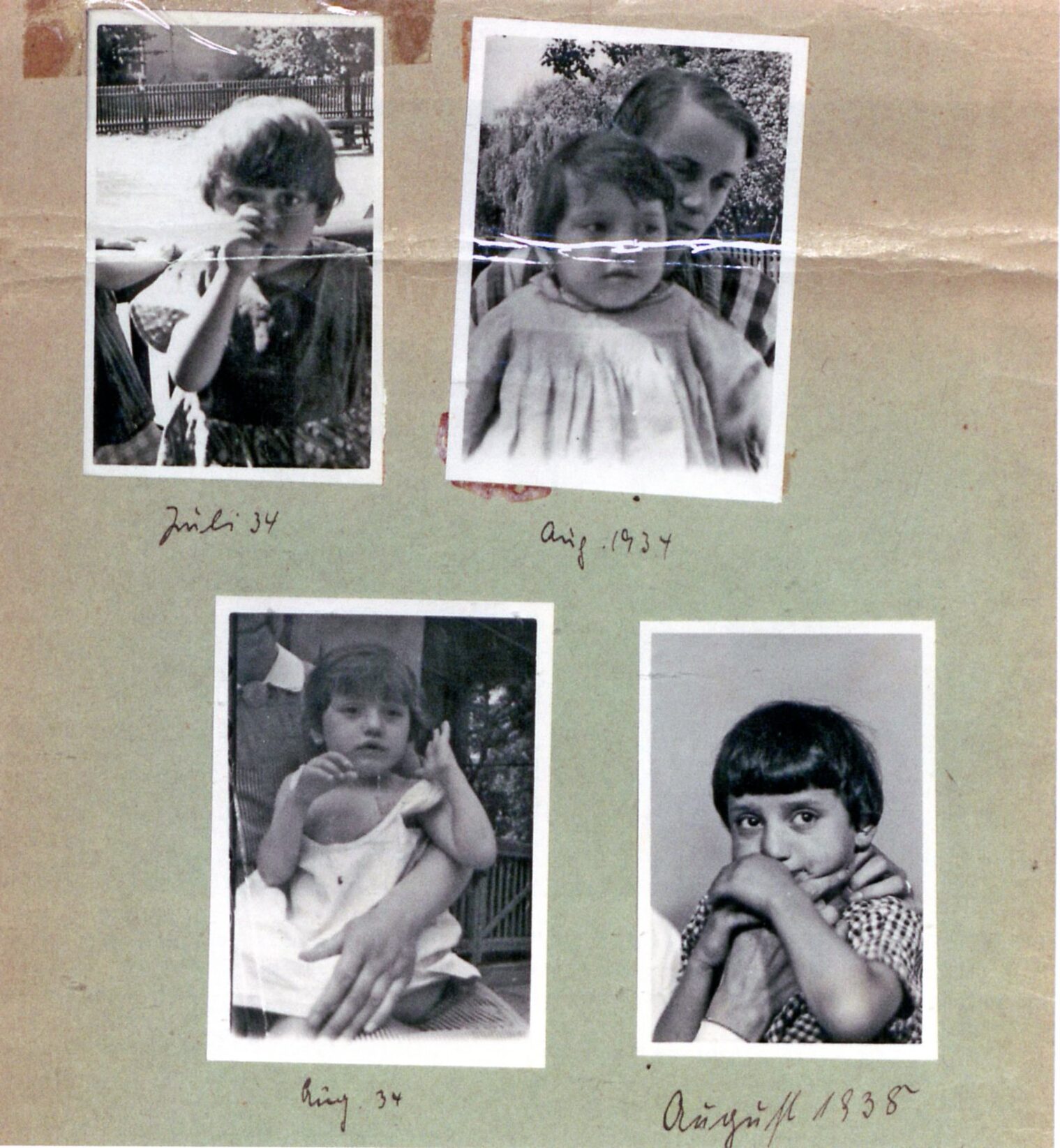
Irma Sperling in the Alsterdorf mental hospital, 1934 and 1938
Irma Sperling was born in Hamburg in 1930. She was the seventh of twelve children. Her father, Bruno Sperling, was a health insurance clerk; her mother a housewife.
Decades later, Irma’s sister Antje Kosemund remembered:
“Irma was very musical. Whenever she heard music, she sat up in her little bed and swayed to the sound. She tried to beat time with her little hands. Her favorite toy was a music box. We always sang a lot, that’s why we were called the children’s choir.”
Irma’s father was arrested for political reasons in 1933 and subsequently lost his job. Her mother fell ill and the family slid into distress.
At the age of three, Irma was admitted to the children’s hospital in Rothenburgsort, where she learned to sit, stand, walk and eat. An official assessment stated: “Physically rachitic, stunted and feeble-minded child with restlessness and states of excitation.” In December of 1933 Irma was committed to the Alsterdorf Mental Hospital.
In his reports, Dr. med. Gerhard Kreyenburg, a physician at the Alsterdorf mental hospital, repeatedly judged it necessary for Irma to remain in the institution:
“She is a very lively and wild patient who frequently has to be restrained in her bed.” (1934)
“She must be looked after in all respects. She feeds herself only intermittently.” (1935)
“The patient suffers from a considerable degree of feeble-mindedness. She is completely dependent on care.” (1937)
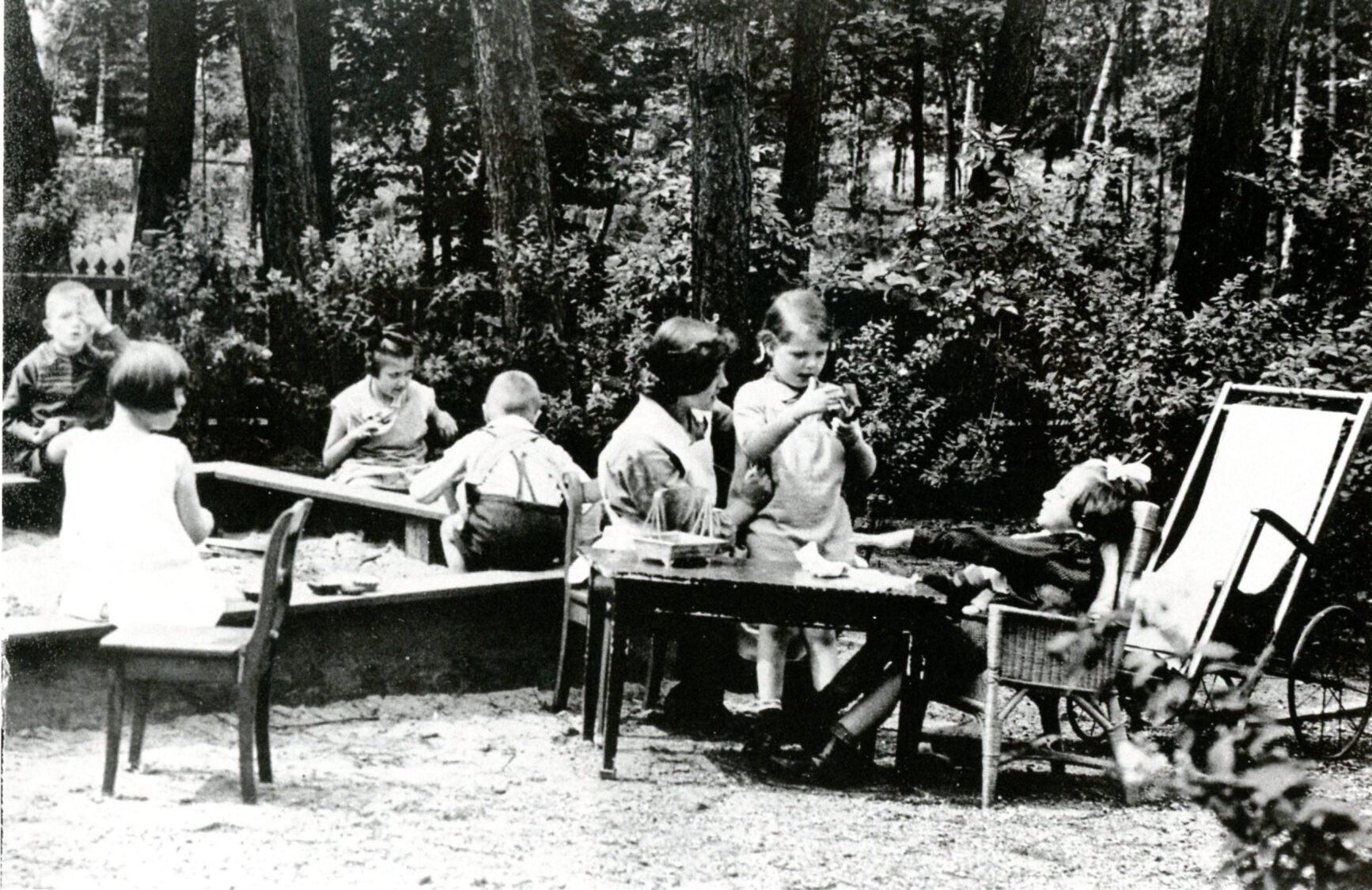
Irma Sperling (middle, standing) in Alsterdorf, 1936
In 1943, Irma and 227 other girls and women were transferred to the Wagner von Jauregg mental hospital and from there to the “paediatric ward” Am Spiegelgrund. She was examined many times while there. On January 8, 1944, Irma died, aged 13, probably as the result of a narcotic overdose.
Report to the “Reich Commission” by Ernst Illing, Director of the “Paediatric Ward”:
“The child laughs often, is jovial but not very responsive. She can feed herself and keep clean during the day; dresses herself with difficulty. Irma Sperling has a probably acquired organic brain affliction and hypertonic tetraparesis, impulsive hyperkinesia and idiocy. She is incapable of education or work and can be expected to remain so permanently.”
In the 1980s Antje Kosemund researched the history of her sister Irma. She was one of the first relatives of a “euthanasia” victim to speak out publicly.
She discovered a preserved brain specimen from her sister in the “brain chamber” of the Baumgarnerhohe psychatric hospital in Vienna. After some contention with the Austrian authorities, she buried the specimen in Hamburg in 1996.
Culled from: registered, persecuted, annihilated.
Andersonville Prisoner Diary Entry Du Jour!
This is the continuation of the 1864 diary of Andersonville prisoner Private George A. Hitchcock (see the archived version for all entries up until now).
Here’s today’s entry:
August 11th. Very warm; rain in the afternoon. The rancid bacon, flinty corn-bread, and beans that are not all beans, make us dainty. The beans come to us cooked up with all sorts of chaff, dirt, and bean-bugs, but it all fills up, and we ought to be grateful. Prisoners came in from Sherman. The old stockade is all up, and the negroes are at work erecting another one twenty rods outside, so that tunneling will have to be dispensed with.
Culled from: Andersonville: Giving Up the Ghost