Today’s Hazardous Yet Truly Morbid Fact!
Here’s a description of prison camps in Kazakhstan circa 1980 from the book The First Guidebook to Prisons and Concentration Camps of the Soviet Union:
Prisoners at the camps in Kazakhstan are assigned the most diverse kinds of duties — from construction work to work in mines and factories.
Prisoners, for example, in the camps in northeastern Kazakhstan are put to work in lead mines. Despite the fact that the work is hazardous, the Communist state refuses to provide its slaves with a special diet or protective clothing.
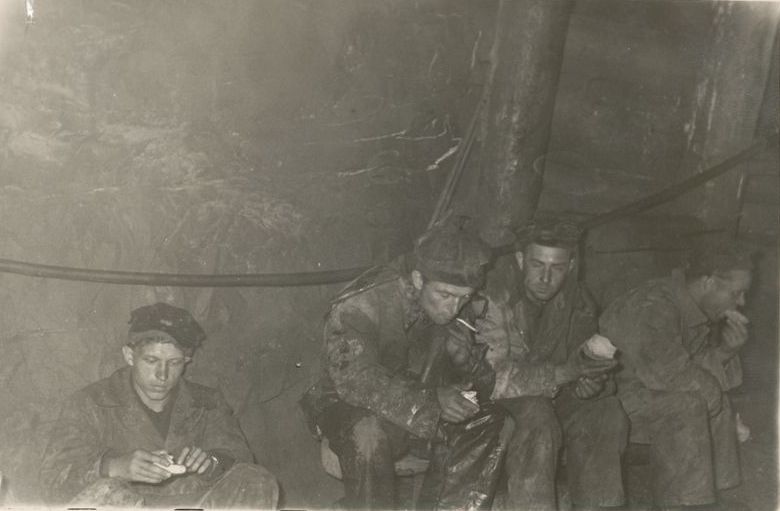
Gulag mine workers
At a camp near Dzhezkazgan, 1,500 prisoners are assigned to work in copper mines under extremely hazardous conditions. A special prison for unruly inmates is located in the same area.
Dzhezkazgan was the scene of a camp uprising in 1953 at a time when there were more than 10,000 prisoners there. Driven to despair by the harsh regimen of the facility complex, the prisoners proclaimed a strike to demand humane treatment by the authorities, remuneration for their labor, and the right to correspond with , receive packages from, and occasionally meet with their relatives.
The alarmed local authorities attempted to calm the prisoners and promised to meet their demand. As might have been expected, however, the prisoners were deceived and their leaders arrested, whereupon the strike flared up again. This time, Mosco intervened. Special units of the M.V. D. (the Russian initials for Ministry of Interior; in this case, a former name of the K.G.B.), tanks, airplanes, mortars, and killers armed to the teeth were dispatched to storm the unarmed prisoners. Among the insurgent camps was a women’s facility, most of the 500 prisoners of which were Ukrainians arrested for participating in the anti-Communist national liberation struggle. The women of the camp took opposition between the tanks and the men they sought to defend. Yet the tanks rolled on. Think about those heroines when you visit Dzhezkazgan .
Culled from: The First Guidebook to Prisons and Concentration Camps of the Soviet Union
I found further details about the conditions in Dzhezkazgan in a CIA document:
In Camp #1 at Dzhezkazgan the hospital had 400-500 beds. The hospital had mostly surgery cases as a result of daily accidents in the mines. There were a good many TB patients who would be treated for a while and then put back to work. They often came back several times for treatment. The hospital had a few separate rooms for severe TB cases. Most of the other diseases had to do with dysentery and other stomach trouble. There was a great deal of jaundice, but little scurvy. Jaundice and TB cases were usually isolated.
Subcamp #1 was occupied to 1,300 prisoners who lived in four large barracks, about 400 prisoners to each. The barracks was divided into four sections. There was one main entrance and two sections were built on each side with a corridor down the middle. Until about 1950 or 1951 these sections were of very primitive boards. At that time they were rebuilt and each section was subdivided into compartments, called nary. Each nary held four people, two on the ground level and two above. Each man had a personal shelf or night table (called tumbochka) where he could store his personal belongings. When a new prisoner arrived, he drew a thin cotton mattress, a single blanket, and a pillow from the camp supply room. Until 1951 hygiene was very poor. At that time a general sanitation campaign was undertaken. Planks were taken out of the barracks, dropped into hot water, and steamed. After that there were no more lice but still many bedbugs. They had no DDT. Once a week the prisoners, one brigade (20-30 men) at a time, were taken to the camp showers. While the prisoners took their showers, their clothes were steamed in a special room. The showers and drying room, as well as toilet facilities, were in the center of the barracks. During the winter one coal stove served for each two sections. Winter clothing was issued very late and taken away long before the return of warm weather.
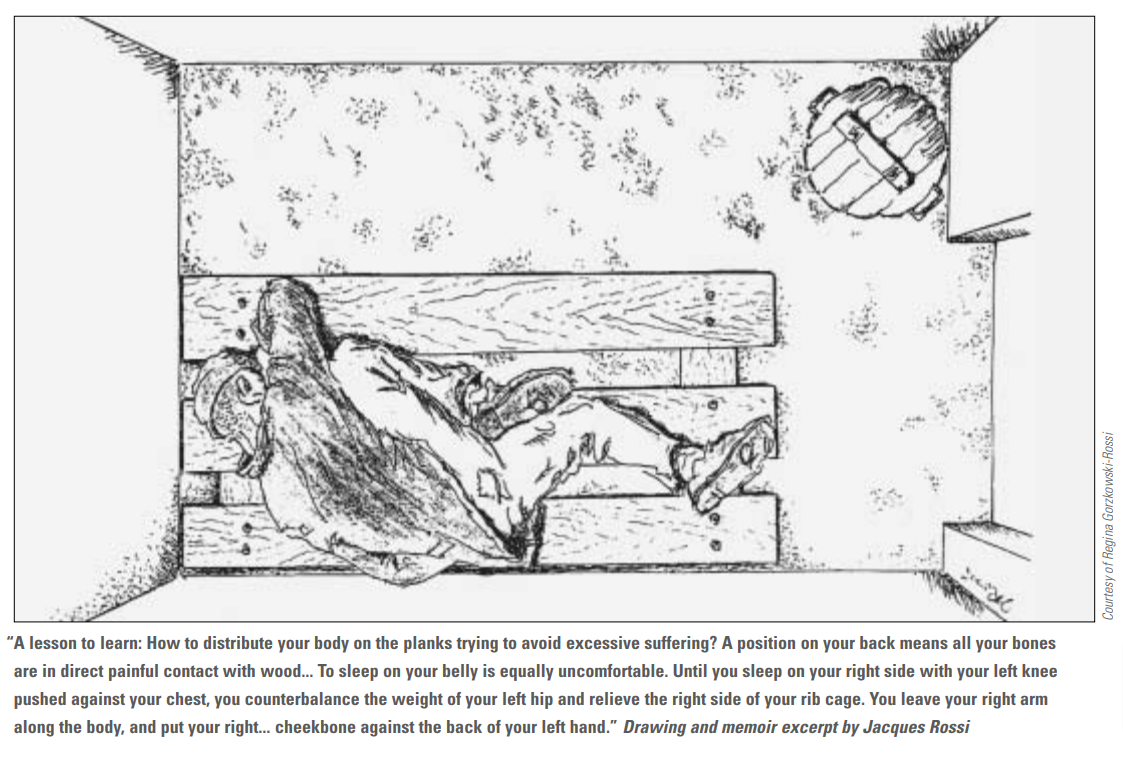
Before 1953 the work was very hard and usually lasted from 11 to 12 hours per day. Prisoners were beaten with sticks while at work if they were slack and also for not fulfilling the norm. They received no pay, were not allowed to receive visitors, and could write only two letters a month and those only to addressees within the USSR. Food was very bad and insufficient, as follows: 650 grams of black bread, 240 grams of kasha (served in two portions of 120 grams each), and 13 grams of sugar per day. For surpassing the norm, the rates were increased as follows: Up to 120% of the norm, 100 extra grams of bread; up to 150% of the norm, 200 extra grams of bread; and 200% or more, 300 extra grams of bread. Until about 1951 working conditions were so bad and so hard that many prisoners committed self-mutilation in order to avoid work. They would take an axe and chop of their fingers or a whole hand. Others deliberately broke a leg by jumping down a mine shaft and called it an “accident” (otherwise they were punished). Some would also jump on a board with a rusty nail and let the wound become infected.
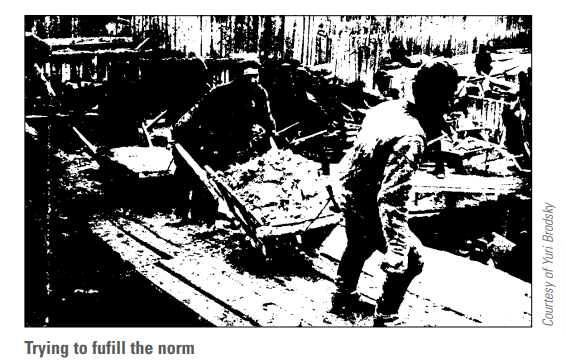
After March 1953 conditions improved considerably. The bread ration was increased to 700 grams. Prisoners were paid if they surpassed the norm. However, the amount received was about 20% of the pay earned. The government withheld 50%, the camp withheld 165 rubles for food and clothing, there was tax, and a certain sum withheld and placed into a liberation fund. On the average the pay varied between 30 and 150 rubles. Before 1953, prisoner were often called out for special work during the night after having worked all day—this no longer took place after the reform.
Culled from: CIA.gov
Images culled from: Gulag: Soviet Prison Camps and Their Legacy
Crime Scene Du Jour!
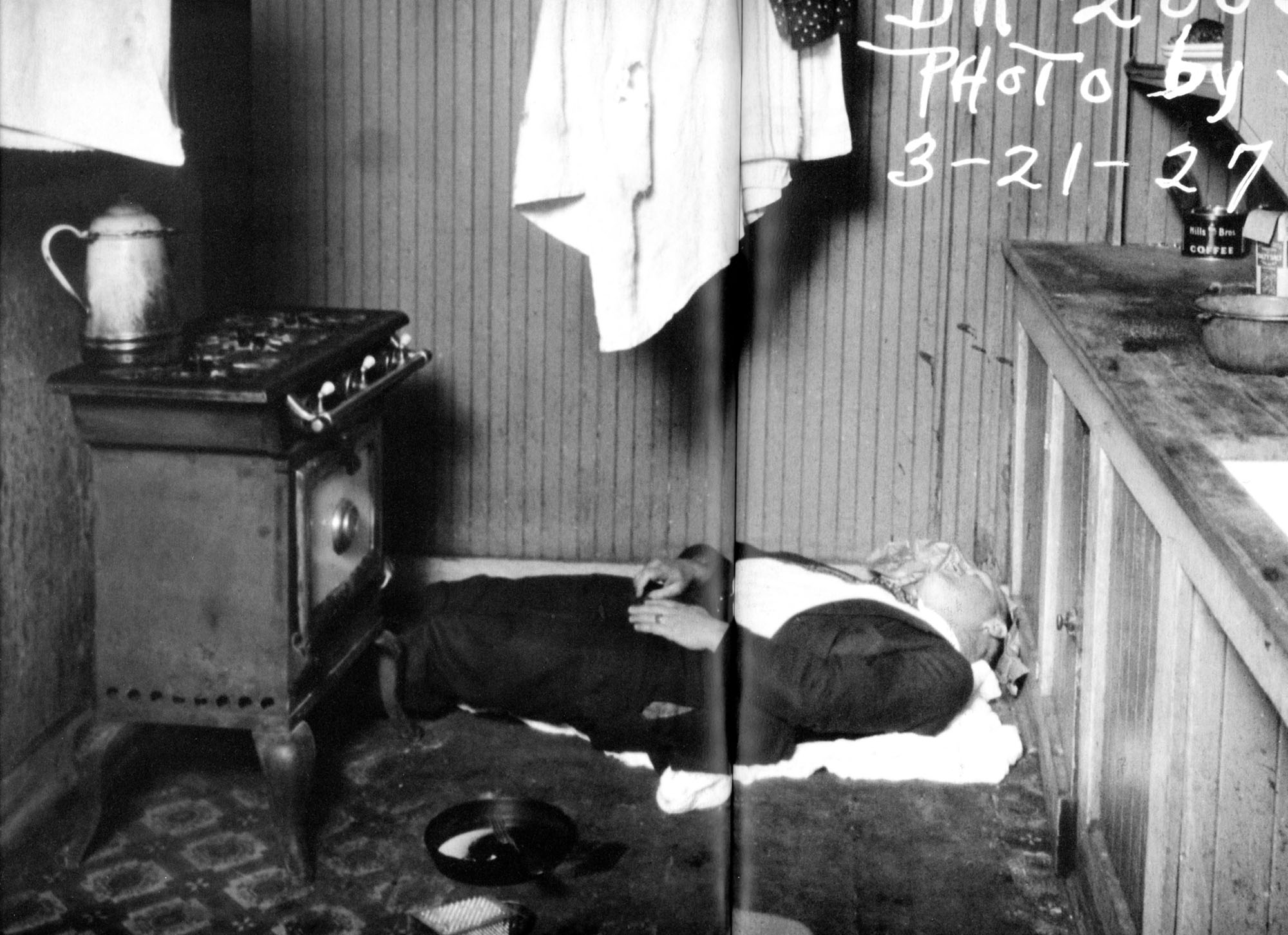
(I hate it when they spread a photo across two pages, grumble… – DeSpair)
Photographer: Stewart. 03-21-1927. A police officer and a drunken husband both were dead after a shootout in which the lone patrolman arrived at a Wilmington address on a domestic disturbance call. James H. Williams was said to be drinking and threatening the woman of the house with a gun. The officer, John V. Wicks, died the following day at White Memorial hospital. According to police report, “This is a plain case of a patrolman losing his life in attempting to make an arrest.”
Culled from: Scene of the Crime
Here’s an article about the incident from the San Pedro Daily Pilot, March 22, 1927:
OFFICER WOUNDED, SEAFARER SHOT TO DEATH IN FIERCE GUN BATTLE
WOUNDED OFFICER DRAWS GUN AND KILLS ASSAILANT
Early Morning Battle With Officer John Wicks—Mother and Son, Occupants of Invaded Home, Badly Injured in Fierce Battle Prompted by Son’s Love for Mother
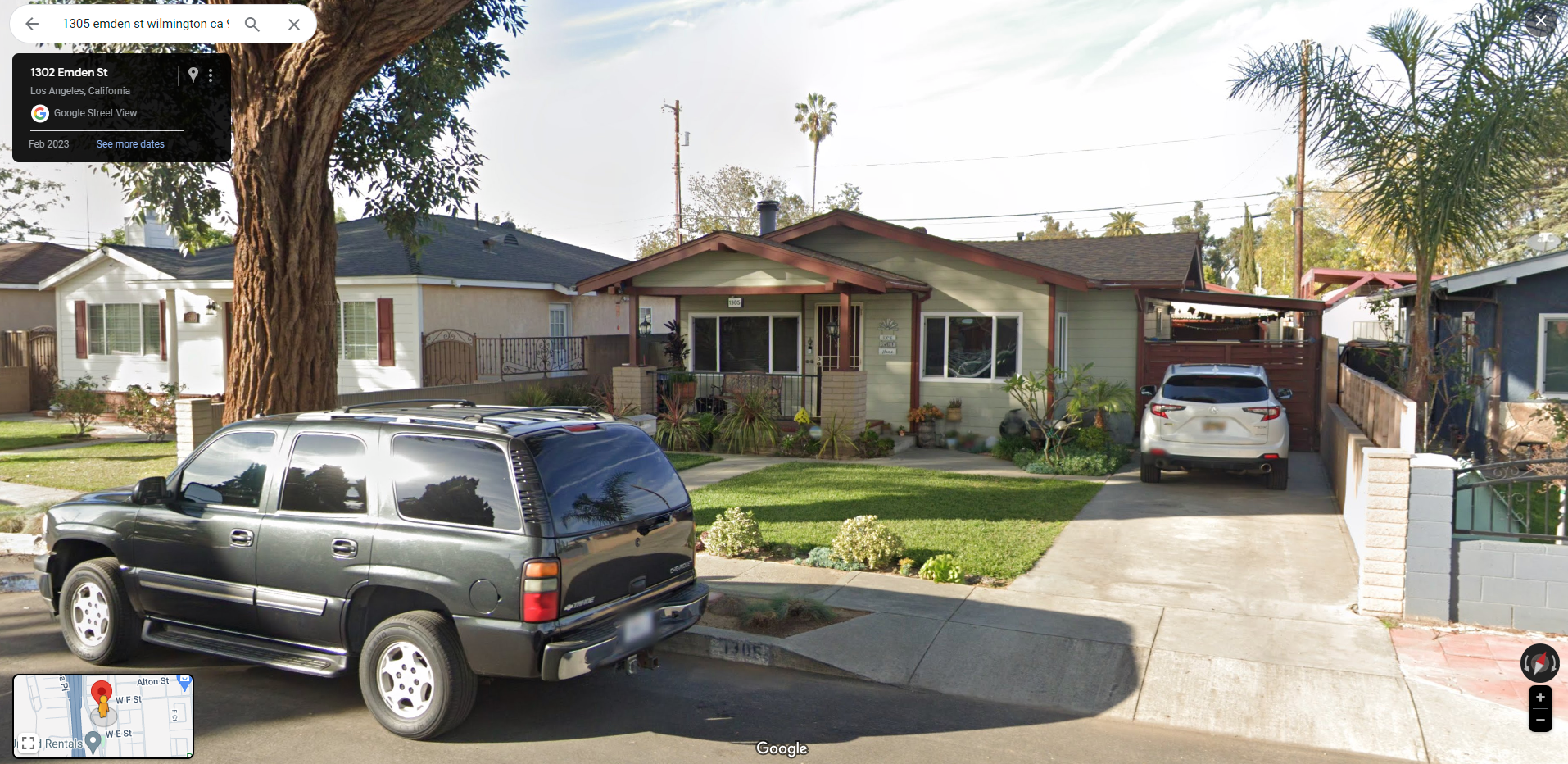
As a result of a fierce gun battle in a private home at Wilmington early today, a marine engineer is in the morgue, dead, a brave police officer is lying in the White Memorial hospital, Los Angeles, suffering from a serious but not fatal wound in the abdomen, and a mother and her boy are being treated for minor bruises and lacerations sustained in a fight that led up to the fatal shooting in a house at 1305 Emden street, Wilmington, early today.
The dead man is James H. Williams, 34, marine engineer of the tank steamer Cities Service Petrol, in port from Philadelphia to load oil. Four bullets took effect.
Patrolman John V. Wicks, 25, of Wilmington was wounded, but not fatally. He has a serious bullet wound through his abdomen and is in the White Memorial Hospital, Los Angeles.
Boy, Mother Hurt
Mrs. Frances Mitchell, 38, of 1305 Emden street, is at her home under the care of a physician and a trained nurse, suffering with a serious scalp wound. It was inflicted with the butt end of a revolver by Williams, according to police reports. She also has numerous body bruises.
Newton Mitchell, 18, her son, was severely beaten about the face and body in the fight. He is at home and is not permanently injured.
Entered Home
Early this morning Williams is said to have called a taxicab to an inner harbor dock. He ordered the driver, Leonard Anderson of 2904 Kerckhoff street, San Pedro, to take him to the home of Mrs. Mitchell. There Williams gained entrance to the home after considerable knocking and talking.
Newton Mitchell, son of Mrs. Frances Mitchell, was awakened by loud voices and sharp words between Williams and his mother in the front room, and when he came into the room he found Williams striking his mother, he states. He at once attempted to defend his mother and was knocked to the floor, where Williams beat him.
Finally gaining his freedom the boy went to a back closet in the house and secured a hidden .38 caliber revolver, which he brought to his mother. [And that was helpful, how? – DeSpair] Then he jumped out of a window and ran 14 blocks to the Wilmington police station, where he found Patrolman Wicks.
Return to Home
With the officer the boy returned to the house. Wicks was warned of the gun and cautiously crawled through the window. He found Williams in an enraged condition beating Mrs. Mitchell over head with the butt end of the revolver. [Yeah, that was a great idea you had there, kid! – DeSpair]
Soon Mitchell opened fire on Wicks, hitting the policeman in the abdomen. Although wounded, Wicks drew his revolver and a death battle took place in the front room and later at a doorway leading to back rooms of the house. Mitchell fired three times, striking the officer but once. Wicks, one of the crack shots of the harbor police pistol team, fired four times, scoring on Mitchell’s body each time, the latter falling to the floor dead.
Assistance Comes
When Detective Lieutenants E. R. Dunphy and J. S. Fickes of San Pedro, Sergeant E. E. Baldwin of San Pedro and Sergeant A. L. Waught of Wilmington arrived, at the calling of the taxidriver and Newton Mitchell, they found Williams dead on the floor, Officer Wicks wounded on a couch and Mrs. Mitchell in a state of near collapse.
Officer Wicks was removed to the Wilmington emergency hospital for first aid treatment and later taken to the White Memorial hospital in Los Angeles. A bullet is said to be lodged in his back near his spine.
The body of Williams was taken to the Cleveland and Barker undertaking parlors in Wilmington, to be held while efforts are made to locate his home. Captain Hutchins of the tank steamer reported that Williams has relatives in Texas.
Mrs. Mitchell and her son remained at home, attended by a physician and a nurse.
Victim Was “Pest”
Williams is said to have had a long acquaintance with Mrs. Mitchell, and, according to her son, has been a “pest” for a long time. He is said to have called upon the woman on all of his recent shore leaves at the local harbor when his ship was in port.
The shots fired in the battle between Williams and Officer Wicks pierced the walls of the house several times. One passed through the window of a house next door.
Leonard Anderson, the San Pedro Taxi driver, will be an important witness at the inquest, according to investigating officers. Coroner Frank Nance has set the time of the inquest for 2 p.m. Wednesday.
This morning the tank steamer Cities Service Petrol sailed for Philadelphia with a new chief engineer aboard.
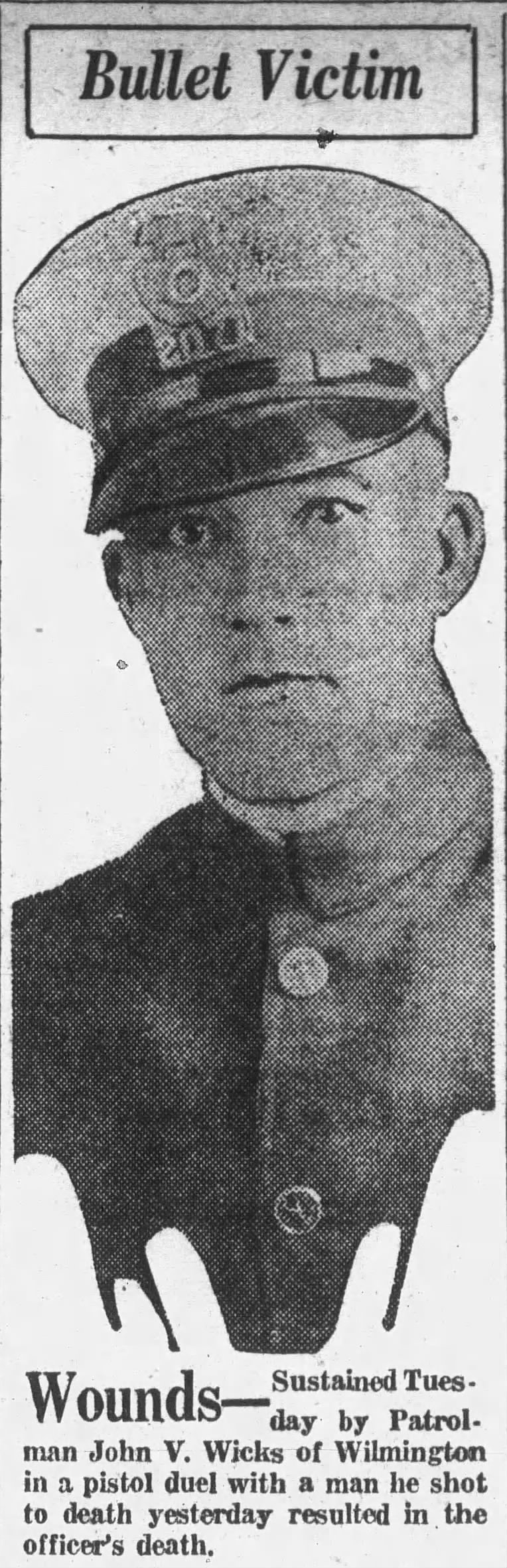
Here’s a photo of officer Wicks, who succumbed to his wounds the next day.
And it looks like the house where the shootout took place is still there:
Andersonville Prisoner Diary Entry Du Jour!
This is the continuation of the 1864 diary of Andersonville prisoner Private George A. Hitchcock (see the archived version for all entries up until now).
Here’s today’s entry:
August 12th. Rations of bread (half-cooked), rice (quarter-cooked), meat (slightly warmed). More prisoners from Sherman to-day.
Culled from: Andersonville: Giving Up the Ghost