Today’s Violently Spasming Yet Truly Morbid Fact!
William Sproat thought little of the attack of diarrhea that struck him on Saturday, October 23, 1831. He recovered immediately and simply put it out of his mind. When dinnertime arrived, he ate a mutton chop and then walked from his home in Sunderland in Britain’s Durham County to the boat on a nearby river where he worked as a keelman.
The agonizing stomach cramps began when he arrived at his boat. Sproat doubled over in pain, and a watery, white-speckled diarrhea poured from his bowels, seemingly gallons of it. Each attack was heralded by violent intestinal spasms. He began vomiting. Sproat barely made it home, where he crawled into bed, shivering with fever, writhing in pain.
That night, Sproat curled in his bed, unable to sleep as the symptoms continued unabated. The next day, his doctor arrived. Sproat, he wrote in his notes, was “evidently sinking; pulse almost imperceptible, and extremities cold, skin dry, eyes sunk, lips blue, features shrunk, he spoke in whispers, violent vomiting and purging, cramps of his calves and legs, and complete prostration of strength.”
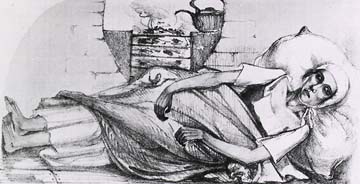
On Wednesday morning, Sproat’s doctor wrote an even more dire report: “Pulse scarcely beating under the finger, countenance quite shrunken, lips dark blue.” Sproat died at noon, the first known victim of the great cholera epidemic to follow.
His son was next, dying of the awful illness a few days late. His granddaughter too became ill, with the identical symptoms, but she recovered. Others in Sproat’s town got the sickness. Within weeks, the disease had spread throughout the land, leaving a swath of dead.
It was sickness notable for its sudden onset, terrifying and unpredictable spread, and horrifying mortality. Untreated, cholera kills 40 to 60 percent of its victims. Today it is treated with fluid replenishment, including intravenously. But no one in the early nineteenth century knew how to control the disease or even what caused it or how it spread. When Sproat became ill, the disease was a complete mystery.
While cholera itself was an ancient illness, the disease this time seemed particularly virulent. It had first been noted by British newspapers in 1818 when it appeared in India. Reporters described it as a new disease, calling it cholera morbus, that was burning through Calcutta and killing British troops fighting there. In the winter of 1818-19, cholera killed 3,000 of a British army of 10,000 in India that was led by the Marquis of Hastings. One London doctor who traveled with the army to India wrote of his trepidation. “To a young man of twenty-five, what a fearful responsibility was the charge of a European regiment, with 2,000 native camp followers and the cholera among them coming as an epidemic. Never before in my life had I seen anything as dreadful as this disorder.”
The disease stayed clear of England, however, until 1831, when William Sproat fell ill. The epidemic that followed was the first of a wave of six deadly cholera epidemics that spread across the world, frightening and killing multitudes. British historian R. J. Morris writes that in Britain “the approach and arrival of these epidemics, especially that of 1832, created a crisis atmosphere in the country quite unlike that produced by any other threat apart from a foreign invasion.” At least 140,000 died in Britain. Morris adds that a “normally calm” journal, the Quarterly Review, described cholera as “one of the most terrible pesiliences which ever have devastated the earth.”
Sproat was the typical cholera victim. The disease is caused by a lozenge-shaped bacterium, Vibrio cholera, that is usually transmitted when someone drinks contaminated water. But the bacteria also can be transmitted by food or by flies, on blankets and on clothing. The bacteria can survive for two to five days. in foods like meat, milk, and cheese, but it can live for as long as sixteen days on apples.
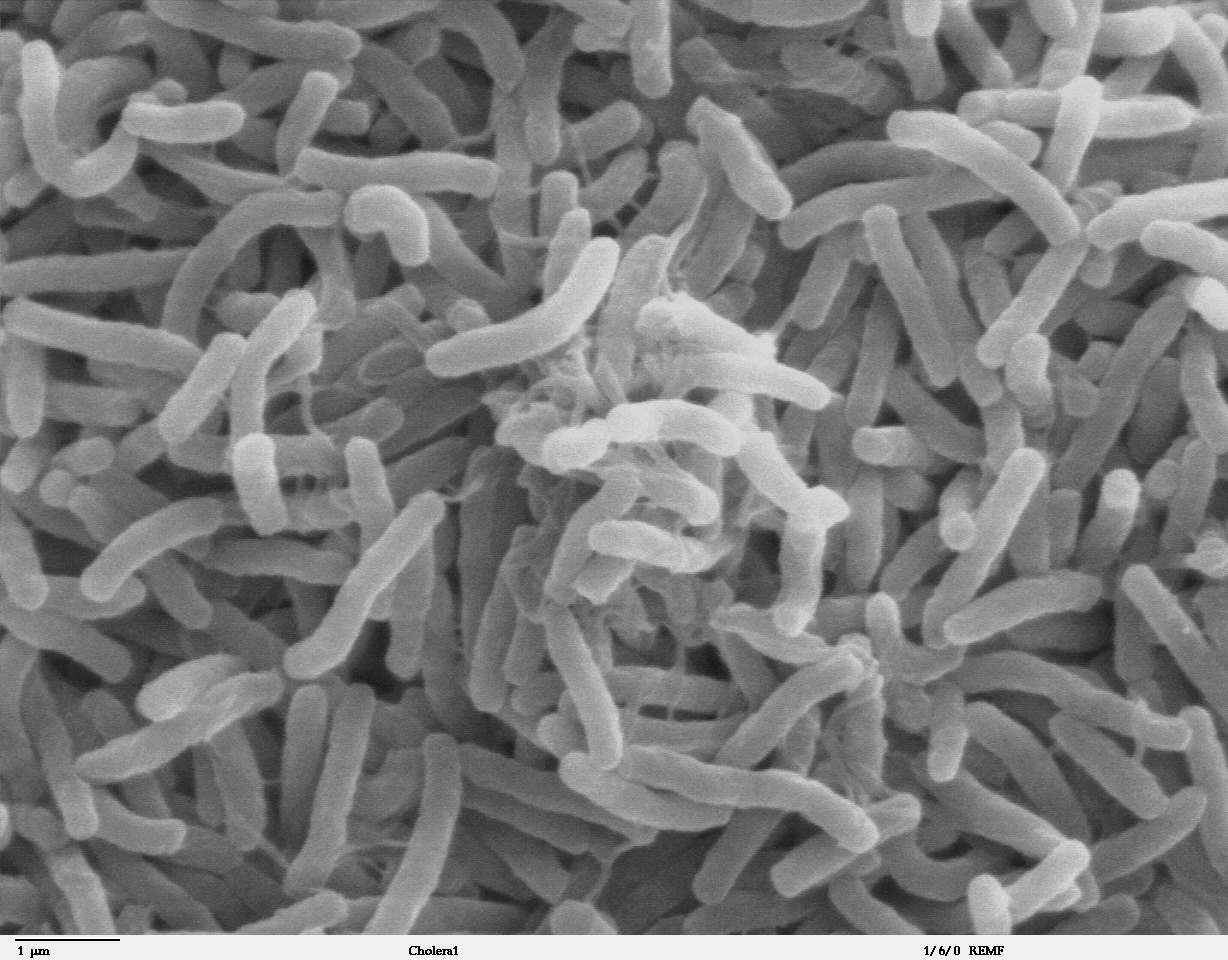
Cholera bacteria
Cholera bacteria release a powerful toxin into the intestines that forces cells to pump water and salts from blood and tissues. The result is massive watery diarrhea that is dotted with mucus and skin cells, the so-called rice-water stool.
And as the bacteria draw fluids from the victim’s body, the vital signs start to plummet. Within an hour after the symptoms begin, a healthy person’s blood pressure can drop precipitously. The dehydration and loss of salts creates excruciating cramps. Death can follow two or three hours later, but more often occurs within eighteen hours to several days after the first attack of diarrhea.
Culled from: Flu
Post-Mortem Portrait Du Jour!
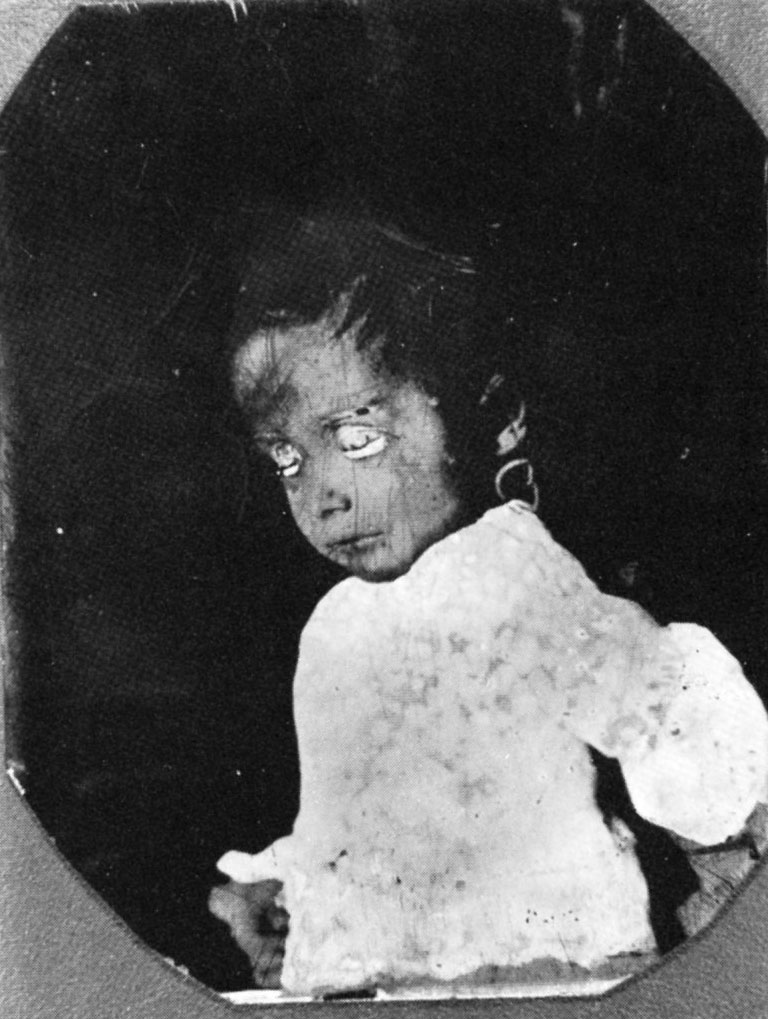
Postmortem photograph of an unidentified child with eyes painted open.
Unknown, ca. 1870-1890s. Tintype, 8 3/8 x 6 7/16 inches.
Note: the size of this tintype would indicate that it was produced to be framed and hung on a wall. It is too large for an album.
Culled from: Secure the Shadow
Andersonville Prisoner Diary Entry Du Jour!
This is the continuation of the 1864 diary of Andersonville prisoner Private George A. Hitchcock (see the archived version for all entries up until now).
Here’s today’s entry:
August 13th. Very hot and clear. Beautiful moonlight evening. We have two new neighbors from Iowa, who have stretched their blankets with ours. They were taken in the rear of Johnson’s army, while raiding. They were robbed of a large amount of money, and of watches and clothing. The bank of the creek has been boarded up, so that we are able to dip for water without making it muddy. Shower in the evening, our rations better to-night.
Culled from: Andersonville: Giving Up the Ghost