Today’s Ever-More-Sophisticated Yet Truly Morbid Fact!
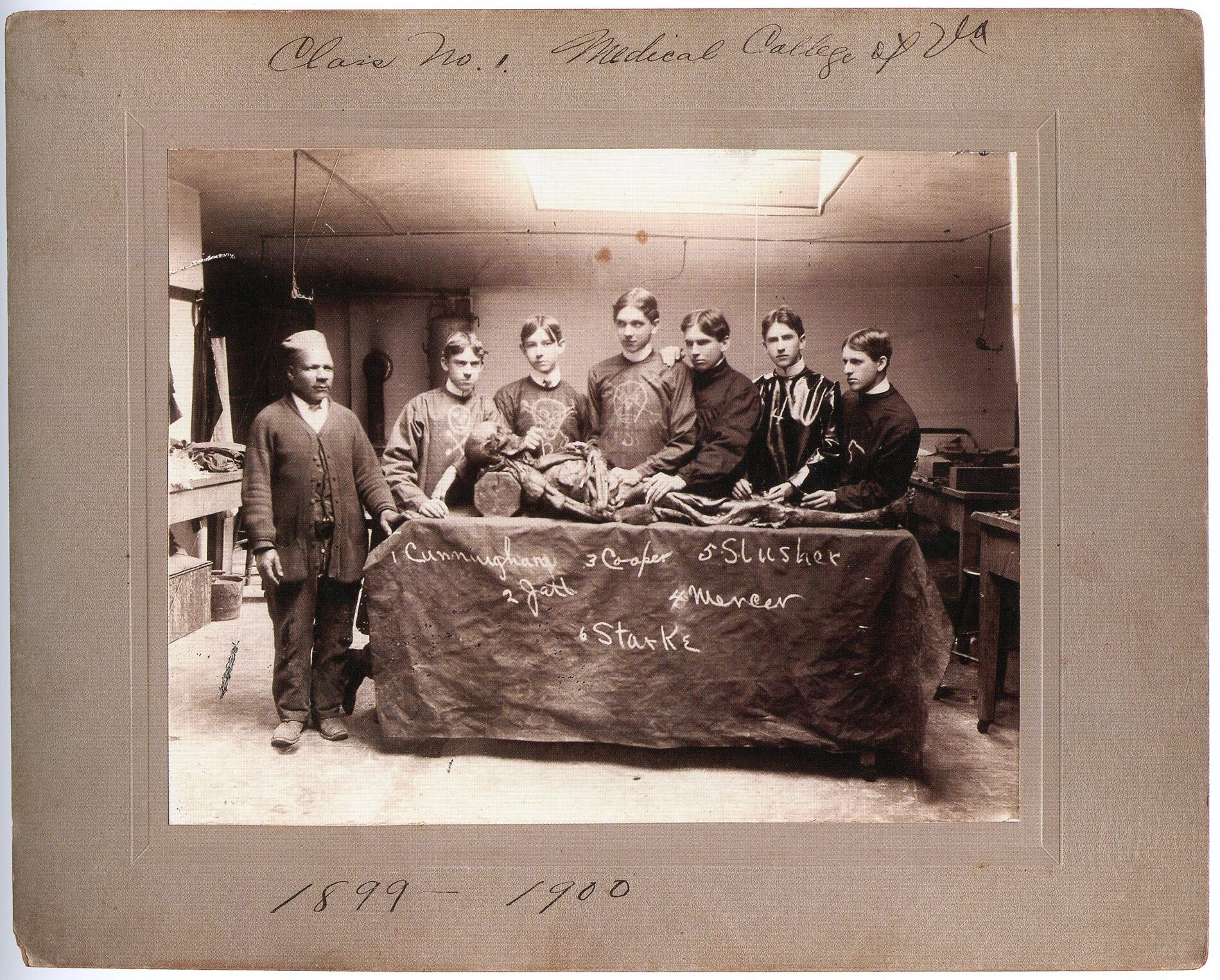
Professional grave robbers had begun supplying anatomists with corpses for dissection in the early 1700s. Concentrated mainly in London and Edinburgh, but also working in provincial English towns and later the American colonies, the body snatchers developed unique methods of unearthing their quarry with speed, stealth, and efficiency. Strongly despised and universally feared, the rival packs of ruthless men were nicknamed the “Resurrectionists,” after their ability to raise the dead from their graves, or the “Sack ‘Em Up Men,” after their method of transporting their wares. Initially, the perpetrators were grave diggers and sextons bribed by surgeons to exhume the corpses they had just buried. One grave digger who had been thus seduced was caught in 1736 lifting bodies from St. Dunstan’s churchyard in Stepney, located in east London, where he worked, and selling them to a surgeon for dissection. Sentenced to be publicly whipped, he received hundreds of lashes from the angry crowds that gathered in the churchyard to dole out his punishment.
So not only were the grave robbers willing to supply bodies to Scottish and English anatomist,; they could also prove to be convenient scapegoats for outraged public opinion. By the time Pritty and Thomas were caught stealing John Race’s corpse in 1747, the growing business in dead bodies was beginning to attract all manner of lawless desperadoes and petty crooks, who were greedy for rich pickings from the eager surgeons. Before long, with the Hunter brothers’ backing, body snatching would become a carefully orchestrated, highly managed, and increasingly lucrative industry. Rising public vigilance and widespread condemnation would only prompt the Resurrectionists to develop ever more sophisticated techniques.
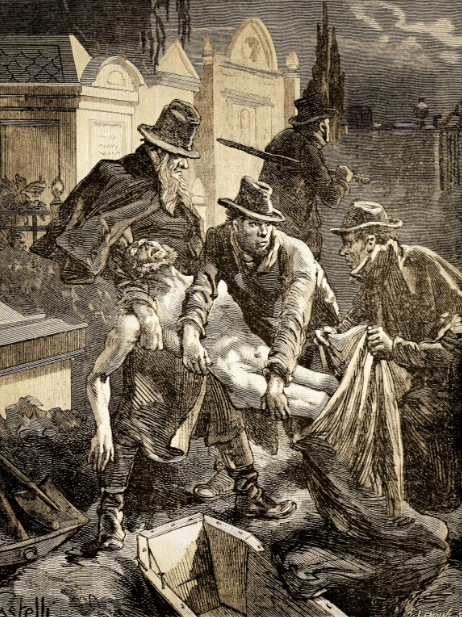
Resurrectionists at work
Working on moonless nights throughout the winter, when the anatomy classes ran, the teams used wooden shovels to dig silently through the freshly turned soil of a new grave. By the discreet glow of covered lanterns, they dug a narrow shaft at the head of a grave down to the top end of a coffin, exposing about one-third of the lid. Using crowbars of grappling hooks, they pulled on the coffin lid, snapping the cheap thin wood under the weight of the remaining soil, to reveal their trophy. It was now but an easy matter to sling a rope around the arms and drag the body from its dank hole. Quickly, the gang stripped the corpse of its funeral shroud, working on the principle that while there was no law against stealing a body, since it had no owner, taking clothes, a coffin, or even a wedding ring could be punishable by hanging. In practice, the courts still found ways to punish miscreants—as Thomas and Pritty had found, to their misfortune. Next, the naked and usually limp body—rigor mortis would normally have passed within a day or two of death—was bundled into a sack or a hamper, ready for delivery before dawn to the basement steps of a waiting anatomist.
At the peak of their reign of terror, before the Anatomy Act ended the practice, professional gangs would unearth a body from a shallow grave in fifteen minutes flat. A single team could procure as many as ten bodies in a night’s work or three hundred in one year. Paupers’ graves were always the most popular, since the poor were conveniently buried in mass graves left uncovered until full or in shallow graves in public burial grounds. Richer folk took care to protect their dead in locked vaults or lead coffins.
Culled from: The Knife Man
Vintage Crime Scene Du Jour!
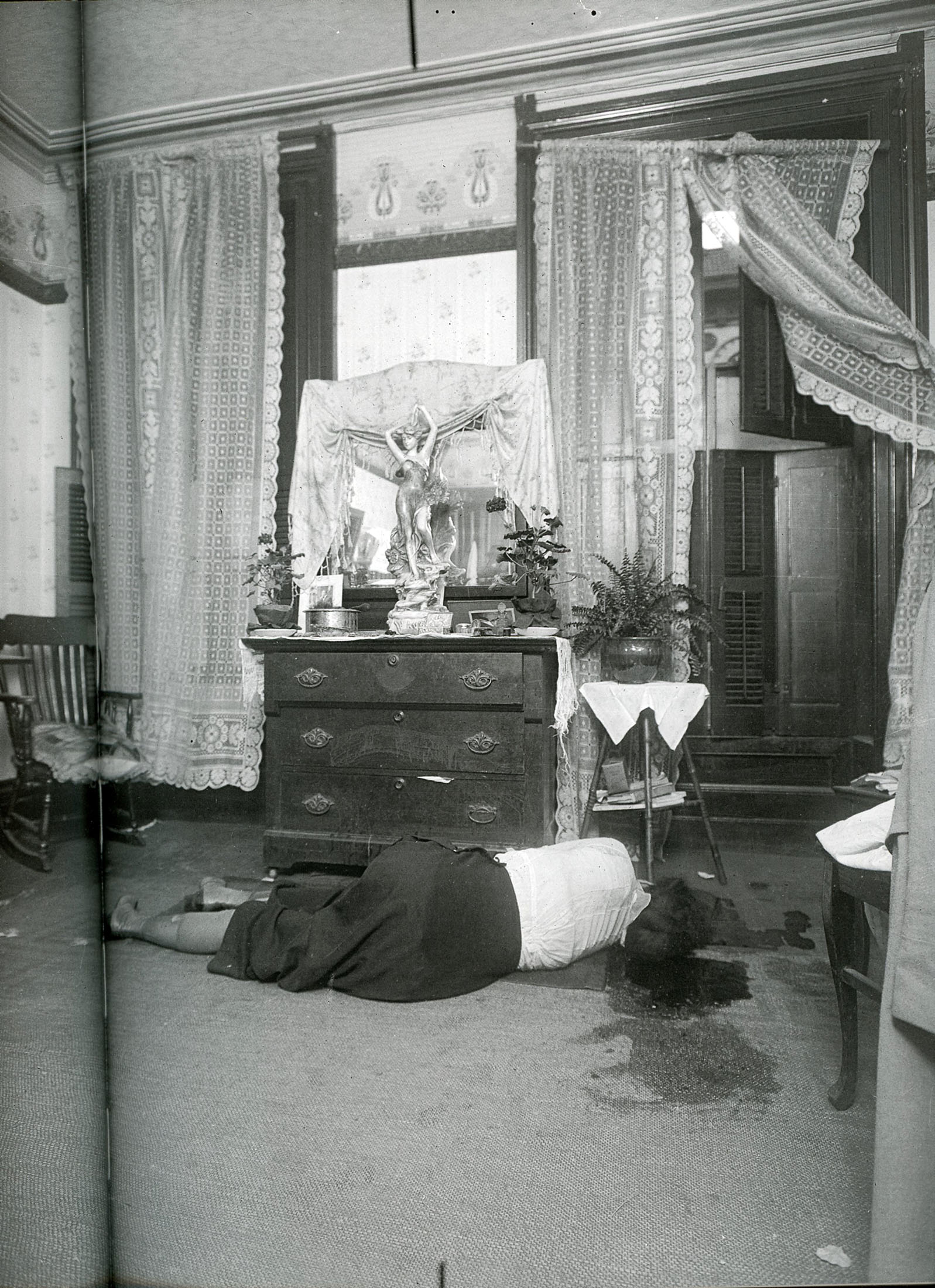
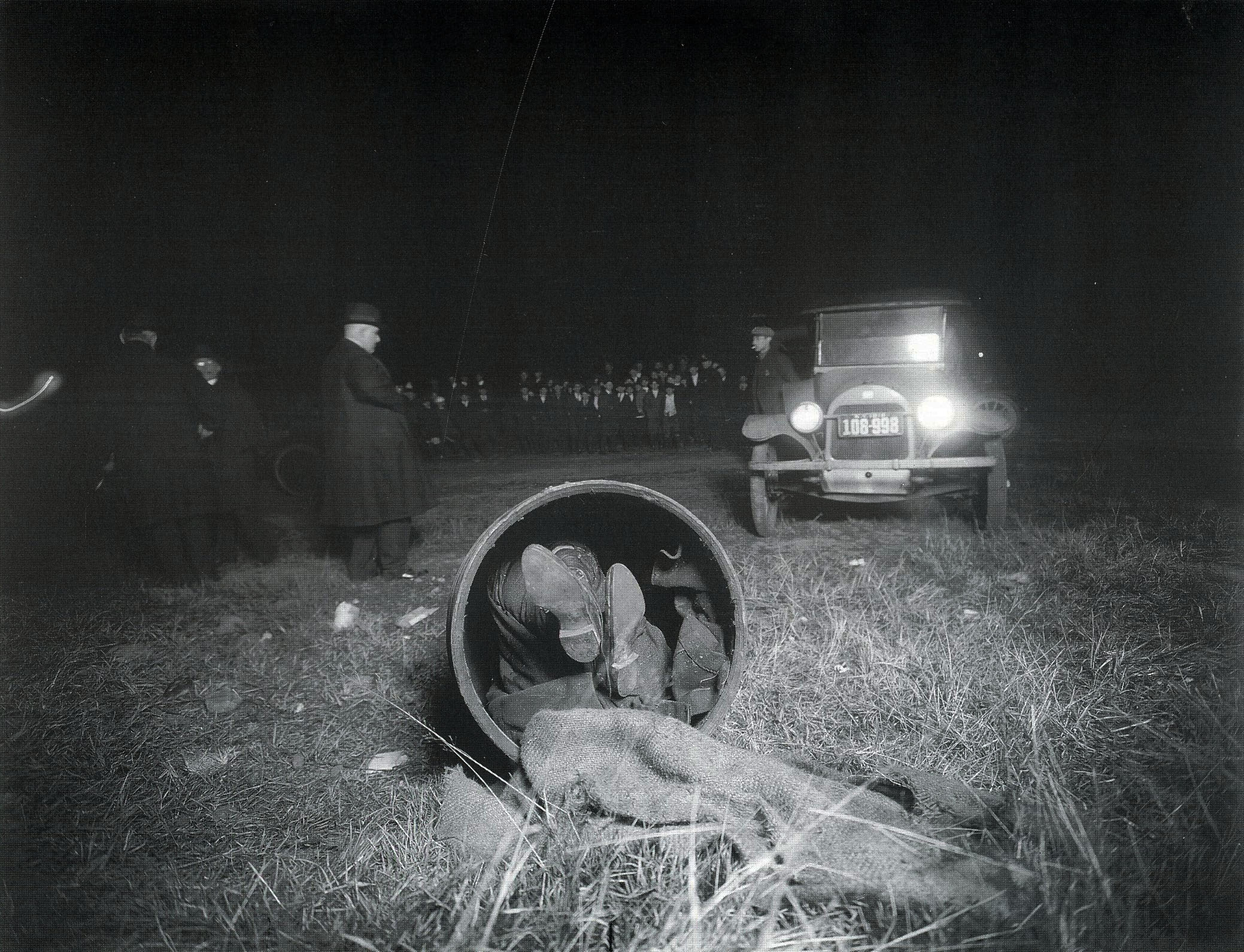
KILLS WIFE IN QUARREL
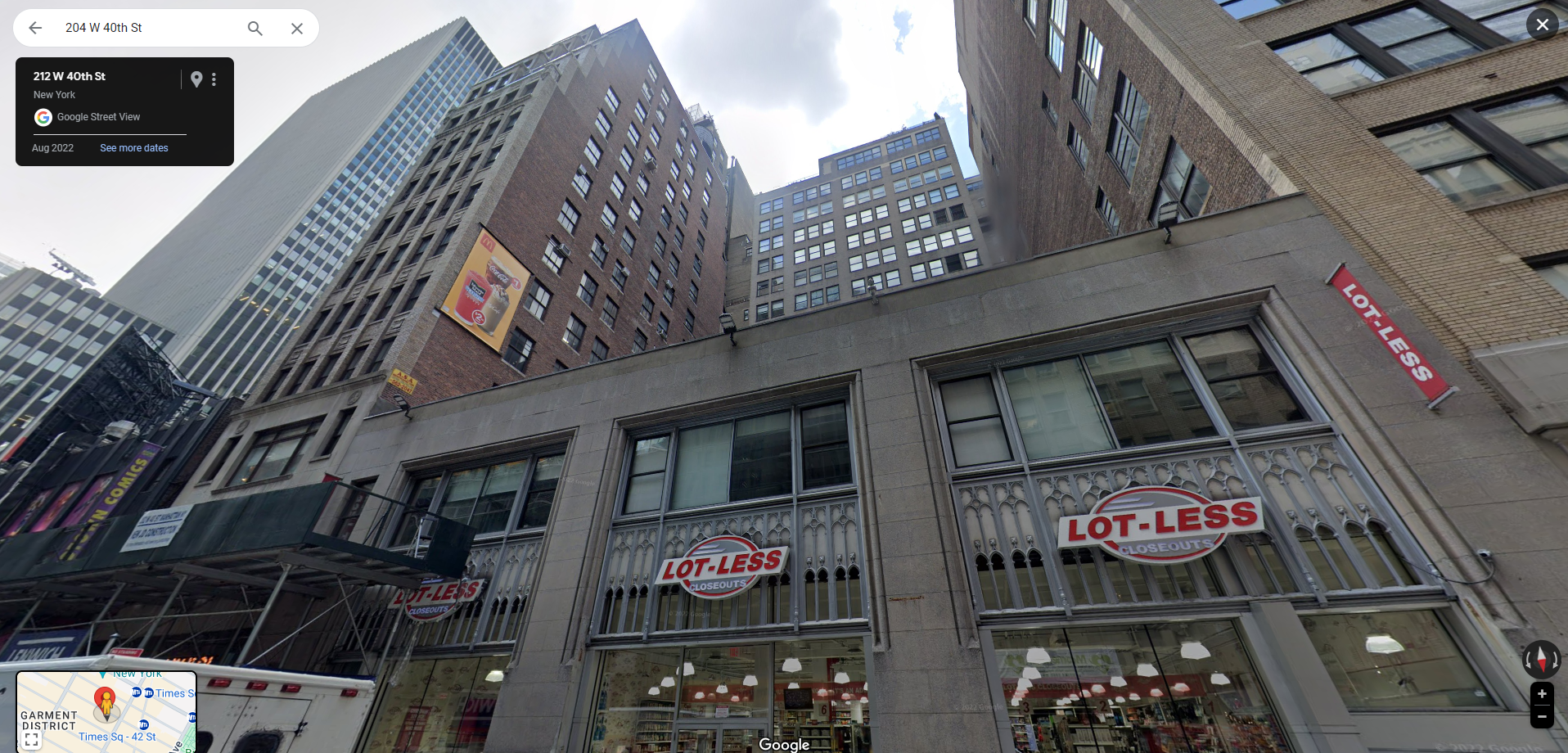
Gertrude Miller, 22, a negress of 204 West Fortieth street, was shot and killed by her husband Leslie yesterday afternoon after they had quarrelled over money. She died before an ambulance arrived.
The Sun,
May 21, 1915
Culled from: Murder in the City
Incidentally, the 4-story building where Gertrude was slain is long gone, replaced by this:
Andersonville Prisoner Diary Entry Du Jour!
This is the continuation of the 1864 diary of Andersonville prisoner Private George A. Hitchcock (see the archived version for all entries up until now).
Here’s today’s entry:
November 12th. Very chilly wind all day. Our two days’ rations did not come till late at night, because a number of the enlisted recruits could not be found, and the authorities feared that they had been murdered by our boys, who are very indignant at their action. A man near me, who was nearly naked, perished with the cold.
Culled from: Andersonville: Giving Up the Ghost