Monthly Archives: August 2023

MFDJ 08/31/2023: The Duchess in the Death House

Today’s Dimwitted Yet Truly Morbid Fact!

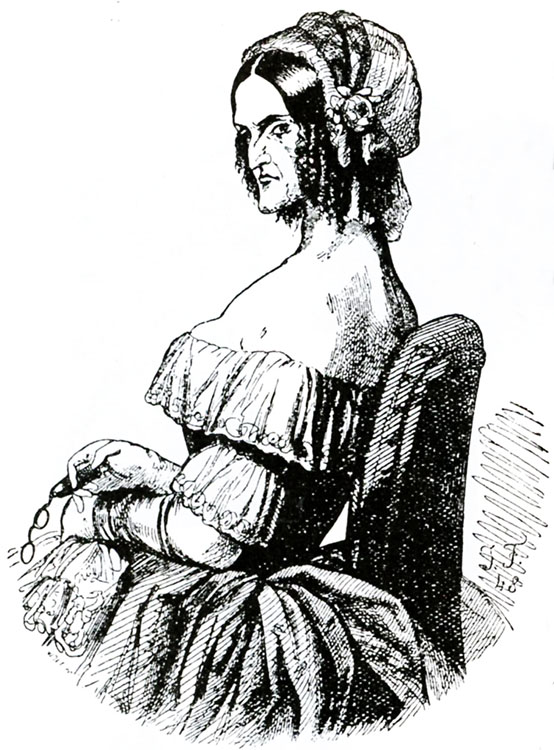
Juanita Spinelli’s entire life was a lie, but she had the talent to influence the young and dumb to do her bidding. We know that Ethel Leta Juanita Spinelli was born on October 17, 1889, in Kentucky, but after that the rest of her pathetic life is speculation. Spinelli made so many claims about her past that only the truly gullible would believe a word that she said. Whether she gave herself the nickname “The Duchess” or whether it was coined by her alleged Purple Gang connections, nobody will ever know, nor probably care.
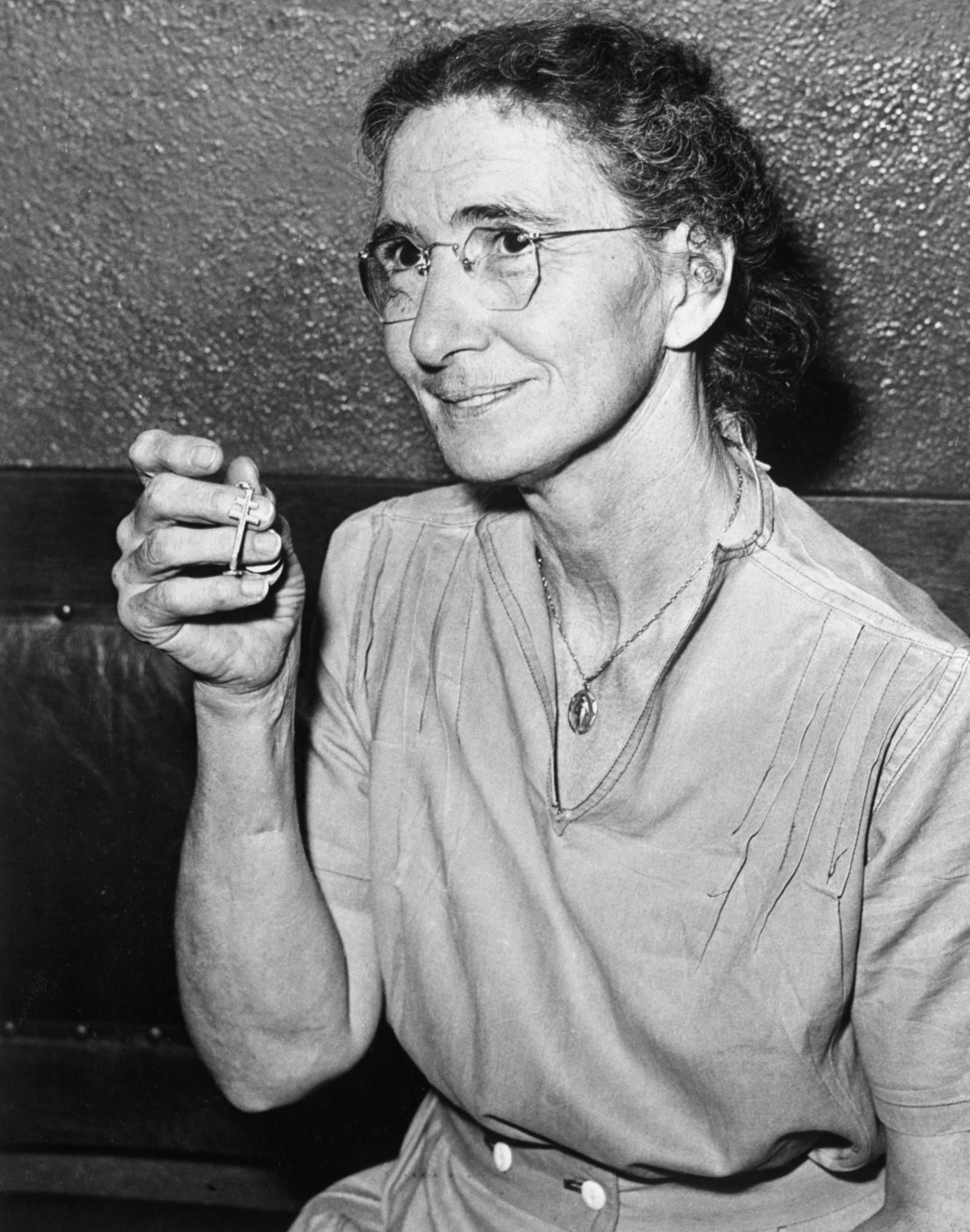

“They call me The Duchess.”

What is known about her is that she materialized in San Francisco sometime in the late 1930s, with three kids and a hood named Michael Simone in tow. Spinelli was a haggard, toothless woman who looked twenty years older than the fifty years that she claimed to be. She asserted that she was an informer for Detroit’s ultra-violent Purple Gang and had to leave the Motor City in a hurry. The Purple Gang was a Jewish organized-crime outfit that was basically wiped out by internal disputes by 1935, so Spinelli’s story is questionable. She was supposedly married to bank robber Anthony Spinelli, who had been killed while smuggling contraband across the Mexican border. Information on Anthony Spinelli and his crimes are as non-existent as were the Duchess’ parenting skills.

The Duchess rounded up a handful of malcontents with serious mental deficiencies: eighteen-year-old Robert Sherrod, twenty-one-year-old car thief and jailbird Gordon Hawkins, and Albert Ives, a twenty-four-year-old, one-eyed half-wit. Together with the thirty-two-year-old Simone, who acted as a caseman as well as the Duchess’ lover, the gang knocked off gas stations and rolled drunks.

Spinelli’s teenage daughter Lorraine was used as a sex lure by her criminally demented mother. Lorraine, whose street name was Gypsy, would approach drunken men with the promise of easy sex. Once they were alone, Spinelli’s thugs would rob the man, sometimes taking off his clothes.

Juanita thought of herself as the brains of the outfit and when she wasn’t planning small-time robberies, she was cooking and cleaning for her troupe of young crooks. Acting as the teacher, Spinelli instructed the boys in the fine arts of robbery, assault, and car theft. She taught them that it was smarter to commit a steady stream of small crimes than one big one like robbing a bank. She explained that the police would go all out to find a bank robber, but they would more than likely shrug at a man who woke up on the sidewalk with his wallet missing. Providing them with the mother figure that they may never have had, Spinelli delegated jobs for the gang and doled out their cut of the money as if it were an allowance.

On a foggy night on April 8, 1940, Ives shot barbecue stand owner Leland S. Cash while attempting to rob him of the day’s receipts. The fifty-five-year-old Cash was deaf and didn’t hear Ives when he demanded the money. Cash reached into his pocket to turn up his hearing aid, but the dim-witted Ives plastered the restaurateur before he had a chance to comply, leaving him to die in the parking lot of his diner at Lincoln Way and La Playa in San Francisco’s Sunset District.

The Duchess panicked, packed up her gang and headed for Sacramento in a stolen car, stopping only to rob a gas station on the way out of San Francisco. Settling at a cheap hotel on the seedy side of town, the gang drank whiskey and planned to make quick money by rolling drunks in Sacramento.

Much to the gang’s dismay, the dim-witted Sherrod kept reliving the murder of Cash, asking the Duchess and others if they thought that Cash had died right away or if he had suffered a lingering death. The hooligans sent Sherrod out on an errand to discuss the situation.

They decided that Sherrod must die before he talked too much. Ives suggested that they shoot him in the head and make it look like an accident, but the Duchess vetoed Ives’ idea. She didn’t want the boy to suffer. Knowing that Sherrod was a weak swimmer, they decided to have a picnic along the Sacramento River. After the cookout, they would go swimming in the river, where they would push Sherrod into the middle of the swift spring current and to his death.

The next day, the inept gangsters piled into their stolen car and drove to an area about ten miles south of Sacramento near the Freeport Bridge with the intent to drown the hapless teenager, but Sherrod was afraid of the fast-moving current and refused to get in the water. The gang drove ack to Sacramento with Sherrod blabbing on about Cash’s murder.

Fearful that Sherrod would go to the police, Simone and Spinelli decided on a better half-baked plan. They put the plan into action the very next evening, April 13, 1940.

After the two younger children were put to bed, the Duchess had a get-together in her hotel room. Sherrod was anxious for a drink and downed his first glass of whiskey in one gulp. When he asked for another drink, Spinelli poured him one laced with chloral hydrate, popularly called knockout drops, or a Mickey Finn.  Sherrod gulped down the drink and was soon groggy. After he became unconscious, the gang beat the teenager, before Hawkins and Ives loaded him into the car and drove him back to the Freeport Bridge.

As Hawkins drove, Ives undressed Sherrod and put him into swimming trunks. At the bridge, Ives dragged Sherrod out of the car and tossed him over the rail into the ice-cold water. Ives placed Sherrod’s clothing nearby, so it would like as if he had gone swimming. Little did Ives, Hawkins, Simone and Spinelli know, but Sherrod was already dead by overdose from the chloral hydrate.

The next day, the Duchess decided that the gang should drive to Reno. They needed to be in a fresh town full of money and drunks. They planned to rob hitchhikers and motorists along the way. The real plan was to kill the simple-minded, yet violent, Ives before he, too, started running off at the mouth. Ives was getting full of himself, bragging about the two murders that he had committed. The plan was to kill him in the High Sierras and dump his body off a tall cliff where he would never be found or even looked for.

Sometime during the ride, Ives saw Simone give Hawkins a knowing glance. At a gas station near Grass Valley, he overheard the gang talking about a 700-foot-cliff. Ives wasn’t as stupid as everyone thought, and he ran into a nearby diner, through the kitchen, out the backdoor and into the brush behind the diner. He waited until the gang drove away, and then he ran to a nearby California Highway Patrol post, where he told the stunned officer his story about the crime gang.

The Duchess and her crew were pulled over by highway patrol officers in Truckee. Spinelli tried to pull her innocent-mother routine, but after the police found their cache of weapons, the jig was up.
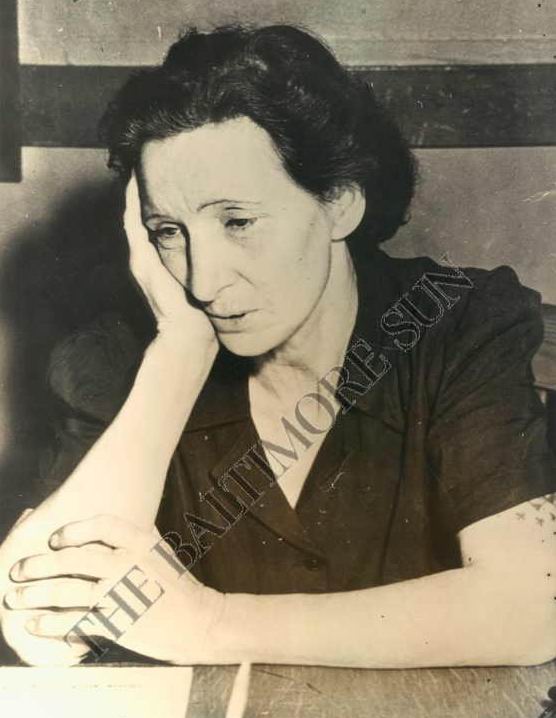

Where did it all go wrong?

After being taken to Sacramento to face charges of Robert Sherrod’s murder, the gang quickly turned on each other. Ives turned state’s evidence first and told the authorities about every robbery and car theft and the two murders that the gang had committed.

Gypsy, who was pregnant, claimed that she had been busy attending Continuation High School in San Francisco and was too busy with school to know about the criminal deeds that her mother was involved in. She was released from custody. Eight-year-old Vincent and fifteen-year-old Joseph Spinelli were placed in foster care.

The city of San Francisco waived its right to the prisoners, and the gang was tried for the Sacramento County murder of Robert Sherrod. Gordon Hawkins, Michael Simone, and Juanita Spinelli were sentenced to death in San Quentin’s gas chamber.

After the usual appeals and stunts, Ethel Leta Juanita Spinelli was led into the gas chamber on November 21, 1941. Spinelli didn’t mind when the warden realized that the witnesses weren’t all assembled and made her wait a few minutes while the spectators found their seats. Spinelli was the first female put to death in California’s gas chamber.
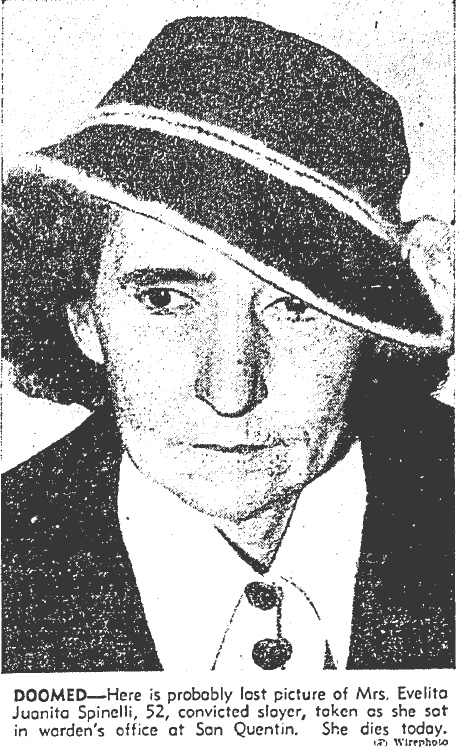

One week later, on November 28, Simone and Hawkins were gassed simultaneously in San Quentin’s double-seat gas chamber. Ives was found not guilty by reason of insanity and was sent to live out his life at the Napa State Asylum for the Insane.

From the San Quentin Correctional Records:

 

Culled from: Death In California by my friend, David Kulczyk


Death Scene Du Jour!
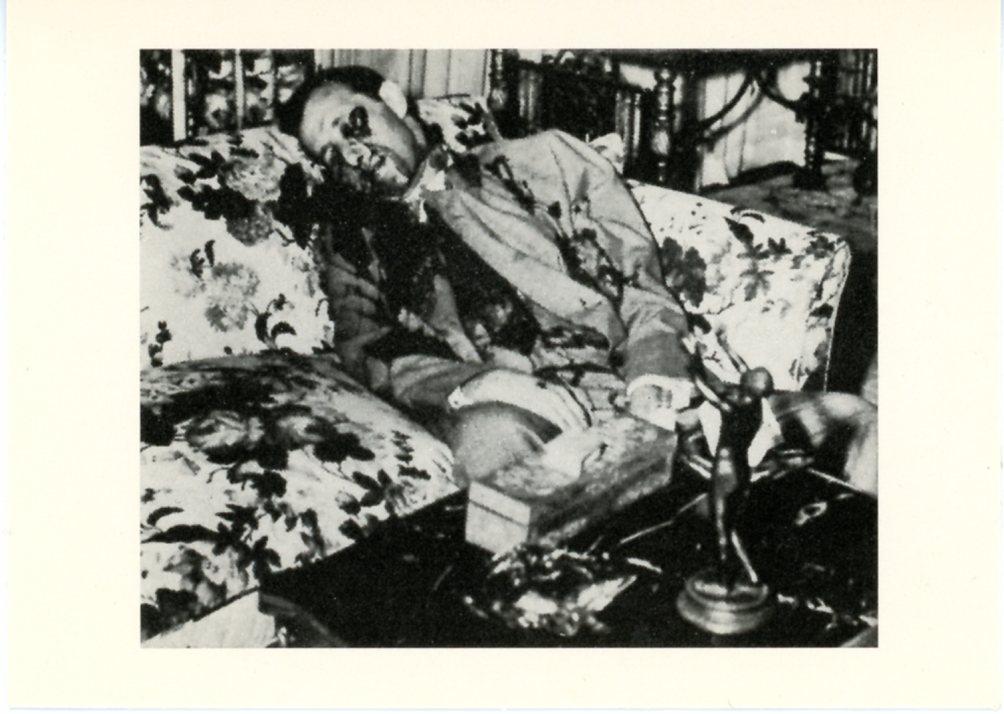
The famous coroner shot of “Bugsy” Sigel after his demise by the Mob.

Culled from: Faces of Death Trading Cards
MFDJ 08/30/23: The Lynching of Lloyd Clay

Today’s Misguided Yet Truly Morbid Fact!

Even some ordinarily unsympathetic white Mississippians thought the lynching of Lloyd Clay in Vicksburg in 1919 might have been misguided. A twenty-two-year-old day laborer from a respected family, Clay was accused of rape, even though the victim denied he had been her assailant. Overly zealous to remove Clay from the jail, the mob accidentally shot two whites. Still, they carried off the execution, clumsily trying to hang him and finally burning him alive near the center of town. Newspapers called it “hideous” and “horrible,” “one of the worst lynchings in history,” and at least one newspaper thought Clay was “probably an innocent man, and one wholly out of the classes of the ‘bad negro’.” Another newspaper labeled the lynchers rank amateurs who lacked the necessary skills to dispatch their victim. The more than one thousand spectators reportedly remained passive during the execution, though some thought the executers had been clumsy and inflected “needless suffering” on Clay. The lynching incurred further criticism for having taken place in a white neighborhood.  At least six white women fainted, and others reported that their “sensibilities” had been “shocked.”

Culled from: Without Sanctuary: Lynching Photography in America

Despite the rare condemnations of the lynching, there was still much approval, such as this despicable little snippet from the Semi-Weekly Leader of Brookhaven, Mississippi (May 21, 1919):

Within twenty-four hours after the body of Lloyd Clay was lynched and burned at Vicksburg, a negro entered the home of Robert Scott, who discovered him upon his return home at 9:30 in the evening. Scott’s wife had heard the negro and had run out of the house. If lynching doesn’t serve to impress the negro with a sense of wrong and sure and hasty punishment for his crime, what will?  The mob has failed to teach him.  What will?

Mütter Museum Specimen Du Jour!

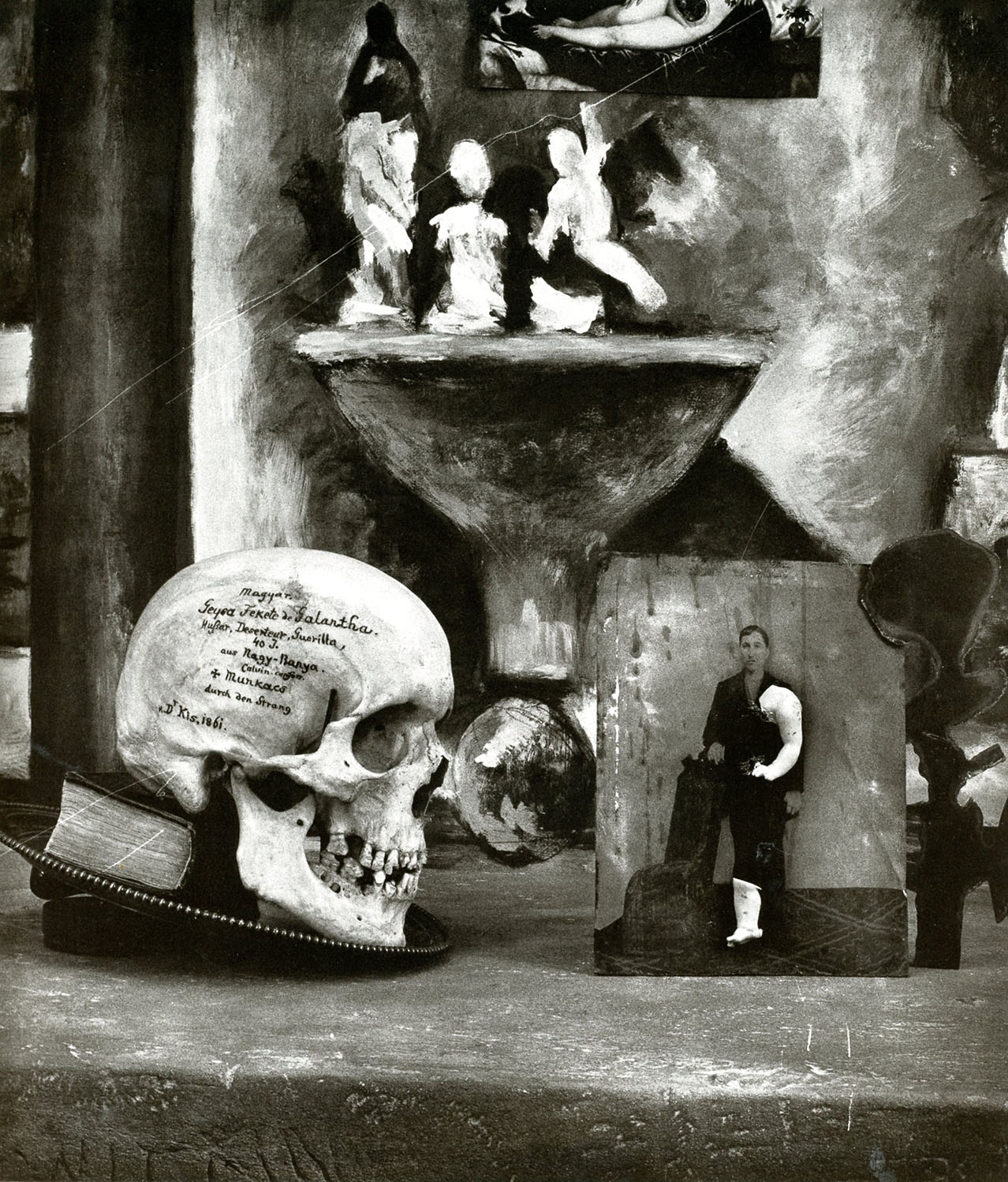
Allegory on the Mystery of Separation and Death
1999, Joel-Peter Witkin

Skull of Geysa Fekete de Galantha, Magyar (Hungarian) from Nagy-Banya, age forty, Calvinist, Hussar, deserter, guerrilla. Died in Mukacs by hanging. From the collection purchased in 1874 from Professor Joseph Hyrtl of Vienna.

Culled from: Mütter Museum Calendar, 2000

MFDJ 08/29/23: The Suicide of Kiyoko Matsumoto

Today’s Trendsetting Yet Truly Morbid Fact!

According to the poet Bryon, no one who has ever handled an open razor has not, at some time, had the fleeting temptation to draw the blade across the throat. A similar phenomenon occurs when perfectly sane people edge towards a precipice and imagine what it would be like to throw themselves over.

Sometimes it needs only one person to slit his throat or jump from a high building for a host of imitative suicides to follow. Favored places to commit suicide include the London Monument (from which Elizabeth Moves threw herself in 1839 and thereby started a fashion), St. Peter’s Basilica in Rome, the Campanile in Venice and the Kegon Waterfall near Tokyo. The column at the Place Vendôme in Paris had to be closed to the public in 1881 because of the numbers of people hurling themselves down. New Yorkers have the pick of hundreds of skyscraper buildings.

In February 1933 Kiyoko Matsumoto, a 19-year-old schoolgirl, plunged to her death by jumping into the open mouth of the volcano of Mihara-Yama on the island of Oshima, Japan.  Kiyoko had developed an infatuation with one of her fellow students named Masako Tomita. Since lesbian relationships were considered taboo in Japanese culture, Kiyoko and Masako decided to travel the volcano to take their lives.  Only Kiyoko jumped, ending her life there in the lava pit’s hellish temperature of 1200 °C.  Her suicide caused a sensation and prompted thousands of imitators. In the remainder of 1933 another 143 followed Miss Matsumoto into the crater, and on one day alone there were six successful suicides and twenty-five unsuccessful attempts. In the next year the volcano claimed another 167. So great was public interest that boatloads of tourists flocked to the island. Visitors could dine at the coastal restaurants, take a camel ride to the top of Mihara-Yama and, on a good day, witness a suicide or two. 1,208 people attempted suicide in two years before a barrier was erected around the crater and it was made a criminal offense to purchase a one-way ticket to Oshima.


The Crater of Mihara-Yama

Culled from: Death: A History of Man’s Obsessions and Fears


A Word from the Good Book

My favorite book is Wisconsin Death Trip, a collection of 19th century newspaper articles from Black River Falls, Wisconsin accompanied by glass plate negatives taken by the town photographer in the same era.  Here’s an excerpt from the book:

“Mrs. Phillip Fredericks, aged 82 years, who was partly insane, threw herself in her neighbor’s cistern at Beloit and was drowned. She had long planned death in this manner.”  –  Badger State Banner, July 23, 1891

Which leads one to wonder, how did everyone know she was planning death in this manner?  Did she talk about it frequently?  My mother used to say, “You kids are going to drive me to Moose Lake!” (an asylum in Minnesota).  Did Mrs. Phillip Fredericks say something similar?  “Keep it up, and I’m jumping in that cistern!”  Also, “partly” insane?  So many questions…

MFDJ 08/28/23: The Murder of Elsie Sigel

Today’s Lime-Sprinkled Yet Truly Morbid Fact!

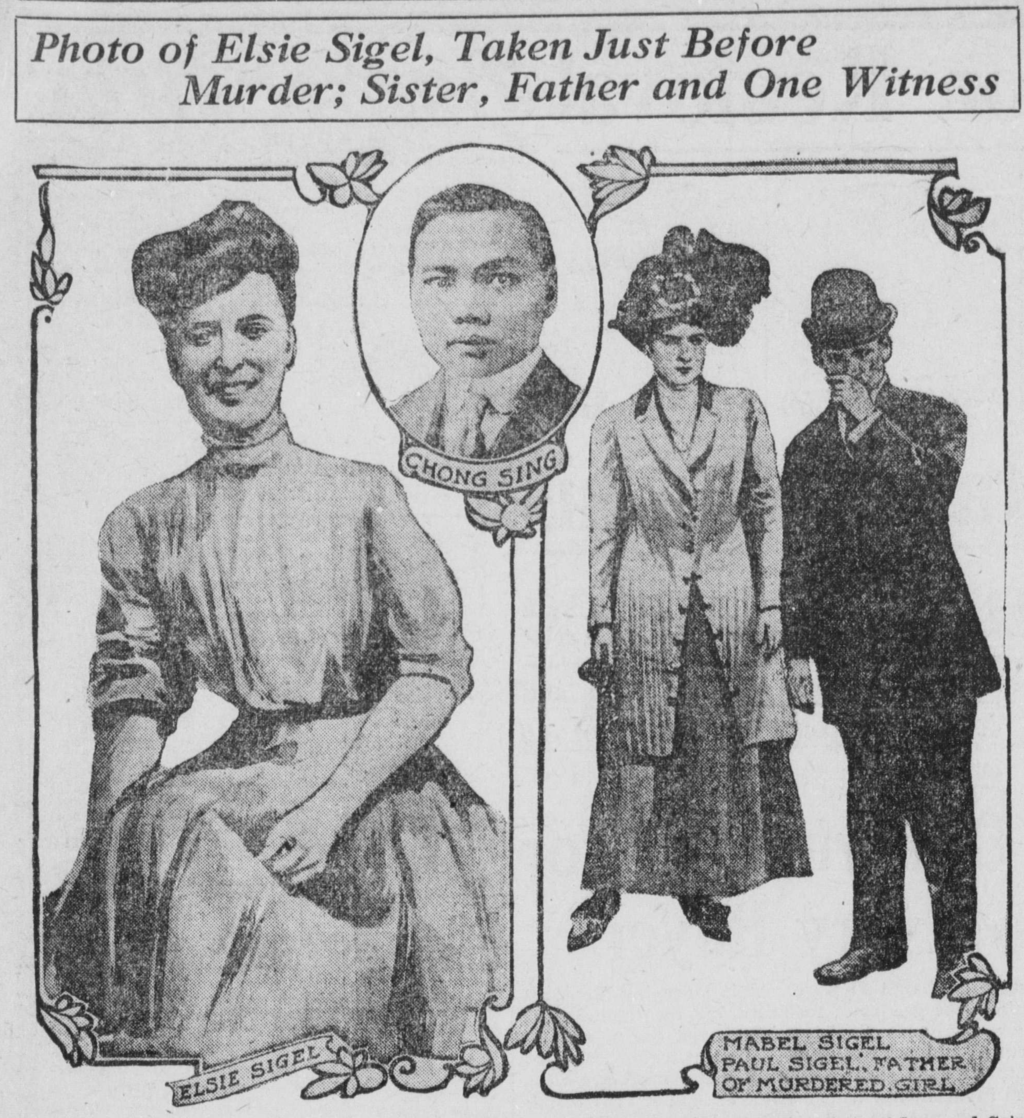
Every detective worth his salt has a case that haunts him for the rest of his life. For NYPD Detective Ernest Van Wagner, that case began on Friday, June 18, 1909. While at the West Forty-Seventh Street stationhouse checking precinct records, he observed an elderly Chinese man in traditional black garb shuffle into the stationhouse seeking help. The man called himself Sun Leung and told the desk lieutenant in broken English, “Me tink my cousin him dead in room. Wanta cop to get him out.”

In itself, the request was not unusual. In the early 1900s most New Yorkers died at home, but very few Chinese resided so far north of Chinatown. The lieutenant, however, did not ask any questions. Instead he roused a patrolman off reserve and told him, “Go with this Chink. He’s got a dead one in his joint.”

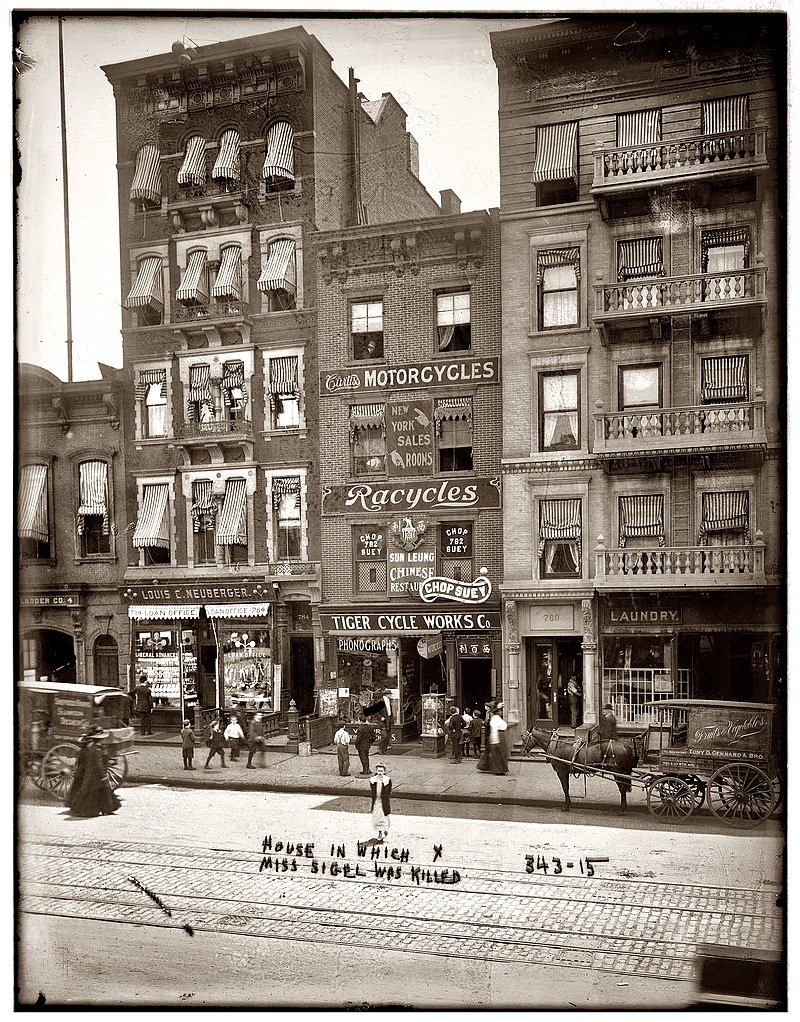
While Detective Van Wagner returned to his records search, Mr. Leung led the police officer to a four-story building at 782 Eight Avenue, off West Forty-Eighth Street. The old Chinese man ran a pricey chop suey restaurant on the second floor, one of the city’s first Asian eateries to open outside of Chinatown. The upper two floors were occupied by restaurant workers and itinerant Chinese men. The telltale stench of decaying flesh emanated from within the flat that Mr. Leung said belonged to his cousin, but six sturdy padlocks on the door effectively prevented the patrolman from gaining access.


782 Eight Avenue, New York City

He notified the lieutenant. Van Wagner overheard their conversation and offered to go to investigate. He had no luck getting in, either, until he borrowed an ax from a nearby firehouse and battered down the door. The smell was so bad that several Chinese men, who had been anxiously watching the two policemen tackle the sturdy door, fled the hallway in search of fresh air.

Van Wagner opened the apartment windows and waited for the odor to dissipate before proceeding. A cursory search of the rooms failed to immediately locate the source of the stink, but Van Wagner took note of the expensive Asian furnishings and the luxurious silk garments in the dresser. Upon closer examination he realized that some of the clothing items belonged to women. His curiosity was further aroused when he noticed dozens of photographs of Caucasian females on display throughout the apartment in the company of a handsome but unknown, Chinese man.

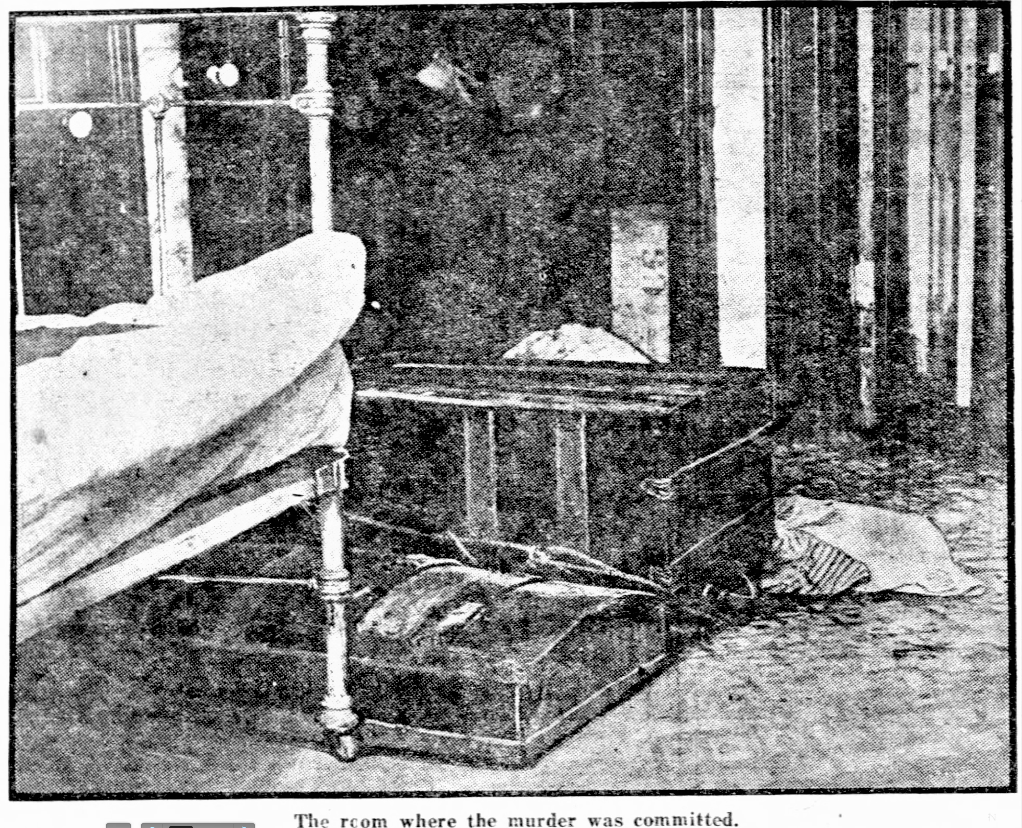
Although the entire apartment reeked, the odor was strongest in the bedroom. He separated the heavy bed curtains, expecting to come across a body, but instead all he saw was sheets in disarray and three articles of ladies’ lingerie and a pair of black stockings partially concealed under a pillow. When he looked under the bed, he found an old battered trunk secured with rope. The motion of pulling the chest out from underneath disturbed the remains. Van Wagner severed the rope and broke the lock. The lid flew up, revealing a naked, trussed, severely decomposed corpse of indeterminate sex, partially covered by a thick wool Army blanket, sprinkled with lime.

The law required Van Wagner to wait until the coroner examined the corpse before he could proceed with his end of the investigation. The coroner determined that the victim was a woman and the cause of death appeared to be strangulation. After the coroner left, Van Wagner conducted his own search of the body and recovered a small, gold, heart-shaped locket that had become deeply embedded in the woman’s rotting bosom. It was etched with the initials “EJS,” and it provided him with the first clue as to the victim’s identity.

Other detectives began to question the restaurant staff, but none of them spoke English. The police brought in a Chinese translator from Columbia University. As Van Wagner listened to the interrogations, he got the distinct impression that the Chinese men knew more than they were telling. He telephoned Police Headquarters, hoping that someone might have reported the dead girl missing. As luck would have it, the detective on duty informed him that a man named Paul Sigel, son of famed Civil War general Franz Sigel, had contacted him earlier that evening seeking advice on how to handle a delicate family matter.

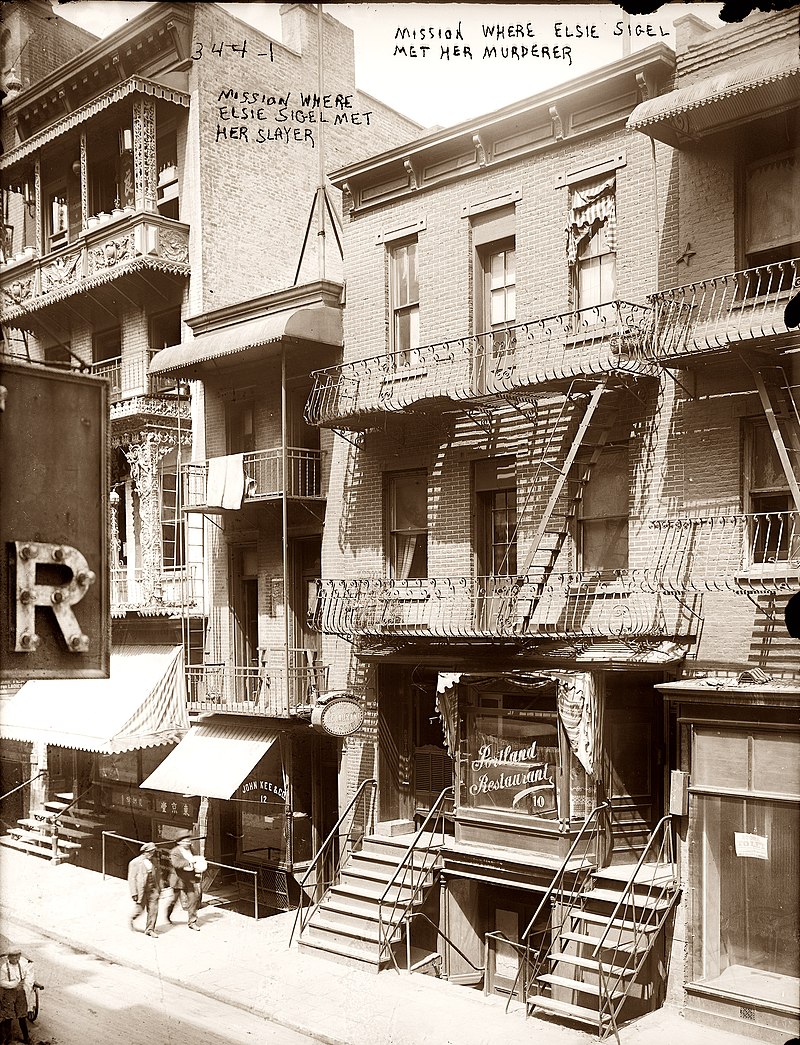
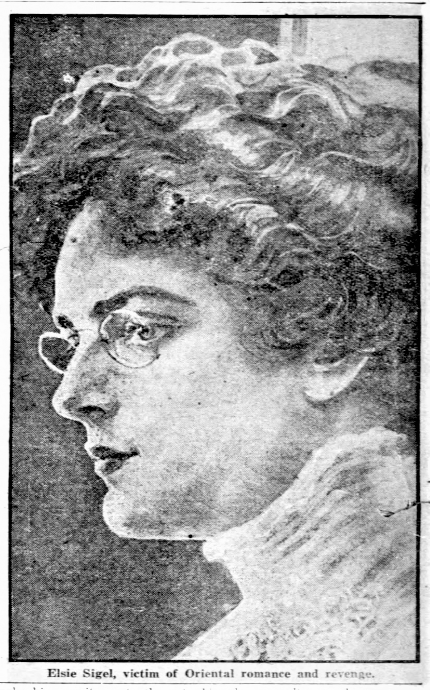
According to the detective, Sigel and his wife worked as Christian missionaries in Chinatown and had always encouraged their daughter Elsie to take part in their crusade. Mr. Sigel now feared that Elsie had eloped with a Chinese man and headed south. Shortly after she disappeared, he received a telegram from her that she was in Washington, D.C., and would return on June 12. A week had passed since that date, but Mr. Sigel did not want to officially report Elsie missing, because of the scandal that the mixed marriage would cause to his family’s reputation. He only wanted to know whom he could contact in the nations’ capital for help in locating his daughter.


The mission where Elsie Sigel volunteered.

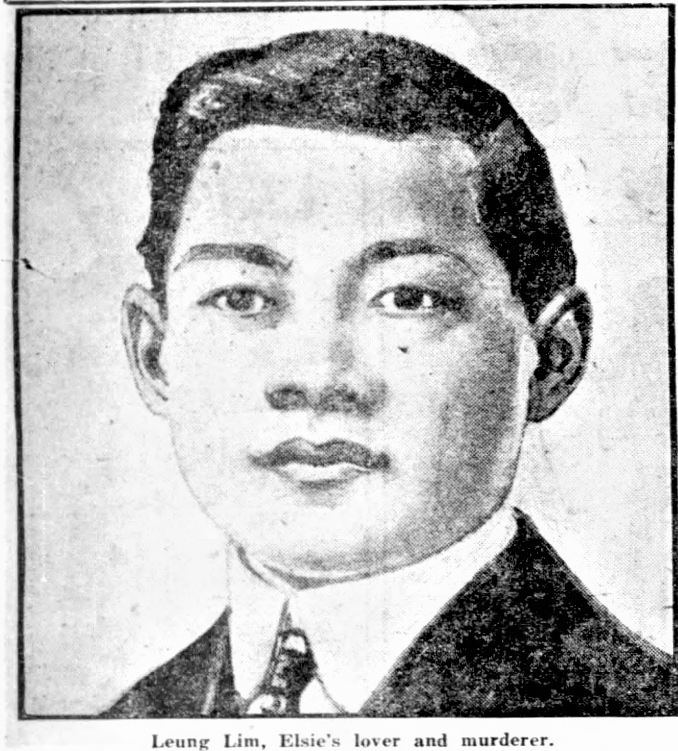
This new information combined with initials on the locket that matched the name Elsie Sigel, gave Van Wagner a pretty good idea who the victim was. He rushed to the Sigel home. After some cajoling on his part, the husband and wife reluctantly added to what he already know. They said that Elsie had fallen in love against their wishes with William L. Ling, a young Chinese-American whom they were trying to convert to Christianity. While they refused to believe their daughter was the murder victim Van Wagner found, they confirmed that Ling lived at the address with another Chinese man they knew as Chang Sing. The next morning, the embarrassing scandal the Sigels had hoped to avoid became front-page news.

The police caught a break several days later when Ling’s roommate turned up working as a cook in upstate New York. According to Sing, Elsie Sigel was a frequent visitor to their apartment and was friendly with other Chinese men as well. On June 9, he was awakened by a commotion in Ling’s bedroom and peeked through the keyhole. He saw his roommate choking Elsie with a stocking, but instead of stopping him, he panicked and fled the apartment. Later Ling asked him to help get rid of Elsie’s body. Van Wagner was able to confirm that the body had made it as far as Newark, New Jersey, before the two men returned it to their flat. He also verified that Ling had bought the six padlocks and that Ling had been the man who sent the telegram from Washington, D.C., but he could not discover Ling’s whereabouts. He became convinced that the Chinese tong had helped Ling escape.

In January 1910, a new administration took charge of the Police Department. It wanted to distance itself from the embarrassing episode and let the matter quietly fade away without ever making William Ling answer for his crime. As for Detective Van Wagner, he eventually got promoted to captain, but he was forever haunted by the case.

Culled from: Undisclosed Files of the Police 

The building in which Elsie was murdered no longer exists.  The block is completely boring now – all the interesting buildings were demolished long ago.

The mission at 10 Mott Street still exists though.  Less charming, of course, but intact.


Weegee Du Jour!

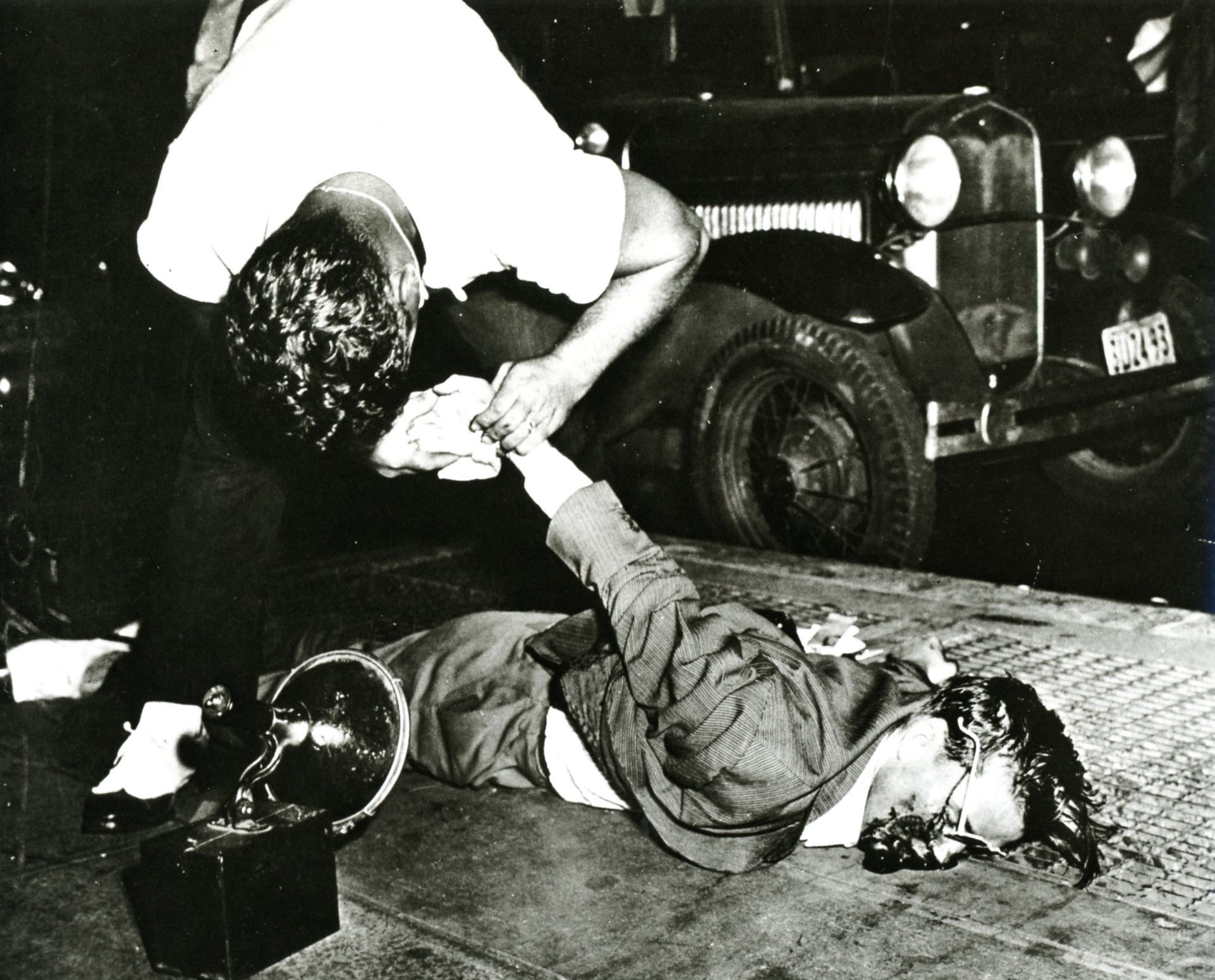
Weegee was the pseudonym of Arthur Fellig (June 12, 1899 – December 26, 1968), a photographer and photojournalist, known for his stark black and white street photography. Weegee worked in Manhattan, New York City’s Lower East Side as a press photographer during the 1930s and ’40s, and he developed his signature style by following the city’s emergency services and documenting their activity. Much of his work depicted unflinchingly realistic scenes of urban life, crime, injury and death.

Here’s a photo from the book Weegee’s New York: Photographs, 1935-1960:

Identification squad, 1943

MFDJ 08/27/23: Crossing in Steerage

Today’s Unheated Yet Truly Morbid Fact!

Thousands of impoverished Northern European immigrants were promised that the prairie offered “land, freedom, and hope,” so they left everything they knew behind to take a chance in America.   The following is an account of the ill-fated emigration of the Norwegian Tisland family:

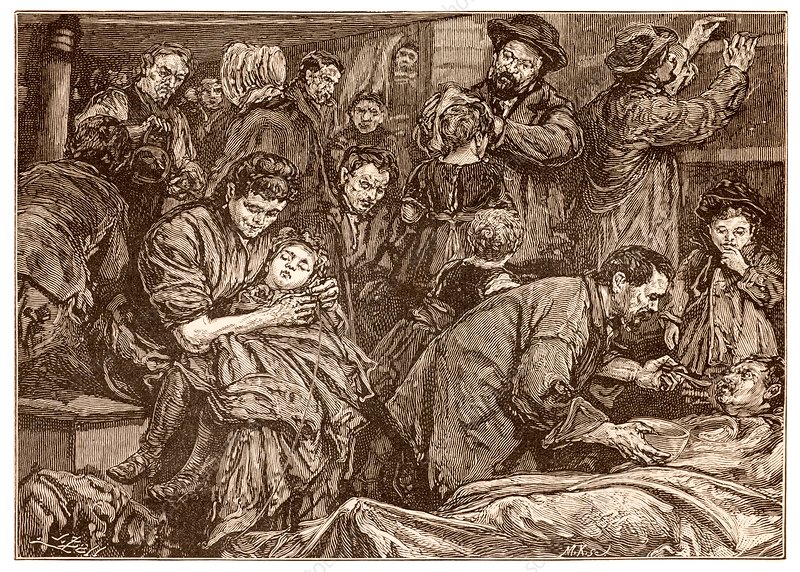
Of the nine children born to Ole and Karen Tisland, five had died of diphtheria and were buried in Norway. Though their son Andreas survived the disease, he was left deaf and weakened. Andreas was six and a half when Ole and Karen emigrated to America with their three other children. Their crossing was rough. In the course of the voyage, twenty-two children and one adult died. Ole and Karen watched helplessly as Andreas shivered with fever in the unheated steerage quarters. When he died his body was sewn into a canvas shroud with weights attached to either end. The ship’s captain read the last rites, and then the bundle was tipped off the side of the ship and into the sea. Some mothers on board immigrant ships kept the deaths of their children secret so they could bury them properly on land. Even burying a child in the strange land of a country they had never seen was better than losing a child’s body to the ocean. About one in ten steerage passengers died on board immigrant ships.


Miserable Steerage Conditions

Culled from: The Children’s Blizzard


Garretdom: Scheming Wife Edition

HAD HER HUSBAND KILLED.

The Crimes a Southern Woman Is Charged with by a Negro Murderer.

RALEIGH, N.C., Sept. 29—Last Thursday night the store of A.D. Owens, at Creswall, Martin county, was entered by burglars. Owens’ dwelling adjoined the store. He heard a noise and stepped to the door. As he did so he saw two burglars, one of whom raised a gun and fired. Forty buckshot entered the stomach of Owens, who in a few minutes was  corpse.  Since that time the authorities have been on the track of the burglars and murderers. Monday night Sheriff Sprewill arrived at Plymouth with the wife of the murdered man and two negroes. Another negro, James Davenport, alias James Ambrose, was shot and killed.

One of the negroes confessed some days ago that Mrs. Owens had hired them to kill her husband. She wished them to drown him, and prepared water in a barrel for that purpose. She gave him medicine to put him in a sound sleep, and the three negroes actually stood by his bedside ready to commit the crime. Their courage failed them. Finally Ambrose some nights afterward entered the store, and when Owens appeared shot him. Ambrose was pursued, and on making a desperate attempt to kill the members of the Sheriff’s posse was shot through the heart. Miss Owens and the other two negroes are now in jail at Plymouth to await trial.

Culled from the Thursday, September 30, 1886 issue of the Carlisle Weekly Herald (PA).

*************************

And I’m sure you want to know what happened to dear Mrs. Owens?   Here’s a follow-up from the January 31, 1887 issue of The Times Herald:

TERRIBLE STORY OF CRIME.

CLOSE OF THE OWENS MURDER TRIAL AT WASHINGTON, N.C.

The Death Sentence Passed Upon One of the Culprits and the Other Two Sentenced for Life—How Owens Was Murdered—A Depraved Woman’s Murderous Design.

WASHINGTON, N.C., Jan. 31—The Owens murder trial, which abounded in startling revelations, has resulted in the sending of Mrs. Owens and Rev. Isaac Jones to the penitentiary for life and a death sentence against Stark Simpson. Simpson has taken an appeal to the supreme court.

The history of the terrible affair is as follows: A.D. Owens, a white man, was a merchant at Cresswell, Washington county. His wife was a woman with whom in early life he had contracted a liaison, and whom he married later, in defiance of the ridicule of friends and the entreaties of his relatives. He was, therefore, cast off, and though a man of respectable family was cut off from all social intercourse. Mrs. Owens had several children born before wedlock, and one of them, a daughter 20 years of age, was suspected of intimacy with a negro named James Ambrose. The latter was a desperado and outlaw, and was the man who some time since set fire to the jail at Harrell, while a prisoner therein, and so made his escape. Owens, angry at the girl’s love for Ambrose, locked her up. Her mother took her part, not objecting to her intimacy with Ambrose. This led to a quarrel, and finally to Owens’ death. The quarrel occurred last September, and Mrs. Owens, her daughter and Ambrose at once began to plan to kill Owens.

They admitted to their confidence Isaac Jones and Stark Simpson. All agreed that the wife should poison her husband. She gave him poison, but in too great quantities, and he was only made sick. The failure of the plan enraged Mrs. Owens. She conferred again with Jones, who was looked up to by all the conspirators. Jones advised her to give her husband an opiate, and said that when he was under its influence at night she should give him the signal. They would enter the house, take Owens from the bed, and drown him in a barrel of hot water. Mrs. Owens heated the water and administered the opiate. She gave the signal and her negro allies entered. Owens was partially stupefied, and all the party stood by his bedside. Jones declared that it was unsafe to make the attempt to end his life in that way. Mrs. Owens, furious at the repeated failures, urged them to shoot him. Jones concurred in her idea, and said that as enough were present to do the deed he would go to his church. It was agreed that the negroes should return later in the night and make a noise as if breaking into Owens’ store, which adjoined the house. The plan was carried out. Mrs. Owens roused her husband, telling him burglars were attempting to enter. Owens declined to go out. She urged him to do so. Finally he went into the yard, and clapped his hands together to frighten the burglars. In an instant the report of a gun was heard, and Owens fell, pierced by many buckshot. In half an hour he died. The community was soon in a state of the wildest excitement, and Ambrose was at once suspected. Two men, Bosnight and Spruill, volunteered to capture him. Entering his cabin, they found him. He cried out:

“If you want me for shooting at Owens, you are after the wrong man.”

With these words he sprang at Spruill, threw him to the floor, and, drawing a revolver, attempted to shoot him.

Bosnight seized his revolver, but Ambrose drawing another again attempted to shoot Spruill. Bosnight then fired at him, blowing off the top of his skull. Concealed in Ambrose’s house was Stark Simpson, who was arrested. He confessed the deed, and revealed the awful crime above stated. He said that Ambrose Shot Owens, and also that Mrs. Owens had promised each of them $20 and a pair of shoes for killing her husband.

To verify Simpsons’ statement they took him to Mrs. Owens’ door. She came out when Simpson called, and Bosnight and Spruill, who were concealed, heard her acknowledge her obligation for killing Owens. She told Simpson to call in the morning and get his money. The men entered and arrested her. The people were furious, and came near lynching her and her two accomplices, but they were safely jailed. Later they moved the case from Washington to Beaufort county. Upon the witness-stand Simpson testified in his own behalf, and retold all the horrible story, and his statement caused a profound sensation.


More Grim Olde News Can Be Perused at Garretdom!

MFDJ 08/26/23: Hiroshima, Ground Zero

Today’s Vaporized Yet Truly Morbid Fact!

At exactly 8:15:17 a.m. on August 6, 1945, the ‘Little Boy’ was released from the bomb bay of the Enola Gay as it passed over Hiroshima. Its target was the T-shaped Aioi Bridge.  The following is an account of what happened at or near ground zero.

Facing the T-shape of the Aioi Bridge, the teachers’ room of the Honkawa Elementary School was suddenly bathed in blinding bluish light. It was eight seconds past 8:16 a.m. in downtown Hiroshima. Teacher Katsuko Horibe  heard nothing. The window near her exploded. Glass bombarded her scalp, forehead, and left arm, but she felt nothing. She flung herself under a desk but did not bother to protect her head as everybody has been taught in air-raid drills: hands shielding the eyes, thumbs plugged into the ears. Whatever was happening was evidently already over. It was silent and dark as night.

A teachers’ meeting had been scheduled for 8:30, but since commuting schedules had become unreliable Miss Horibe had taken an early street car and been the first to arrive. All ten of her colleagues died on their way to work.

Innumerable other accidents of time and place spared and took lives in Hiroshima on that hot and muggy morning, beginning with the accidental course of the Enola Gay‘s bomb itself. It had missed the Aioi Bridge by 800 feet and exploded instead 1850 feet above Dr. Shima’s hospital, just 650 feet southeast of Miss Horibe’s school. The Shima hospital and all its patients were vaporized, but its owner, the fatalistic Dr. Shima, kept pedaling unscathed on his bicycle. He was between house calls in the suburbs.


Ruins of the Shima Hospital, with the famous Prefectural Industrial Promotion Hall (preserved as part of Peace Memorial Park), in the background

The “hypocenter” was in the courtyard of his hospital. It was ground zero, the hub of the nuclear death wheel, the point on the ground directly underneath the explosion, the focus of  Hiroshima’s new universe. Eighty-eight percent of the people within a radius of 1500 feet died instantly or later on that day. Most others within the circle perished in the following weeks or months. All who were in Hiroshima on August 6 would come to know precisely how far fate had placed them from the hypocenter at 8:16. And everyone would learn at least one new English word: “hypocenter,” the place from which all life and death was measured.

The handful of survivors who, like Miss Horibe, escaped almost automatic death near the hypocenter owed their lives to luck and to the sturdiness of the very few structures not make of wood. The stone railings of the Aioi Bridge tumbled like bowling pins into the river and segments of its concrete pavement were curled like ocean waves, but somehow the 400-foot bridge survived. So did the shell of Miss Horibe’s long, three-story Honkawa School; it was built of reinforced concrete and surrounded by a thick brick wall. its interior was gutted, along with all of central Hirioshima for 1.2 miles and, in many sections, far beyond. In less than half a second, heat rays with temperatures of more than 3000 degrees Celsius caused primary burn injuries within two miles of the hypocenter. Almost 130,000 of Hiroshima’s 350,000 people would die.


Honkawa Elementary School after the bombing.  A small part of it was preserved as a Peace Museum.

Culled from: Day One: Before Hiroshima and After


Torture Method Du Jour!


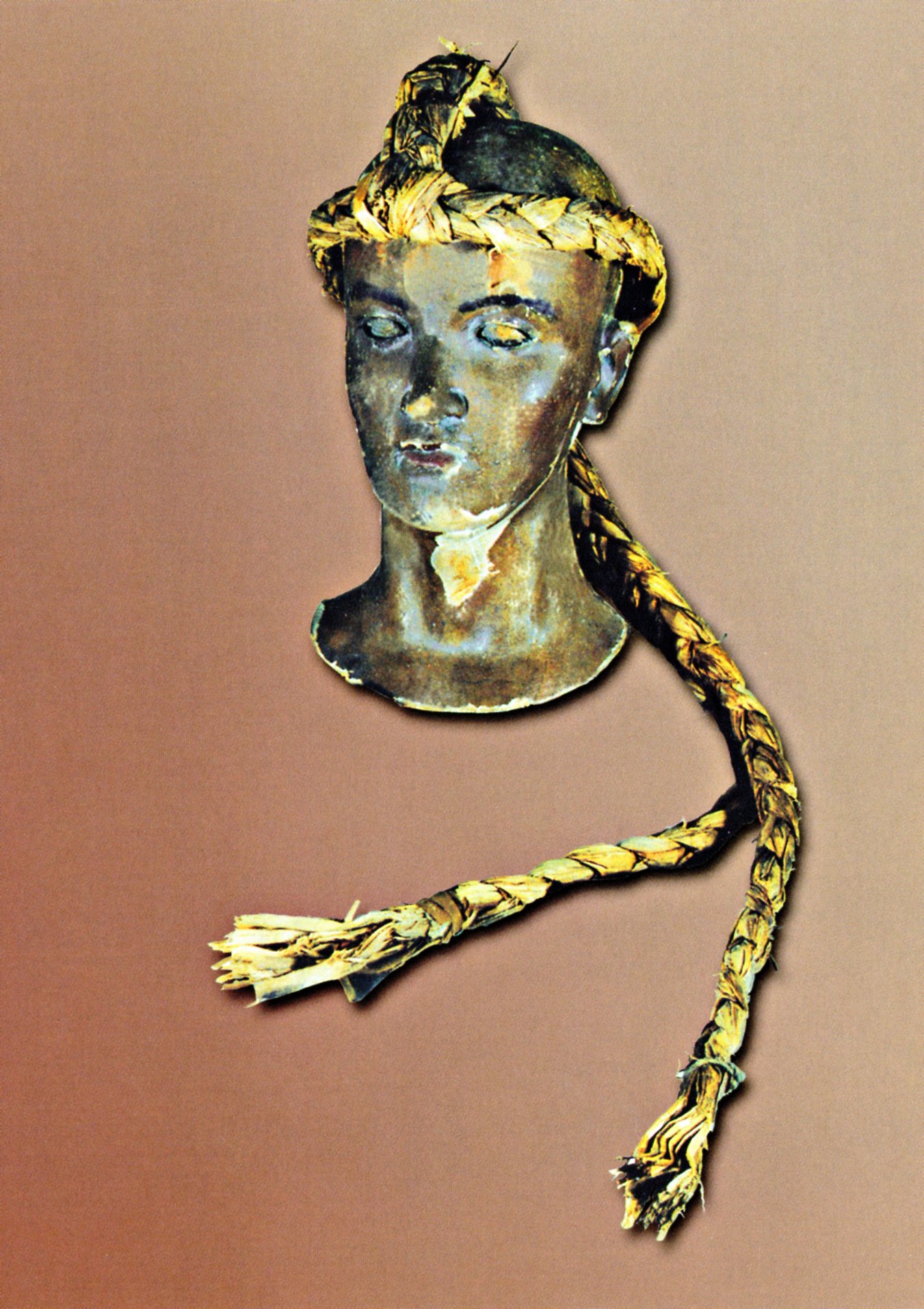
STRAW BRAID

The braid, being very light, did not inflict any physical pain. It was put on a woman’s head, mainly young ones, to punish them for crimes regarding honor, short of adultery, which was considered more serious and deserved a harsher form of torture.

This instrument was mainly inflicted for small sins, such as a shameless neckline, being the object of gossip, or even for simply moving in a way that was considered enticing to men.

Culled from: Torture – Inquisition – Death Penalty

MFDJ 08/25/23: The Earthquake of 1202

Today’s Relatively Shallow Yet Truly Morbid Fact!

The earthquake of May 1202 that shook a very large area around the eastern Mediterranean is very well recorded. It must have become, rapidly for the time, a very notable event, for among those who wrote of it was the English historian Ralph of Coggeshall (d.1228), who says that the cities of Acre and Tyre were “overthrown”.

These cities, on the Mediterranean coast of what is now Lebanon, were among the places worst affected by the earthquake, but it was reported from Armenia to Libya, and from Sicily to Iran. In Syria, Lebanon, Cyprus, Libya and Egypt there was very severe damage. Acre and Tyre were virtually destroyed, as was the town of Safad, inland from them, and Bedegene, where “everything was swallowed up” according to Arabic accounts of the disaster.

Nablus, thought to have been near the epicenter of the quake, also suffered very badly, and strong tremors were felt in Damascus where, as in many other places, mosques collapsed, causing great terror amongst the population. There was heavy loss of life in Tripoli, where the old castle of Arqa was ruined.

The earthquake was felt through Egypt from Qua to Alexandria, and there was a long tremor reported from Cairo, where “sleeping people jumped from their beds in fear.” The quake was of unusual severity for Egypt. Cyprus also suffered badly, with many buildings destroyed and considerable loss of life. Although the quake clearly destroyed many buildings , in some reports of the disaster this may have become confused with damage already caused by Saladin’s attacking hordes only 12 years earlier.

Modern seismologists studying the quake believe it to have been relatively shallow but spread over an unusually wide area, and with a Richter scale reading of probably about 7.6, not one of the largest earthquakes by any means. Despite this, the cumulative effect was clearly catastrophic. There were strong aftershocks for several days following the major tremor.

Arabic reports speak of a million people having died. There is, of course, no way this figure can be checked. Abd al-Latif, one of the principle historians of the period, records 111,000 deaths in Cairo alone, and says that the main aftershock—which may have been almost as powerful as the principle tremor—caused the deaths of 50,000 in Nablus. However, it is known that in many places the earthquake was followed by famine and epidemics of disease, and the death toll would have been greatly increased in this way. We shall never know if this was the worst disaster ever in terms of lives lost, but it was certainly among the worst.

Culled from: Catastrophes and Disasters


Crime Scene Du Jour!

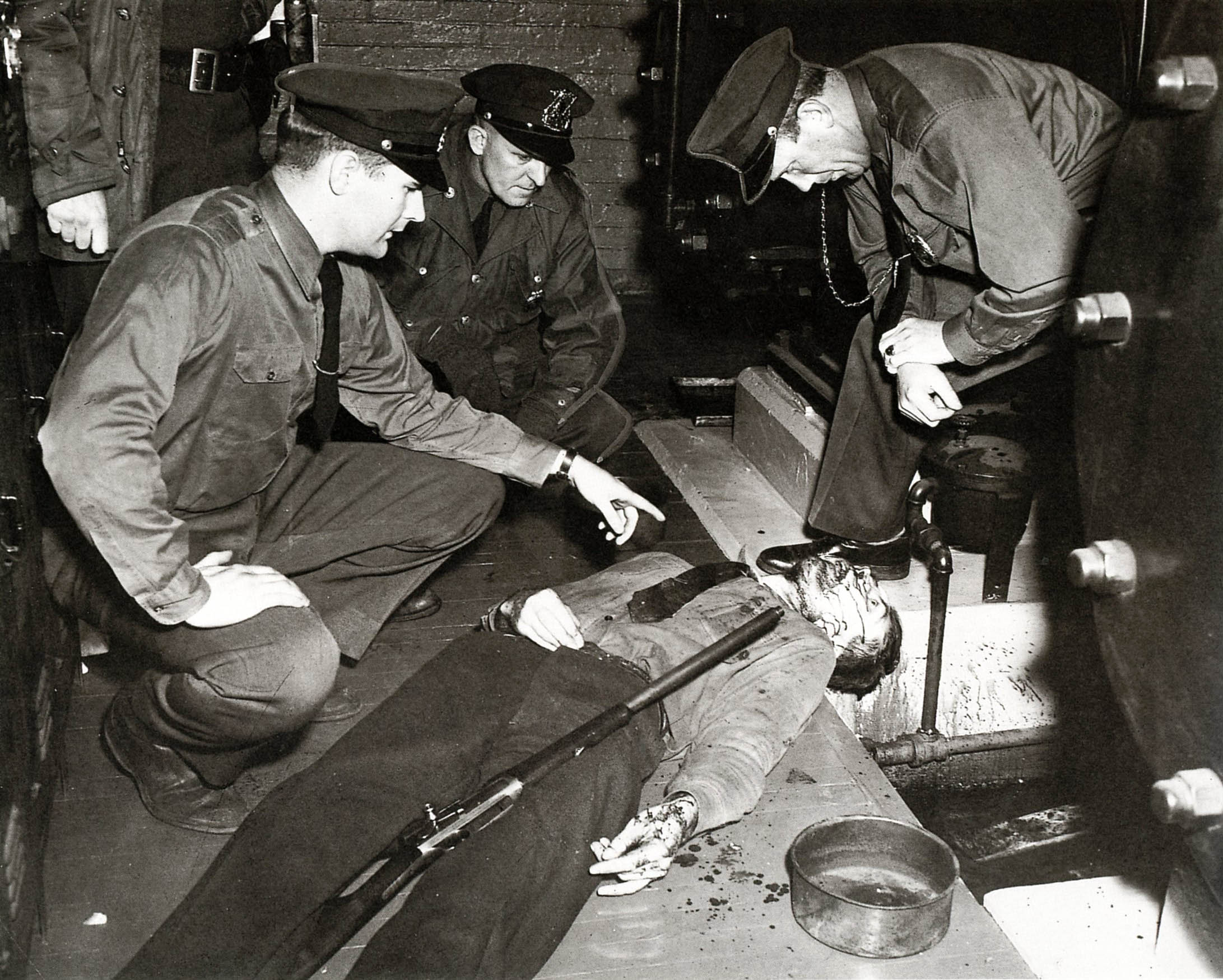
On December 9, 1948, a man named John J. Hill, a longtime employee in the power plant at the Northern Pacific Railroad’s sprawling Como shops in St. Paul, got into an argument with coworkers just before quitting time. The argument was apparently over who should clean some boilers, but behind it lay a long and troubled history of conflict. Hill, age 54, had been passed over for promotion and nursed a deep grudge.

What happened next has a familiar ring to it. Hill got out a .30 caliber hunting rifle, either from his locker or the trunk of his car,  and started shooting. There were five other men in the building, and Hill killed four of them. It was St. Paul’s worst mass murder up until that time. A fifth worker escaped by ducking behind a steel post, which deflected the bullet intended for him. After his brief killing spree, Hill walked into another room, put the gun barrel under his chin, and fired.

This extremely graphic photograph of Hill, taken as three St. Paul police officers examined his body, appeared the next morning on the front page of the Pioneer Press. It was one of a dozen pictures from the murder scene printed in the newspaper that day.

Culled from: Strange Days, Dangerous Nights

MFDJ 08/24/23: Norman and Elsie

Today’s Filthy Yet Truly Morbid Fact!

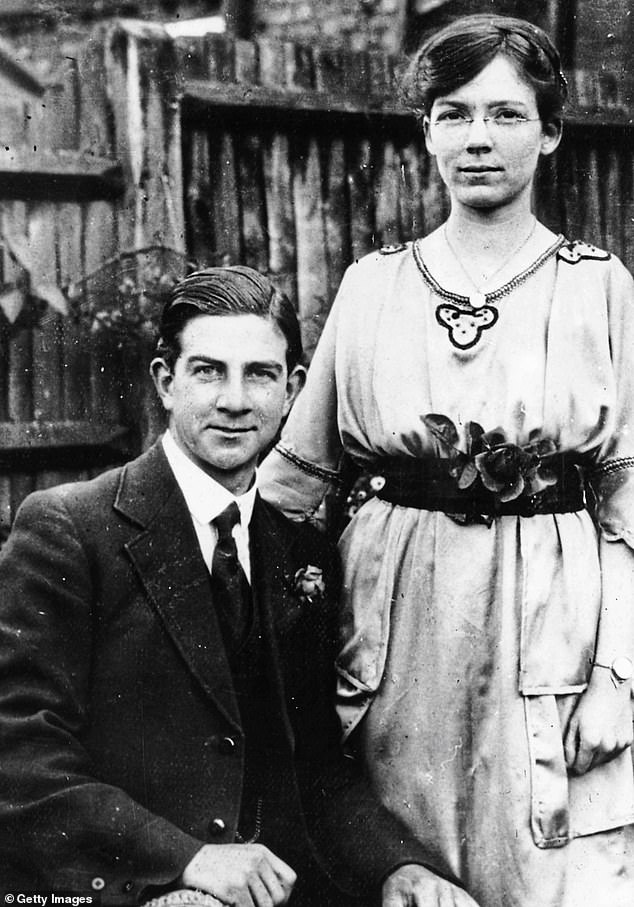
Ever since 1922, Norman Thorne had struggled to eke out an existence from a run-down poultry farm on the outskirts of Crowborough in Sussex, England. He not only raised chickens but lived among them as well, in a squalid shed barely fit for human habitation. At age twenty-four, he was perfunctorily engaged to a young typist from London, Elsie Cameron, a plain and neurotic girl with but one thought in life—to find a husband. Some idea of Elsie’s desperation can be gauged from her willingness to bed down with Thorne in his filthy shack, which she did in hopes that it would lead to something more permanent. But Thorne had other plans. Each morning after she had stayed with him, he would shunt Elsie back to London on the first available train. By letter she pressed him to announce a wedding date. In November 1924, she changed tack, writing untruthfully that she was pregnant. Thorne was unmoved, announcing that he intended to marry another girl, a local beauty named Elizabeth Coldicott. In a fury, Elsie wrote Throne that she would be arriving on the afternoon of December 5, at which time she expected him to do the decent thing. Fiercely determined, and with all her worldly possessions crammed into a single bag, she caught the train from London.


The Happy Couple

Five days later, her anxious father telegraphed Thorne to find out what had become of her. Thorne expressed bewilderment, saying that Elsie had not arrived. When Mr. Cameron contacted the Crowborough police, they interviewed Thorne and came away impressed by his concern and obvious desire to help. Soon Elsie’s disappearance attracted reporters from Fleet Street. Thorne was good copy, as he enlarged on the plans that he and Elsie had made to marry and agonized over her welfare. An accompanying photograph taken of him in the chicken run, mournfully scattering seed to his flock of leghorns, only emphasized his isolation.

Such an honest looking man!

However, two men who knew Elsie told the police they had seen her walking toward Thorne’s farm on the night of December 5. Strangely, not until a month later, when a vacationing neighbor returned and told the same story, did Scotland Yard become involved. Thorne repeated his earlier story to the Yard detectives on January 13, unaware that digging had already begun at his farm. The following day, Elsie’s bag was discovered. After some consideration, Thorne made a statement. Elsie had arrived, he said, telling him that she intended to stay until he married her. An argument broke out, and Thorne had stormed from the shed. Upon his return, he found Elsie swinging by a noose from the hut’s main beam. In a blind panic, Thorne opted to chop his lover into quarters and bury her in the chicken run, at the very spot where his photograph had been taken.

Elsie’s remains were dug up and taken to the local mortuary for examination by Sir Bernard Spilsbury. Naturally, he devoted close attention to the neck. In suicidal hanging, death is due to rupture or obstruction of blood vessels in the brain due to pressure on the vessels of the neck, obstruction of the windpipe, or both. Usually the rope or ligature used leaves a deep bruise on the flesh at the point of pressure. Spilsbury found none of these features, nothing to suggest that Elsie Cameron had hanged herself. What he did find were bruises on her head, face, elbow, legs, and feet “sufficient to account for death from shock.” In other words, she had been bludgeoned to death. On January 26, 1925, the remains were reburied and Norman Thorne found himself facing a charge of murder.

Realizing that their sole hope lay with the suicide story, Thorne’s defense team demanded a second autopsy, this time to be carried out by Dr. Robert Bronte, then pathologist at Harrow Hospital and a former Crown Analyst to the Irish government. Bronte loathed Spilsbury; so it was with some tension that in late February they met at Willesden Cemetery to preside over the second disinterment of Elsie Cameron’s body. Spilsbury studied Bronte’s autopsy with gimlet-eyed intensity.

At the subsequent trial everything hinged around one question—how did Elsie Cameron die? Spilsbury insisted she had been battered to death. Bronte, while conceding that his examination had suffered because of the advanced state of decomposition, pointed to marks on the neck as proof that death had resulted from suicide through hanging. Spilsbury dismissed these as “natural creases” in the neck. Not so, argued Bronte, they were clearly “grooves” and, furthermore, displayed signs of bruising. He had taken slides of the grooves and passed sections of the bruised areas to Spilsbury so that he might make his own slides. Spilsbury testified that neither his slides, nor those of Bronte, showed any signs of bruising.

Seriously undermining Bronte’s argument was one critical fact. Along the main beam in Thorne’s hut—the one he said that Elsie hanged herself from—there was a thick layer of undisturbed dust. Had a rope been tied around that beam and then used to suspend a body, not only would it have dislodged the dust, but the beam itself would have shown traces of grooving. There were not such markings.

The judge, in summarizing, described Spilsbury’s opinion as “undoubtedly the very best… that can be obtained,” and the jury agreed. Thorne was sentenced to death, an outcome that aroused considerable public outrage. But his appeal was unsuccessful, and on April 22, 1925, the failed farmer turned bungling murderer went to the hangman’s noose.

Culled from: The Casebook of Forensic Detection


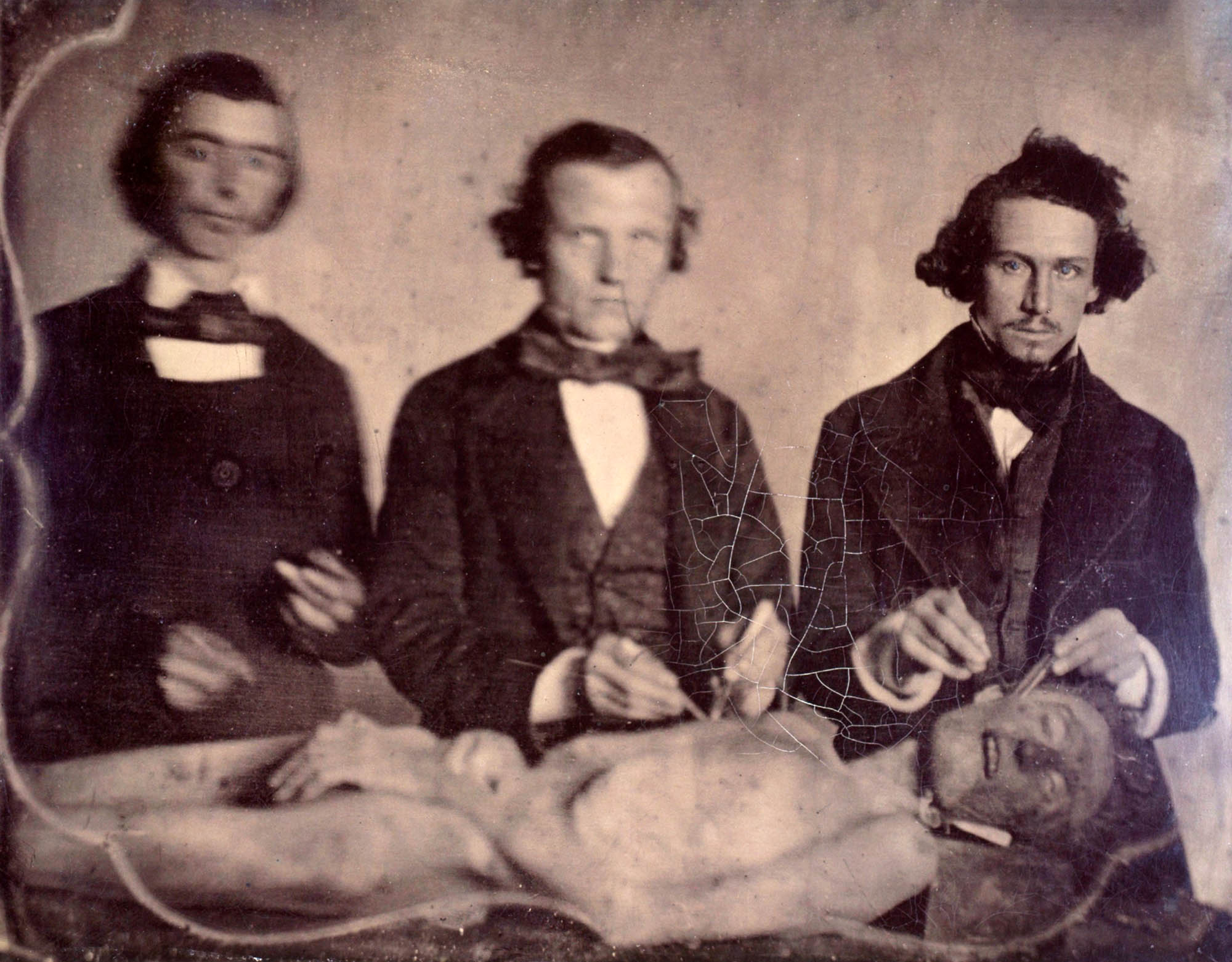
Dissection Photo Du Jour!

Earliest Dissection Scene
Daguerreotype, circa 1844

This is an 1850s full-plate tintype of an earlier daguerreotype. It is the only surviving representation of a dissection scene from photography’s earliest era. The next earliest scene is from the late 1860s. As is typical in this time period, the school and individuals are not identified. Taking a dissection photograph in this early era was not related to the standard ‘rite of passage’ images that began in the 1880s. It is most likely related to occupational photography popular in the 1840s. Photographing a dissection in this time period in the Midwest was quite dangerous due to the public concern with grave robbing.

Culled from: Stiffs, Skulls & Skeletons

MFDJ 08/23/23: The Sociopsychology of Suicide

Today’s Sociopsychological Yet Truly Morbid Fact!

A Vehicular Suicide Case Study:

A thirty-seven-year-old man died on Easter Sunday of blunt trunk trauma following a single automobile crash in which he was the driver and sole occupant. Seven fresh superficial stab wounds on the lower chest and three incised wounds on the left palm were noted as well as several linear scars in the epigastrium, left antecubital fossa, and left wrist. Toxicological studies were negative for alcohol and psychotropic drugs. The above unusual injuries prompted a further investigation. The incident took place in the early evening with good driving conditions on a straight portion of an interstate throughway. The victim’s vehicle left the roadway and traveled 480 ft. (146.30 m) in a straight line before colliding into a concrete pillar of an overpass. The decedent had had a problem with alcohol, difficulty keeping a job, and disabling ankylosing spondylitis. Two weeks before the fatal crash he had been taken to a hospital by ambulance because of multiple self-inflicted superficial stab and incised wounds of the epigastrium and left arm. He admitted his suicidal intention at that time.

In this case, the stab and incised wounds and scars aroused the suspicion of suicide. Through enthusiastic police cooperation [Huh? – DeSpair], information about the victim’s sociopsychological history was obtained that helped to determine the manner of death. Apparently the decedent failed in his attempt to stab himself to death and subsequently used his vehicle to destroy himself.

Culled from: Car Crash Culture


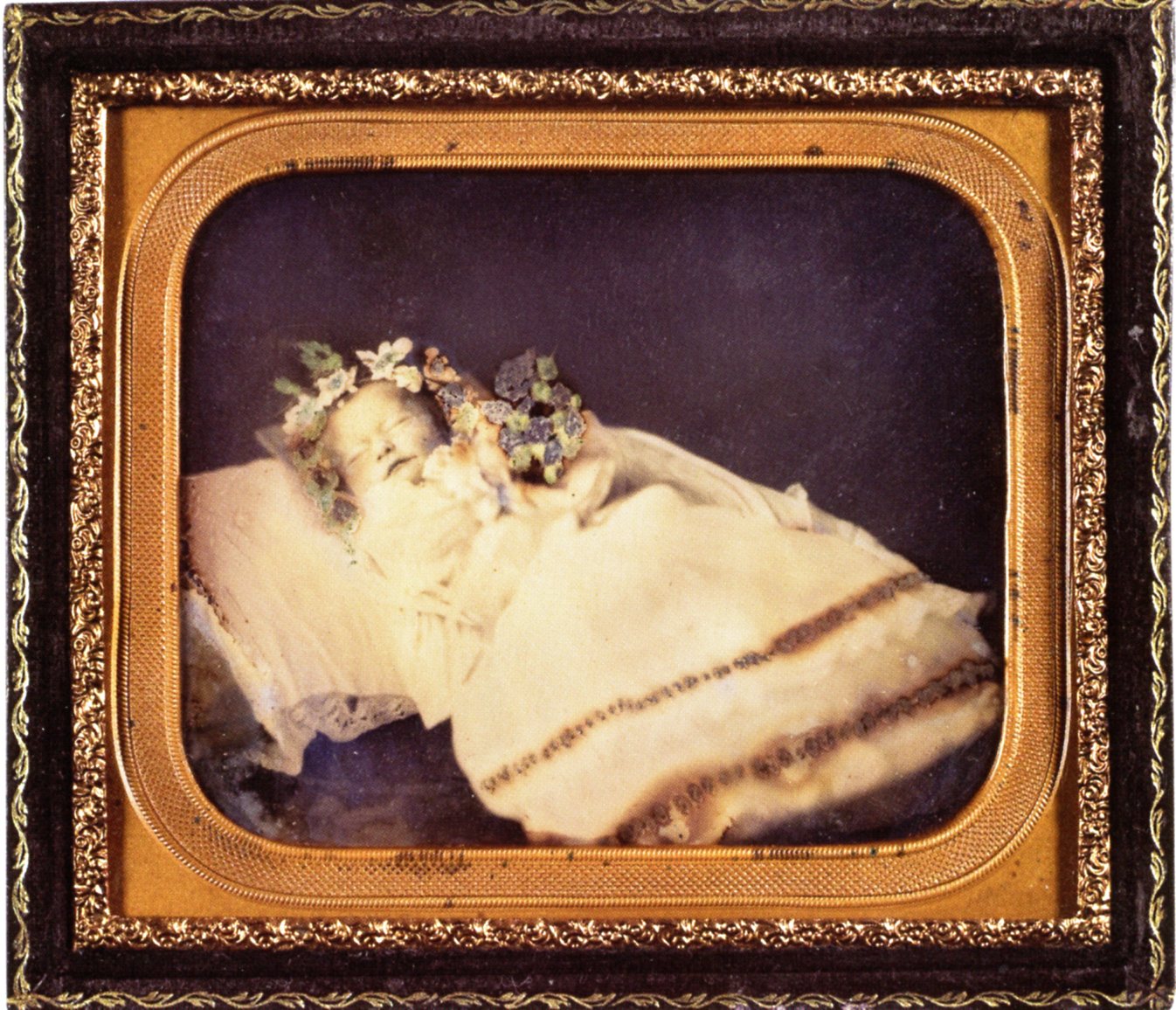
Post-Mortem Portrait Du Jour!


INFANT IN FLORAL CROWN
DAGUERREOTYPE 1/6 PLATE, CIRCA 1855

Culled from: Sleeping Beauty III

MFDJ 08/22/2023: Dora the Destroyer

Today’s Pathetic Yet Truly Morbid Fact!

On the morning of October 27, 1994, a heavy-set, Hispanic female burst into the Riverside County Sheriff substation in the dusty, working-class town of San Jacinto, California. Thirty-four-year-old Dora Buenrostro screamed at the police that her ex-husband was at her apartment and was going to harm their children. Police rushed to the apartment complex at 324 East Shaver Street and found a scene that made the most veteran deputy throw up. Buenrostro’s nine-year-old daughter Susana and eight-year-old son Vicente were dead, their throats slit. Susana was laid out on a loveseat and Vicente on a couch. Both children were covered with a blood-soaked blanket. Their tiny arms had multiple cuts on them from defending themselves. Four-year-old daughter Deidra was nowhere to be found.

Riverside County sheriffs noticed the lack of emotion Dora displayed when they discovered her children dead, as well as her lack of concern about her missing daughter. She demanded the police arrest her ex-husband, Alex Buenrostro, for the murders. Alex lived in the Los Angeles neighborhood of Silver Lake, so the Los Angeles Police were called to pick him up. The L.A.P.D. found him around two in the morning and took him for a ride to Riverside.

While Alex Buenrostro was in custody, the Riverside County Sheriffs informed him of the death of his two children and the disappearance of another. The news of his children’s deaths devastated Alex. Detectives checked with his employer and questioned his friends. They quickly realized Alex Buenrostro not only had an airtight alibi, but he was also utterly distraught over the deaths of his children. Investigators were sure he did not commit the murders. On the other hand, Dora’s story changed every time she told it, and she was evasive and non-responsive when asked if she knew where her daughter Deidra could be. A Riverside County sheriff’s deputy described Dora’s behavior: “She went from laughing and joking to being tired to being nonchalant, but never showed remorse or sadness…”

Later that evening, some children playing in an abandoned post office sorting facility at Date Street and Reservoir Avenue in Lakeview found the lifeless body of Deidra. She was strapped in a child seat, and like her siblings, her throat was slit. She appeared to have been dead for several days. The blade of the knife that killed her had broken off in her neck.

Police arrested Dora two days later and charged her with three counts of first-degree murder. In July 1998, four years after the murders, she was brought to trial. The jury listened for three weeks as Deputy District Attorney Michael Soccio described the crimes in intense detail. Soccio laid out what happened, starting with the night of October 25th, when Dora visited her ex-husband at his Silver Lake apartment. On her way to see Alex, Dora, who had little Deidra with her, first took her anger out on the four-year-old. She stabbed the girl so violently that the knife blade broke off in her throat, and then Dora coldly left her in a massive abandoned postal facility for the rats to eat. She continued her drive to Silver Lake to see Alex. After they had sex, Dora pulled a knife on Alex and he called the police. Angered at her ex-husband for seeing other women while her own love life was stifled by her three young children, she murdered nine-year-old Susana and eight-year-old Vicente as they lounged in their living room the next day. She spent the rest of the day in her apartment with her two dead children as her audience, rehearsing what she would tell the police.

Just as the jury was on the edge of being overwhelmed by the vileness of this crime, Alex Buenrostro took the stand. He tearfully told what happened the night Deirdra was murdered. He described how he was brought in by the police and the emotional impact of learning about the horrible crimes.

Jay Grossman, Dora’s attorney, tried his best to paint the entire crime as unplanned, and that Dora’s plot was pathetic. He asked to find her guilty of second-degree murder. The jury did not buy it. On July 23, 1998, they found Dora Buenrostro guilty of three counts of first-degree murder.

The following Monday, the trial went into the penalty phase. Dora took the stand and denied killing the children. She insisted she was being framed, that Alex had murdered her family, and that the Riverside County Sheriff’s Department were in on the cover-up. She went on to berate the prosecution and her own defense attorney.

A Spanish interpreter was brought in for Dora when the jury announced that it had agreed on a penalty. As the interpret translated the verdict, Dora leaned her heard forward and cried. She was officially sentenced to death on October 2, 1998. As of this date, she is awaiting execution. Jury members told reporters that had she admitted her guilt and said that she was sorry, they would have given her life without parole.


Dora Buenrostro

Culled from: California’s Deadliest Women by my friend, David Kulczyk


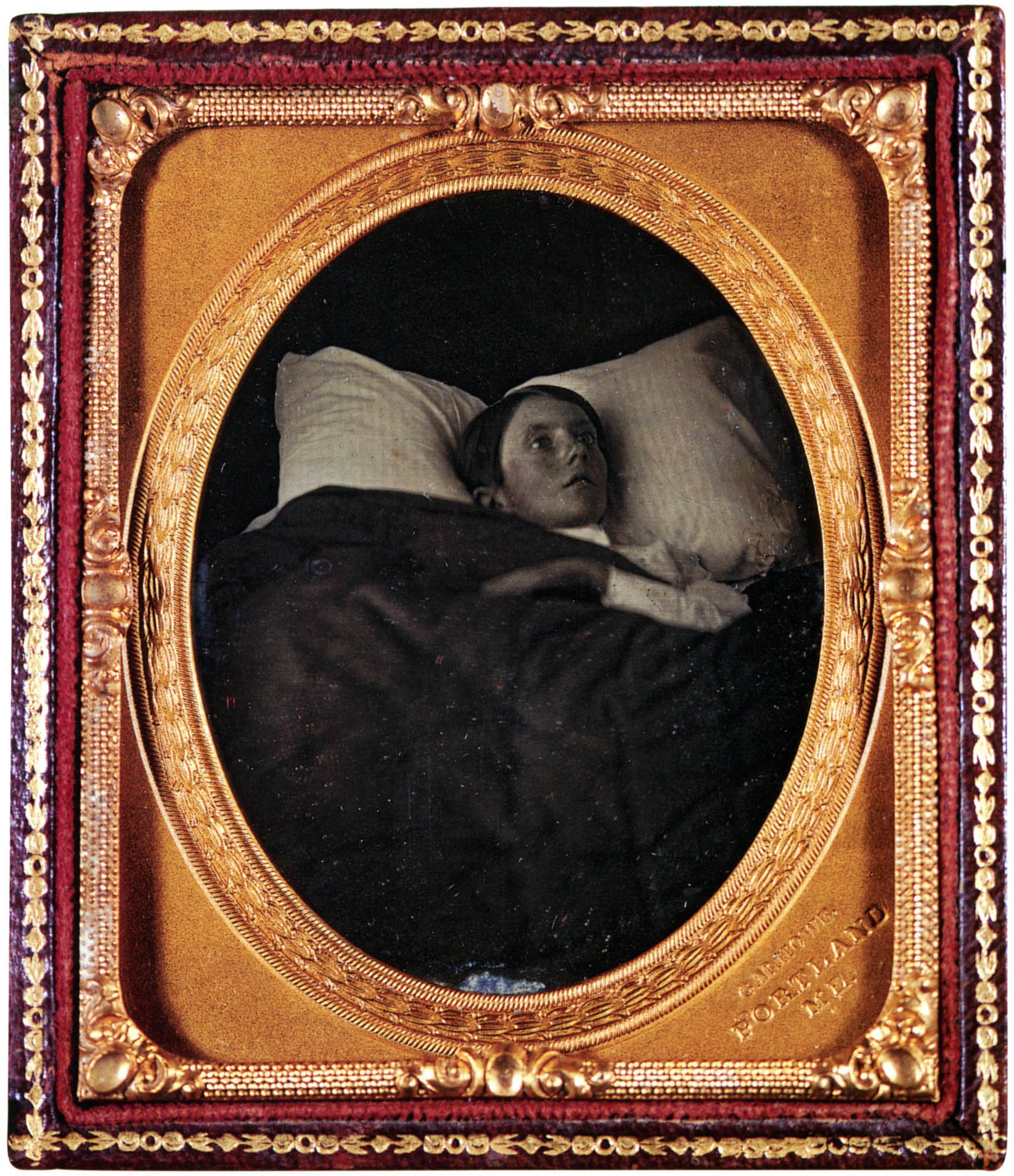
Post-Mortem Portrait Du Jour!

OLDER CHILD PROPPED ON PILLOW AND TUCKED IN BED
G. M. HOWE, PORTLAND, MAINE
DAGUERREOTYPE 1/6 PLATE, CIRCA 1853

This postmortem photograph depicts a young girl [I thought it was a boy? But then again, gender is over.  – DeSpair] as if she were casually lying in bed. Her arm has been placed across her chest to make it look as if she were about to get up. The dead were often posed in sitting positions to make them appear alive in these mementos for their loving survivors. However, this child’s vacant, glassy stare at the ceiling shows us the true nature of her condition. Moreover, if she had been alive, a more natural pose would have been chosen; pictures of the living had recognizable poses which would not be confused with those in memorial images.

Culled from: Sleeping Beauty II