Today’s Toxic Yet Truly Morbid Fact!
In the summer of 1926, federal government seethed with frustration over the flouting of anti-alcohol laws. When Prohibition went into effect, backed by a Constitutional amendment no less, its supporters had assumed citizens would, however reluctantly, obey the law. The succeeding years had proved them wrong. Many now drank more than ever, more recklessly, more adventurously. In Washington, D.C., where the Volstead Act – which provided for enforcement of the Eighteenth Amendment – had been militantly approved, the police reported nearly a ten-fold increase in drunk driving arrests since the legislation was enacted.
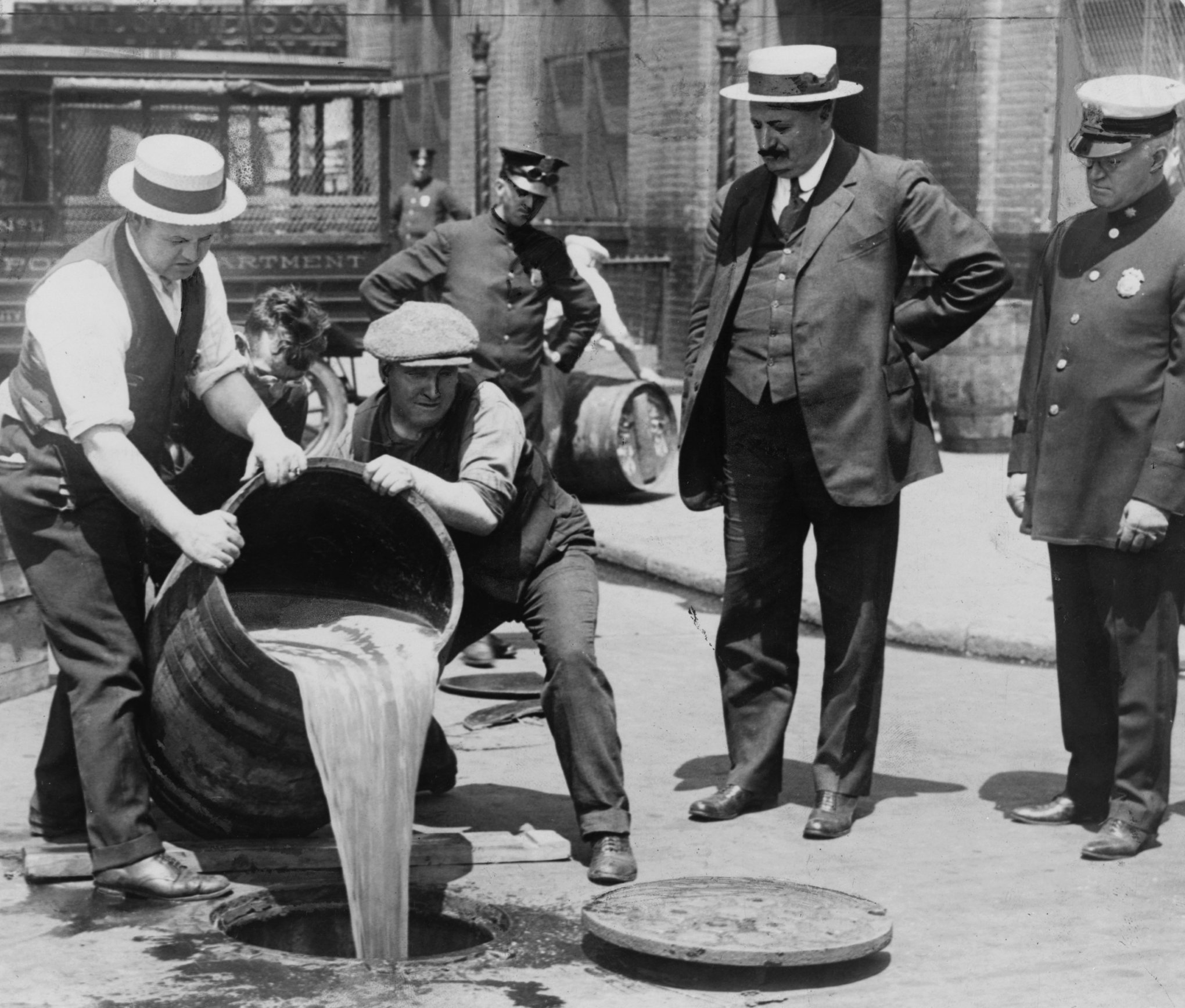
UNITED STATES – CIRCA 1921: New York City Deputy Police Commissioner John A. Leach, right, watching agents pour liquor into sewer following a raid during the height of prohibition (Photo by Buyenlarge/Getty Images)
Prohibition: Alcohol Abuse!
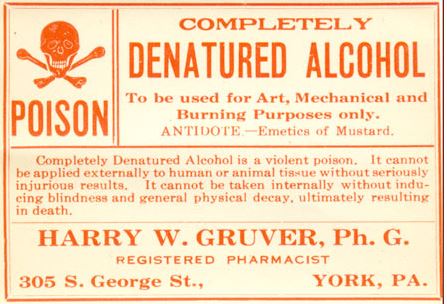
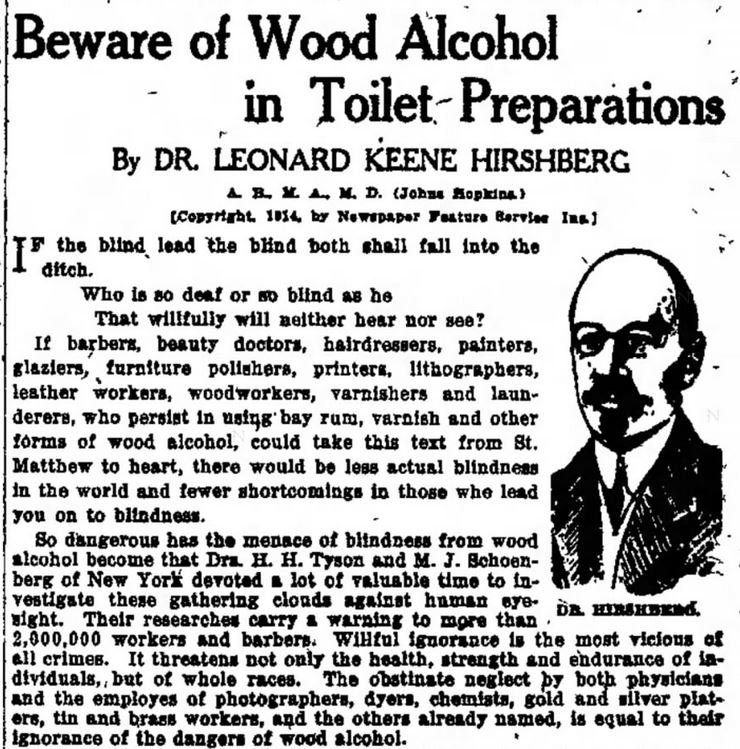
The illegal alcohol trade had not only flourished but grown more sophisticated. In the mid-1920s much of the available spirits came from stolen industrial alcohol, which was famously poisonous. Since 1906 the U.S. government had required that manufacturers denature (poison) industrial alcohol or else pay liquor taxes. By the 1920s some seventy denaturing formulas existed. The simplest formulas just added extra methyl, or wood, alcohol into the mix. Others mixed a cocktail of bitter-tasting but less lethal compounds, designed to make the alcohol taste so awful that it became undrinkable. Liquor syndicate chemists were able to “clean up” most of the poisons, but no one had ever figured out how to completely detoxify wood alcohol, which remained the best poison at hand.
As the year pulled toward its close, on a festively lit Christmas Eve, a man came running – make that weaving – into New York City’s Bellevue emergency room, claiming that Santa Claus had chased him from Fifth Avenue with a baseball bat. He was among the sixty-five people who came to the hospital in two days, all sickened by holiday celebrations.
The problem was primarily poisoned liquor. The latest round of hooch available in the city had not cleaned up well. It remained an unusually nasty soup of government-added impurities and methyl alcohol. Eight people died at Bellevue, and fifteen others were admitted. Two days after Christmas twenty-three were dead and eighty-nine hospitalized. Most of them later were packed into the alcoholic ward at Bellevue, hallucinating, vomiting, blinded by wood alcohol, bundled onto cots like so many sticks of kindling.
The pathologists and chemists of the New York City medical examiner’s office viewed the government’s deliberate poisoning of alcohol as an act of betrayal. Handling an average of twelve thousand bodies a year, they were accustomed to unnecessary loss of life – nearly half of those corpses were the result of accident, suicide, or murder. But they weren’t accustomed to having their national government adopt a policy known to kill people in droves. In the offices at Bellevue, their outrage crackled like a current in the air.
In January the usually reserved toxicologist Alexander Gettler marched off to meet with the New York press, bearing pages of information on lives taken by poisoned alcohol. As always, Gettler said, money brought greater safety. The well-heeled clubbers, the wealthy lovers of jazz-flavored cocktails, could afford the pricey higher-quality alcohol on the market. But the poor could buy only the alcoholic dregs: nickel whiskey from the tenement stills, the Smoke cocktails of the Bowery, straight wood alcohol. More than anyone else, the city’s impoverished residents were paying the real price of Prohibition.
The statistics that Gettler delivered to city newspapers bore this out: in the year 1926 alone some twelve hundred in New York City had been sickened or blinded or both by drinking some form of industrial alcohol; another four hundred people had died, most of them from Manhattan’s Lower East Side, Gas House district, Hell’s Kitchen, and like neighborhoods in the other boroughs. “The figures exceed the number who died from alcoholism in the days of the saloon,” he said. “It is impossible to estimate the effect which this poisoned liquor has had on the nervous systems of those taking it and who are not made ill enough to be brought to the hospital for treatment. It is clear enough, however, that the liquor which contains enough poison to kill so many is slowly but surely killing many others.”
Culled from: The Poisoner’s Handbook
Dissection Photo Du Jour!
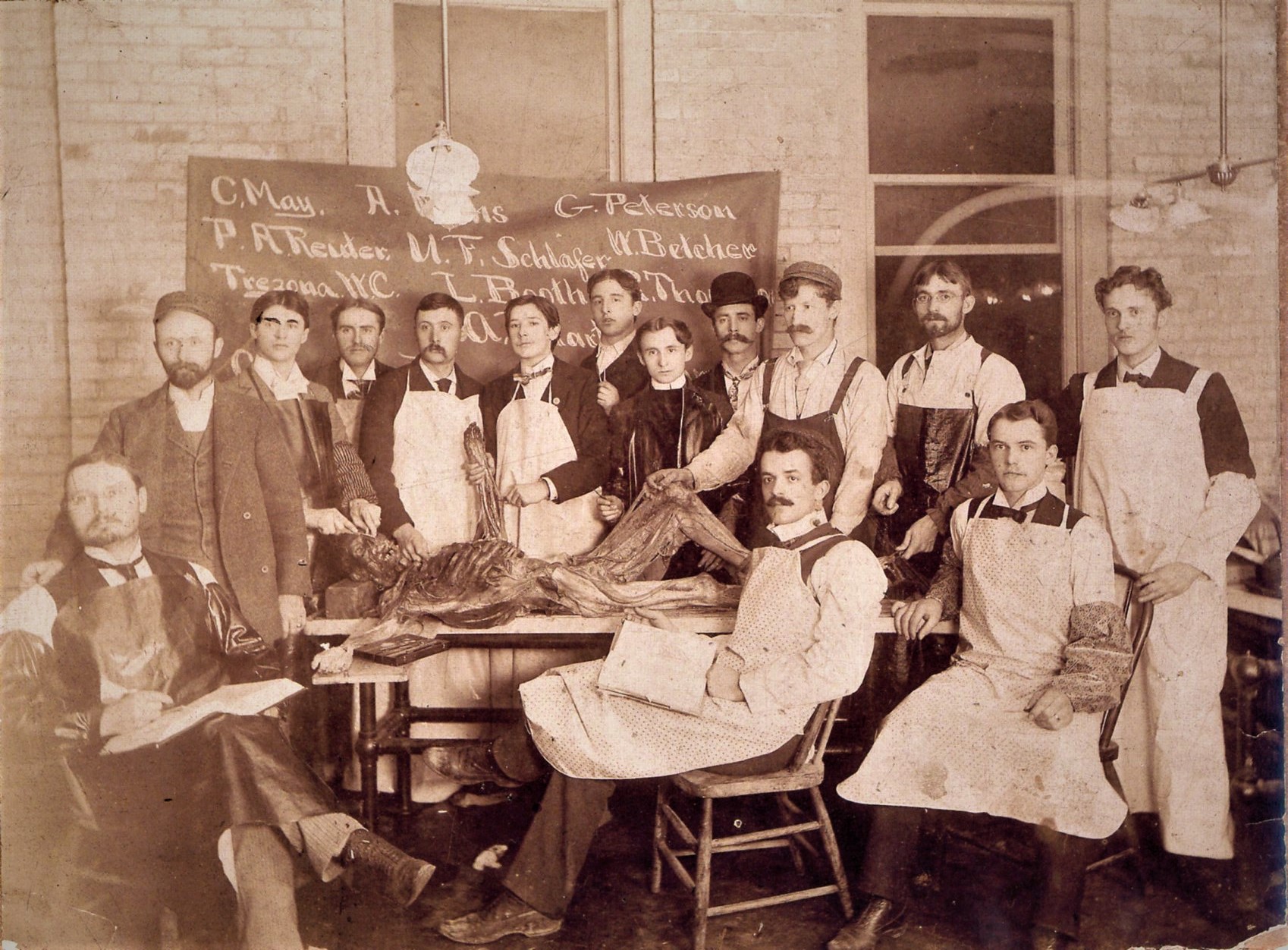
Marquette University Department of Dentistry, Milwaukee, Wisconsin, ca. 1900. Wooden planks extend to the sides of the cruciform dissecting tables facilitating dissection of the outstretched arms and hands.
Culled from: Dissection: Photographs of a Rite of Passage in American Medicine: 1880-1930