Today’s Revolutionary Yet Truly Morbid Fact!
Jonathan Letterman, who graduated from Jefferson Medical College in 1848, earned the nickname “father of battlefield medicine,” thanks to the innovations he developed as a Civil War surgeon. Letterman was named medical director of the Army of the Potomac. The Union Army had entered the war with only ninety-eight medical officers; more than half of the army’s medical professionals had resigned to join the South after the start of the war. In an effort to help resolve some of the issues that came up because the Union Army’s medical teams were short-handed – supplies that were either almost exhausted or necessarily abandoned; hospital tents that had to be abandoned or were destroyed; medical officers either deficient in numbers or broken down by fatigue – Letterman began drawing up plans and instituting them immediately.

Jonathan Letterman portrait, and seated in front of the field tent.
He began introducing a revised concept of the Ambulance Corps – army-issued wagons and trains would be used exclusively for transporting the wounded and, in urgent cases, for transporting medical supplies. Prior to Letterman’s ambulance system, there were horrible examples of inefficiency and abuse by personnel tasked to transport the wounded. In one unsettling example, more than three thousand injured soldiers from both sides were left on the battlefield for three days because the civilians responsible for moving the wounded had instead picked their pockets, stolen alcohol from the medical supplies, and left the injured to die.
Letterman also insisted that all surgeons in the Union Army would be tested on their knowledge and be assigned to duty that reflected their skill level. Those who could cut off a limb swiftly and cleanly were sent to the front line; those who could manage the long-term care of patients suffering various unimaginable injuries were kept to work in Northern hospitals.
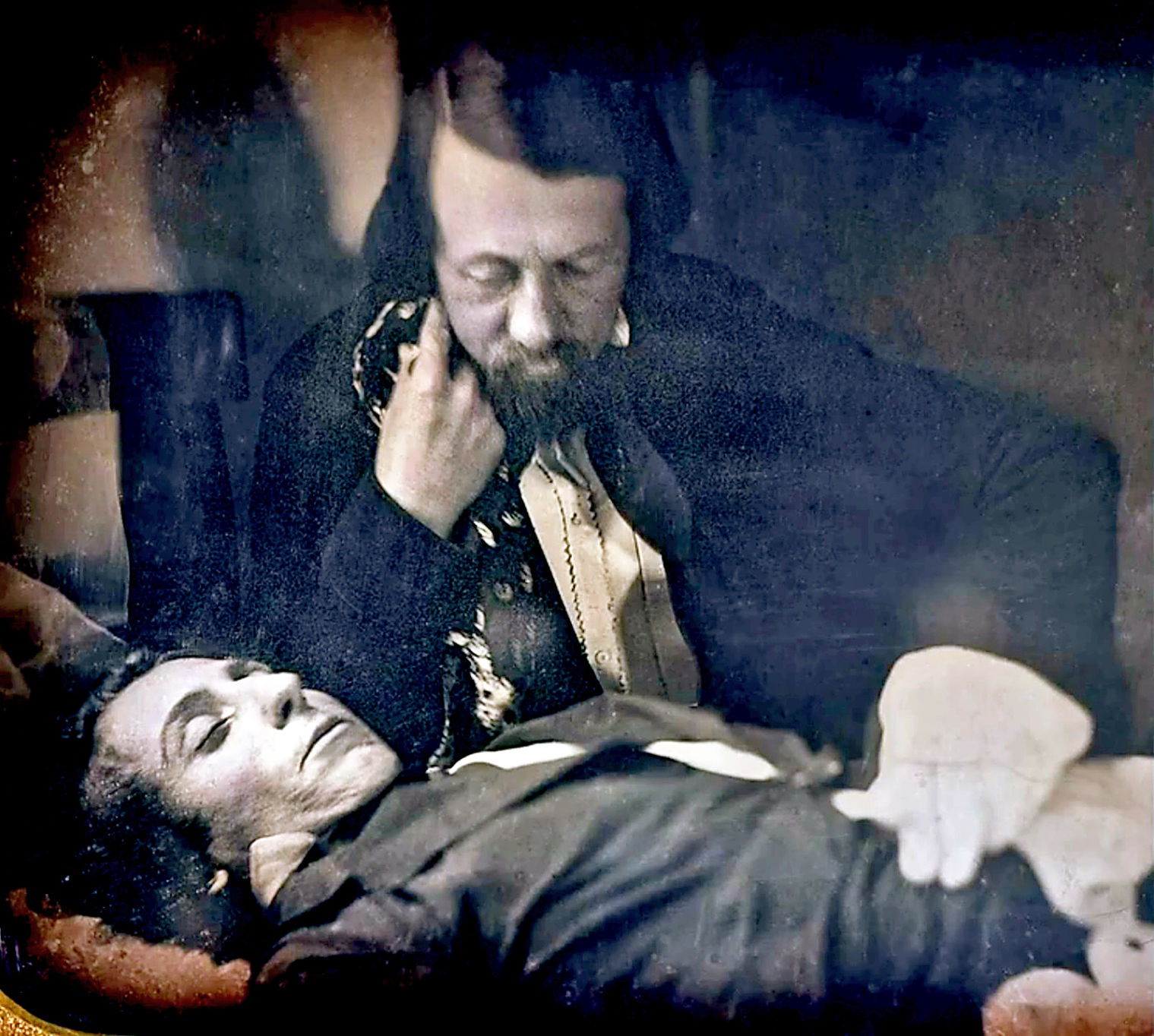
Dr. Letterman with a patient.
Last, and perhaps most important, he established field-dressing stations, where wounded soldiers were divided into categories according to the severity of their wounds. Letterman’s system of organizing patients into groups of those who would live regardless of their wounds and those who would surely die – known as triage – proved to be a revolutionary concept, one still used today.
Culled from: Dr. Mütter’s Marvels: A True Tale of Intrigue and Innovation at the Dawn of Modern Medicine
Hydrophobia!
 |
| Rabies is no joke, as this vintage video shows!. (Thanks to Alethea.) |