Today’s Professional Yet Truly Morbid Fact!
Breaking on the wheel was widely used to administer capital punishment in the Middle Ages in Germany. Here the method varied slightly from that of France in that the wheel rested on a tripod, the top of which passed through the hub, the nave.
This facility allowed the wheel to be rotated while in use. The spectators on all sides of the scaffold were thereby afforded a good view of the suffering victim, and the executioner didn’t have to expend energy in walking around the wheel to ply his iron bar.
The height of the wheel also varied — three feet was the minimum — and the blows were delivered from either above or below. The punishment was more drastic than in other European countries, up to forty blows being regularly delivered. No strangling cord was used, the coup de grace being a blow aimed at the chest or the nape of the neck.
In the sixteenth century the Warden of the Wheel in Nuremberg was Master Franz Schmidt, the public executioner, who bestrode the scaffold from 1573 to 1617. That he was well practised in his art is evidenced by the fact that during his forty-four years of service he executed no fewer than four hundred law-breakers by hanging, drowning, beheading or on the wheel. Tall, bearded, well built, always sober, Franz prided himself on his professionalism, meting out the court’s sentences with dedication blended with whatever mercy was deserved, especially where female criminals were concerned.
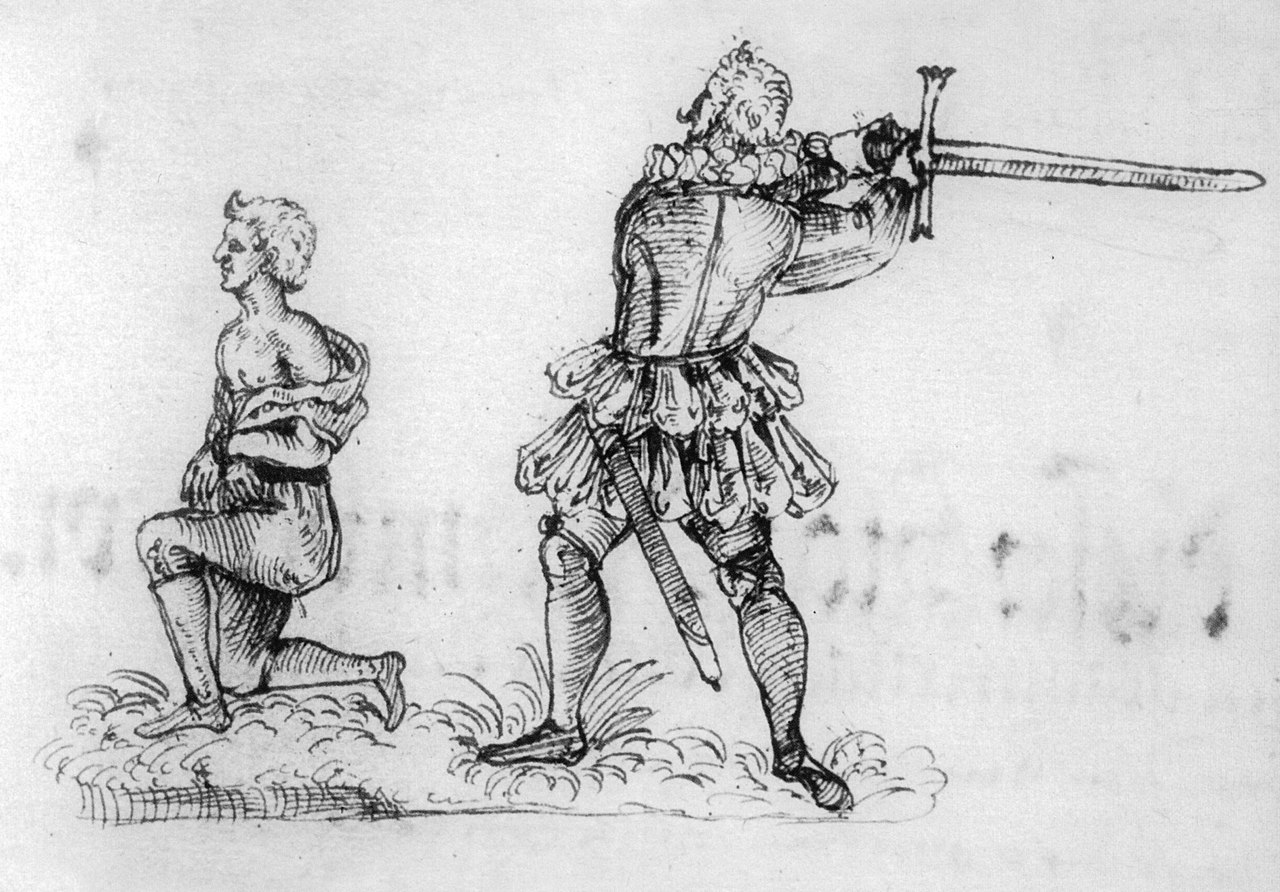
Franz Schmidt executing Hans Fröschel on May 18, 1591. This drawing in the margins of a court record is the only surviving fully reliable portrait of Franz Schmidt.
The list of those broken on the wheel by him is long and draconian. On one day, 5 June 1573, not only triple-murderer Barthel, and Gronla Weygla, guilty of five murders, died in that manner, but also Meussel, who had stabbed two men to death in order to steal their money.
In the following year Schmidt no doubt achieved a certain amount of satisfaction in dispatching Kloss Renckhart who, with an associate, committed three murders. Having killed two members of his gang for various reasons he, together with another accomplice, attacked an isolated mill.
They shot the miller dead and then forced his wife and maid to fry some eggs in fat. Putting the food on the miller’s corpse, Renckhart kicked the body, exclaiming, ‘Miller, how do you like this morsel?’ and then forced the wife to eat the eggs. He was arrested after plundering the mill, and later kept an appointment with Schmidt and the iron bars on the scaffold.
Sometimes iron clubs were not used; instead, the criminal would be beheaded by the sword, his body then being exposed on the wheel. This occurred when, on 6 August 1579, Michael Dieterich, one of three robbers, was sentenced to death.
Among the crowds watching the procession to the scaffold was Dieterich’s wife who, until that moment, had had no idea that her own husband would be one of those in the executioner’s cart —nor had she ever had any suspicions that he was engaged in any nefarious deeds. But Schmidt was waiting, and only a brief farewell was possible.
Dieterich might be applauded for his duplicity, but he certainly lacked the audacity of Hans Horn who, having committed two murders, slew a pedlar in the woods with a chopper. Not only did he take eight florins from his victim, and cover the corpse with brushwood, but he had the nerve to seek out the pedlar’s wife and marry her! Schmidt took good care of him, too.
As if having one’s arms and legs broken with iron bars wasn’t enough, many criminals were first subjected to torture, their arms ‘nipped with red-hot pincers’. One such was George Taucher who, at three o’clock in the morning, killed a tavern-keeper’s potboy by slitting his throat with a knife. The searing agony of the glowing tongs, followed by the shattering blows of the iron bar, soon convinced him of the errors of his ways.
Probably the occasion which tested Franz’s single-mindedness to the maximum was when he had to execute his own brother-in-law. Yet, loyal to his oath, he administered two tweaks with the red-hot tongs to his relative who, after having been allowed to embrace his daughter on the scaffold, was subjected to no fewer than thirty-one blows of the iron bar before he expired.
Culled from: The Book of Execution
Crime Scene Photos Du Jour!
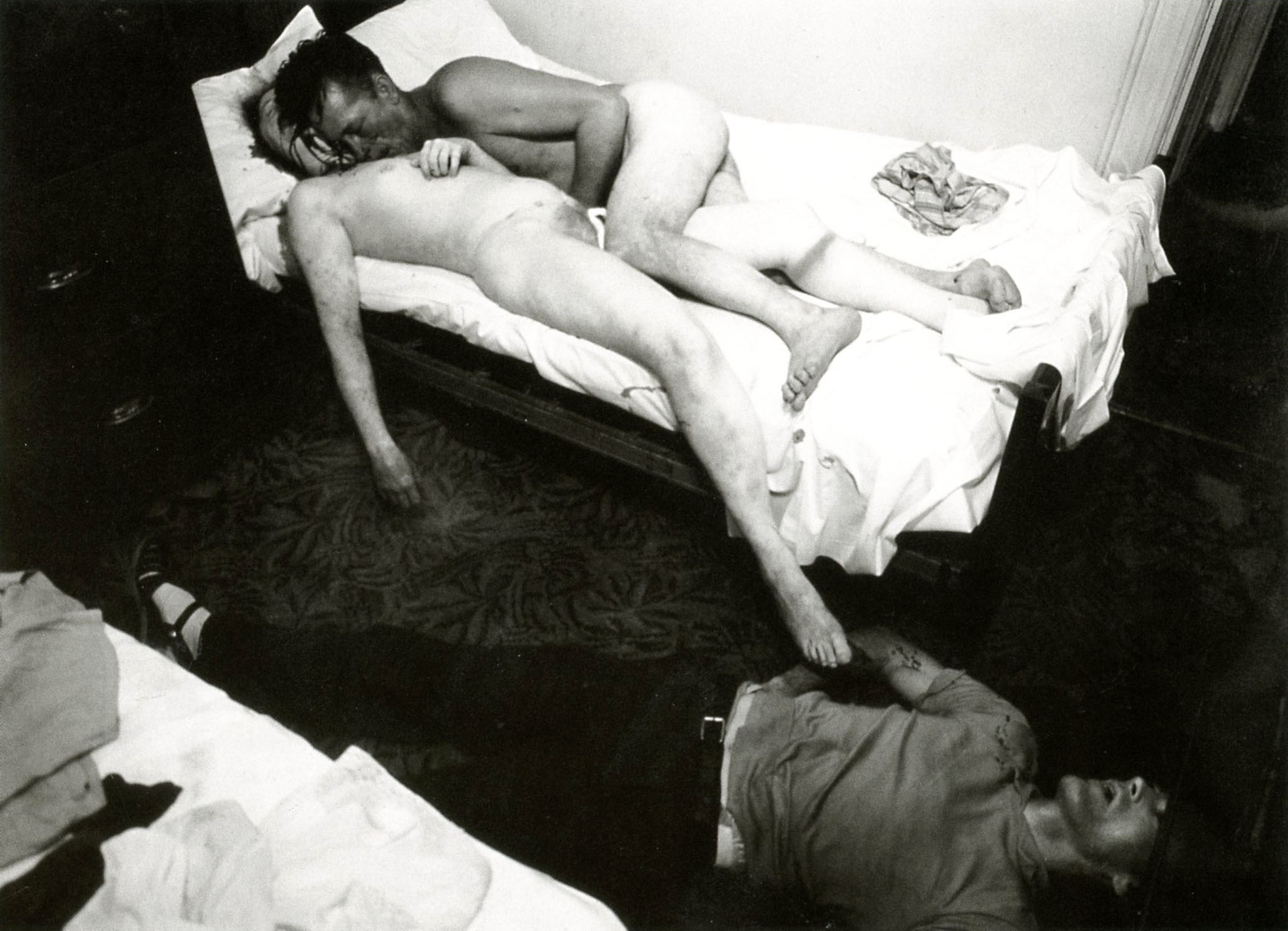
“COP FINDS WIFE AND MAN ABED; KILLS PAIR, SELF” (1949)
Veteran columnist Nat Kanter’s August 1, 1949 headline in New York’s Daily News accurately summarized the sad ending of a love triangle. Kanter continued: “With two accurately-placed shots from his service revolver, he killed them both as they lay in each other’s arms. Then he fired a third bullet into his own brain.” A young Brooklyn patrolman, 30-year-old William R. Lane, killed his estranged wife, ex-showgirl, 28-year-old Blanche Binder-Lane, and her lover, Arnold Meyers, 37, before turning his gun on himself early in the morning of July 31, 1949. The lovers were shot as they lay in each other’s arms in the third-floor apartment of Mrs. Binder-Lane’s parents’ at 4313 Eighth Avenue, Brooklyn. Meyers was a “good-looking” carpenter who lived close to her parents’ home. According to his brother, he was married and his own wife and two children were expecting him to return to Norway. Mrs. Binder-Lane had had a career as a nightclub singer and dancer under the stage name Stephanie Brooks, and worked as a waitress. She had started annulment proceedings against Lane eight months before her murder and had moved back to her parents’ apartment. Lane had continued to make attempts to get her back. He had even commented to her father that he would rather kill her and himself before letting her get an annulment.


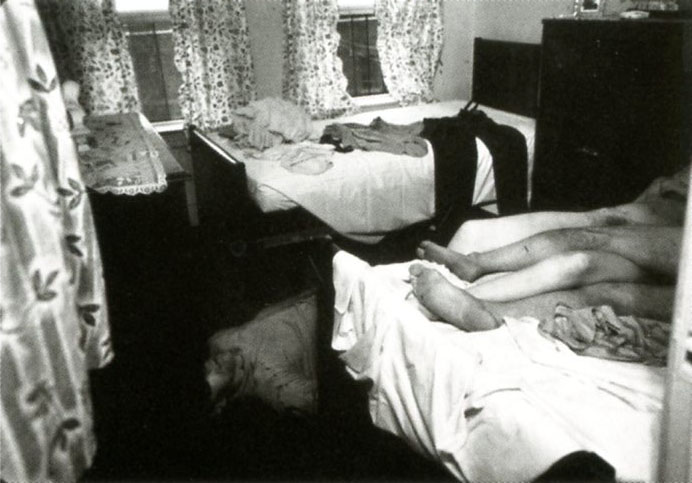
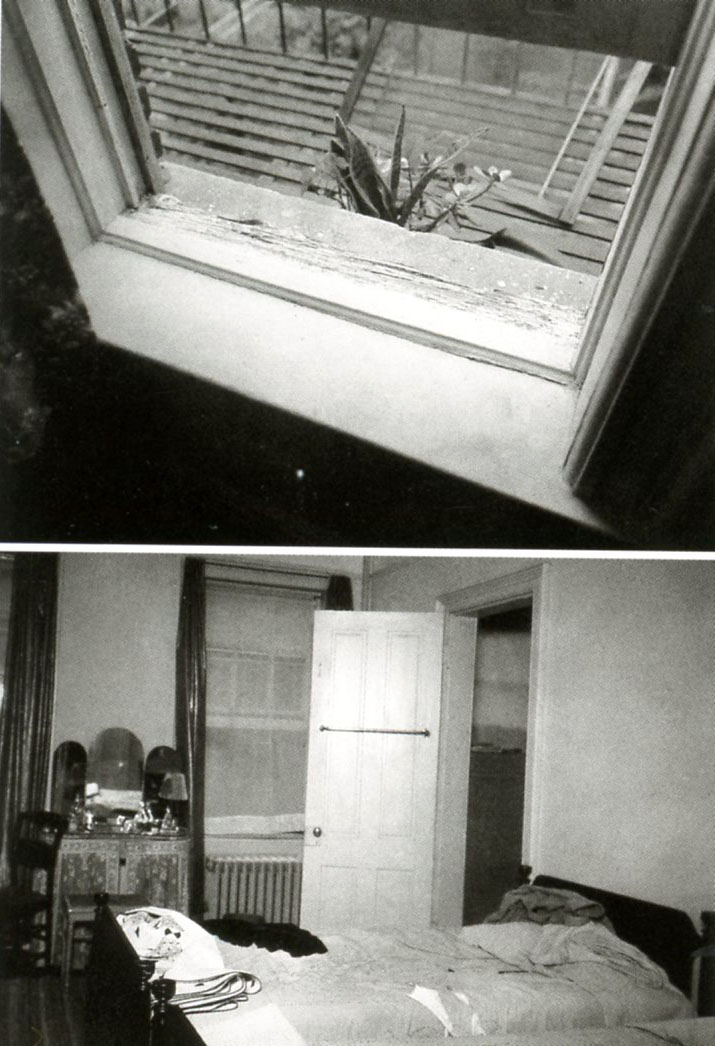
The couple had been married in November 1947. They met in Coney Island Hospital where she was working as a nurse’s aid and he was receiving treatment for a minor injury. They had initially lived with her family, but had moved out with the idea that things would function more smoothly if they had their own place. They found the ill-fated apartment at 17 Madison Street, Brooklyn. The previous occupant, spinster Mary Gray, had been raped and stabbed to death on October 8, 1948. Her killer was a neighborhood punk, Walter “Boots” Davis (see MFDJ 9/11/23). Mrs. Binder-Lane’s father, Emil, discovered the bodies when he returned home from his work as a bargeman. His wife and younger daughter were away on vacation at the time of the murder. Mr. Binder came home to find the door bolted from the inside and called his daughter to come to the door. When she did not answer, he became alarmed and broke the door in. Lane, who had a key to the apartment, had waited on the fire escape while Meyers entered the apartment with his wife. According to neighbors, who had heard a commotion at approximately 4:30 AM, he went through another room to surprise them. The bodies of the two lovers were found naked and intertwined on the bed; she had been shot on the left side of the head. Meyers had been shot above the right eye, and Lane, the only one of the three wearing any clothing, lay beside them on the floor with one bullet hole in the right side of his head and his service gun beside him.
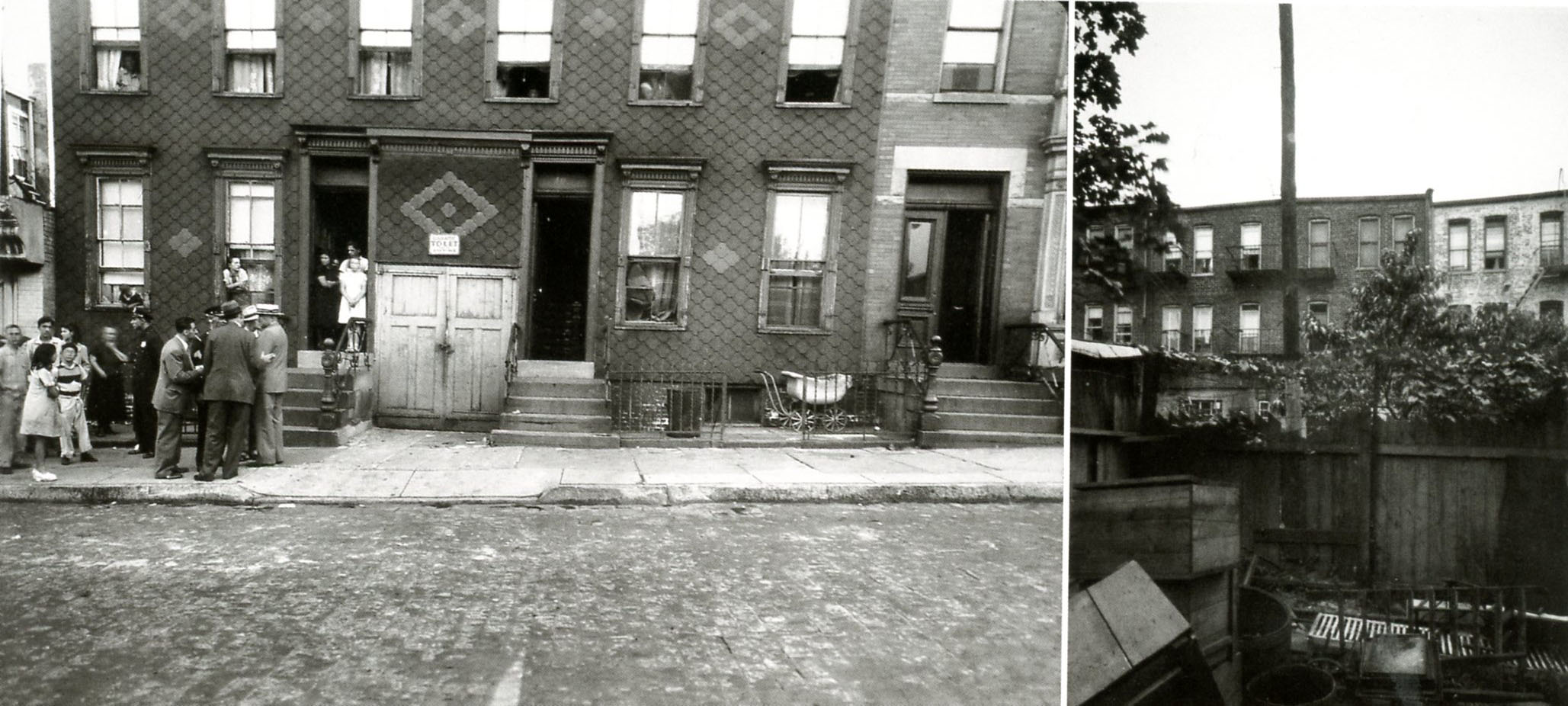
Culled from: Deadly Intent: Crime and Punishment: Photographs from the Burns Archive
I looked to see if the building still exists but the current one at 4313 8th Ave in Brooklyn doesn’t look anything like the photos above. I think it must have been demolished and replaced.

Andersonville Prisoner Diary Entry Du Jour!
This is the continuation of the 1864 diary of Andersonville prisoner Private George A. Hitchcock (see the archived version for all entries up until now).
Here’s today’s entry:
July 22d. Three hundred prisoners from Grant’s army came in, captured June 29th. Several tunnels partly dug were found. A sentry fired at a man near the dead-line, but missed him.
Culled from: Andersonville: Giving Up the Ghost