Today’s Decapitalized Yet Truly Morbid Fact!
England’s North American colonies exhibited significant regional variation in their criminal codes right from the beginning. The early northern colonies were far more lenient than England for crimes against property. Burglary and robbery, for instance, were not capital crimes under the initial criminal statutes of Connecticut, Massachusetts, Plymouth, or Pennsylvania, and were capital only on the third offense in the initial codes of New York, New Hampshire, and New Haven. Arson was not a capital crime in early Connecticut, Massachusetts, New York, or Pennsylvania. The law in the early northern colonies was closer to English law for crimes against the person, but was less harsh in several respects. Murder was capital everywhere, but rape was not capital in the first codes of Massachusetts, New York, or Pennsylvania, and even manslaughter was not capital in the early Quaker colonies of Pennsylvania and West New Jersey, which for a time gave the Delaware Valley the most lenient punishments in the English world.
For what would today be called consensual crimes or crimes against morality, by contrast, the early northern colonial penal codes were often harsher than English law, because of the religious origins of many of these colonies. Blasphemy and idolatry were in principle capital crimes in Connecticut, Massachusetts, and New Hampshire; adultery was capital in early Connecticut, Massachusetts, and New York; sodomy and bestiality were capital throughout the region, even for the animals involved. [Say what??? – DeSpair] In practice, however, these statutes were rarely enforced. Massachusetts executed four Quakers in the mid-seventeenth century who returned to the colony after having been banished, but these are the only people known to have been hanged in the colonies for their religious beliefs. James Britton and Mary Latham, hanged by Massachusetts in 1643 for adultery, are the only two known to have been executed for the offense in any of the colonies. As the New England colonies lost their original sense of a religious mission, they abandoned the death penalty for some of these moral crimes. Massachusetts decapitalized blasphemy, adultery and incest in the late seventeenth century, and new Hampshire decapitalized blasphemy in the early eighteenth. Hangings for sodomy or bestiality were more common; there were at least three in Massachusetts, four in Connecticut, and three in New Jersey. The last American jurisdiction to hang someone for one of these crimes was the state of Pennsylvania, which executed Joseph Ross for “buggery” in 1785. South of Pennsylvania, with the exception of single execution for sodomy in Virginia in 1624, there are no known executions for any of these crimes against morality.
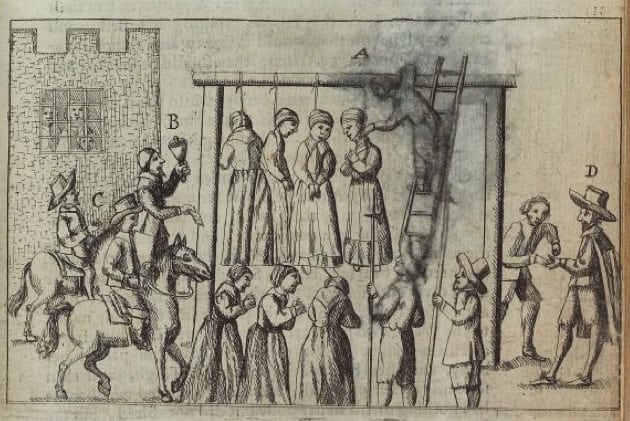
Execution: Colonial Style
Culled from: The Death Penalty: An American History
Civil War Injury Du Jour!
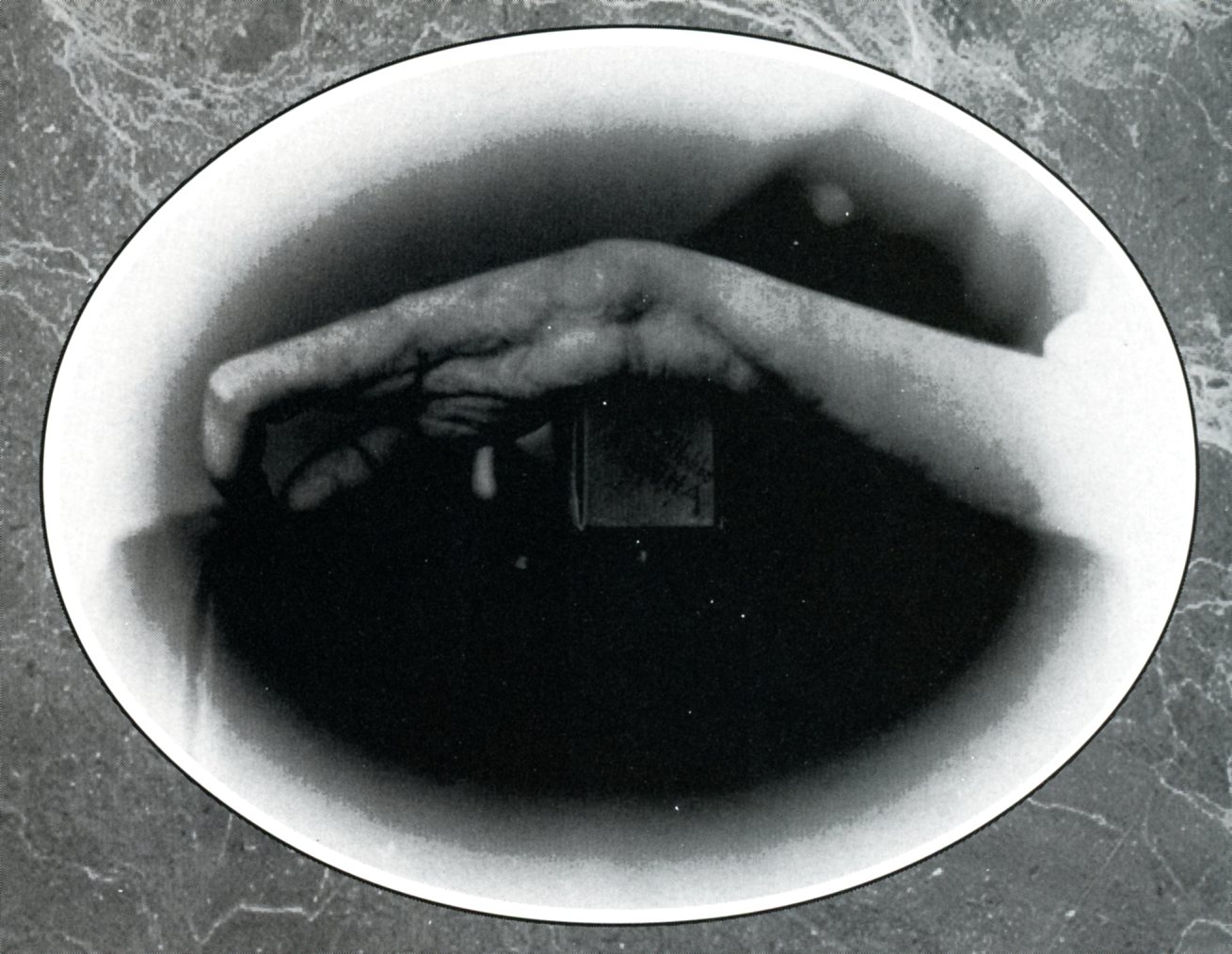
Photograph No. 5 Resection of portions of the carpus and metacarpus, and of the lower extremity of the ulna.
Major C. W. Hobbs, 7th New York Heavy Artillery, was wounded at Cold Harbor, June 3, 1864, by three musket balls. One inflicted a flesh wound of the left thigh, passing across the popliteal space, close to the hamstring tendons. The second fractured the third and fourth metacarpal bones of the left hand and made its exit near the wrist. The third entered the left hand between the distal extremities of the first and second metacarpals, comminuted the second and third metacarpals, the unciform and cuneiform bones, and the lower extremity of the ulna and made its exit on the outside of the forearm. Primary excisions were performed by surgeon J. E. Pomfret, 7th New York Heavy Artillery. Two inches of the distal extremity of the ulna were removed with the fractured bones of the carpus and metacarpus, and three outer fingers. The case progressed without any untoward complication and recovery was complete in two months. The photograph was taken on July 7th, 1865. The remaining portion of the radiocarpal articulation was not ankylosed and the movements of the thumb and forefinger were unimpaired. Major Hobbs was pensioned from expiration of this term of service until September 24, 1867, when he reentered the service.
Culled from: Orthopaedic Injuries of the Civil War
Andersonville Prisoner Diary Entry Du Jour!
This is the continuation of the 1864 diary of Andersonville prisoner Private George A. Hitchcock (see the archived version for all entries up until now).
Here’s today’s entry:
August 8th. A row of sheds inside camp at the west end are being built for the sick. Rain all the afternoon.
Culled from: Andersonville: Giving Up the Ghost